
The Architecture of Exclusion: How Luxury Fashion's Retail Expansion Masks a Deeper Crisis

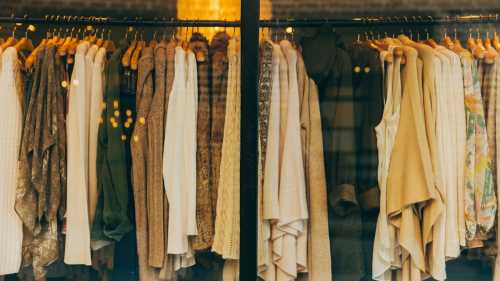
When a landlord renovates a building by removing the elevator and installing a velvet rope at the entrance, they aren't improving accessibility—they're engineering scarcity. The fashion industry's September 2026 maneuvers reveal an identical structural logic. Behind the celebratory announcements of flagship openings and heritage collaborations lies a calculated retreat from democratic access, as luxury houses consolidate physical retail while mid-market brands desperately chase relevance through nostalgia-driven partnerships.
The Physical Retail Paradox
In September 2026, the fashion industry executed a simultaneous offensive across five critical fronts: Hermès unveiled a two-story Williamsburg boutique bringing all 16 métiers to Brooklyn's industrial corridor [[1]], Dior opened a three-story House of Dior on Milan's Via Monte Napoleone designed by Peter Marino [[1]], Gap launched the Reed Krakoff-designed "GapBag" collection transforming denim into structured accessories priced $30-$148 [[1]], Celine partnered with Reebok for its first official sneaker collaboration reimagining the 1982 Freestyle Lo in supple lambskin [[1]], and sustainable fashion weeks proliferated globally as the industry grappled with its environmental contradictions. These are not isolated expansions; they represent a coordinated strategy of geographic and price-tier consolidation.
The Experience Economy Trap
Mainstream coverage celebrates these store openings as victories for local economies, systematically ignoring their function as exclusionary architecture. When Hermès invests in woven leather walls and fire-escape staircases modeled after New York infrastructure, it is not honoring the neighborhood; it is weaponizing local authenticity to justify $8,050 Plume Mini bags [[1]]. This represents a fundamental shift from product-based luxury to experience-based luxury, where the physical space itself becomes the primary commodity. The merchandise is merely a souvenir proving you gained entry.
Furthermore, the data reveals a brutal bifurcation: "The top three brands, Vuitton, Hermès, and Chanel, continued to widen the gap between themselves and the rest of the market" [[3]]. This concentration of market power means that while luxury conglomerates report record revenues—LVMH generated €80.8 billion in 2025, Hermès achieved a 40.5% operating margin [[3]]—the mid-tier brands that once anchored American malls face existential threats. Gap's collaboration with A.P.C. and Reed Krakoff's accessory pivot are not innovations; they are survival mechanisms for brands caught between ultra-luxury consolidation and fast-fashion commodification.
The sustainable fashion movement, meanwhile, has been co-opted into a marketing category rather than a structural reform. Sustainable Fashion Week runs September 26-October 4, 2026 [[35]], yet the industry's fundamental production model remains unchanged. When 75% of luxury consumers under 35 consider supply chain transparency [[3]], brands respond with enamel-coated Alhambra necklaces and "conscious" capsule collections rather than addressing the petrochemical dependence of synthetic textiles or the labor exploitation in their supply chains.
The Accessibility Defense
Critics of the anti-consolidation narrative rightly argue that physical retail investments create jobs, revitalize neighborhoods, and provide tangible brand experiences that digital channels cannot replicate. From this perspective, Hermès' Williamsburg store employs local artists and craftspeople, while Dior's Milan flagship preserves historic architecture through adaptive reuse. Proponents contend that luxury brands have always operated on exclusivity, and that democratizing access through e-commerce has already expanded reach beyond what previous generations could imagine. The "widening gap" between top-tier and mid-market brands reflects natural market sorting, not systemic failure.
Echoes of the 1980s Japanese Bubble Economy
This current trajectory uncomfortably mirrors the luxury market dynamics of Japan's asset bubble era in the late 1980s. During that period, brands like Louis Vuitton and Hermès expanded aggressively in Tokyo, opening flagships that served as temples to consumption while the domestic Japanese market fueled unprecedented growth through speculative wealth. When the bubble burst in 1991, the luxury sector collapsed because it had become entirely dependent on artificial wealth creation rather than sustainable demand. The historical lesson is stark: when luxury brands prioritize geographic expansion and experiential architecture over product accessibility, they create fragile ecosystems vulnerable to macroeconomic shocks. Today's concentration in Williamsburg, Milan, and Manhattan represents a similar bet on affluent enclaves that may not withstand broader economic contraction.
The Collaboration Industrial Complex
The proliferation of brand collaborations—Gap x A.P.C., Celine x Reebok, Banana Republic x La Ligne, Repetto x Yohji Yamamoto—reveals a deeper structural weakness. These partnerships are not creative experiments; they are risk-sharing mechanisms designed to extract value from legacy brand equity without investing in original design infrastructure. When a brand cannot generate cultural relevance independently, it rents credibility from another label. This creates a feedback loop where authentic design innovation is replaced by brand arbitrage, and consumers pay premium prices for diluted heritage.
The Innovation Through Collaboration Argument
Conversely, industry analysts defend collaborations as legitimate innovation vehicles that allow brands to access new demographics and technical expertise. The Celine-Reebok partnership, for instance, combines Parisian luxury craftsmanship with American athletic heritage, creating products neither brand could achieve independently. From this viewpoint, collaborations are not signs of weakness but strategic agility, allowing legacy houses to remain culturally relevant while sharing development costs in an increasingly expensive retail environment.
Strategic Imperatives for Stakeholders
For Independent Designers: Abandon the flagship store model entirely. Invest in digital clienteling and AI-powered recommendation engines, which have proven ROI for brands that invested during 2024-2025 [[3]]. Physical retail should be pop-up and appointment-only to minimize overhead while maximizing exclusivity.
For Local Businesses: Resist luxury brand expansion into your neighborhood. The "revitalization" narrative masks the displacement of affordable retail and the transformation of commercial districts into experience zones inaccessible to local residents. Advocate for commercial rent control and community benefit agreements.
For Consumers: Recognize that experiential retail is a marketing cost embedded in product pricing. The $8,050 handbag subsidizes the woven leather walls and artist installations. Purchase directly from emerging designers who cannot afford flagship architecture but offer superior craftsmanship per dollar.
The Six-Month Horizon
By March 2027, the fashion landscape will exhibit three distinct fractures. First, at least two major mid-tier American brands will file for Chapter 11 bankruptcy, unable to compete with either ultra-luxury consolidation or fast-fashion pricing. Second, we will witness the first major wave of "anti-flagship" protests in Williamsburg and similar neighborhoods, as communities reject luxury brands' co-optation of local character. Finally, sustainable fashion certifications will become mandatory for EU market access, forcing brands to choose between genuine supply chain reform or abandoning the European market entirely. The era of voluntary sustainability theater will end.
Related Articles
![[The Circularity Mandate: How Resale, AI, and Regulation Are Rewiring the Fashion Economy]](https://www.crimaz.com/assets/images/no-image.jpg)
[The Circularity Mandate: How Resale, AI, and Regulation Are Rewiring the Fashion Economy]
Sep 22, 2026
The Architecture of Aesthetics: How Regulatory Friction and Synthetic Media Are Rewiring the Fashion Industry
Sep 18, 2026
Comments (0)
No comments yet. Be the first to share your thoughts!
Want to join the discussion?
Please log in to post a comment.
Login NoworCreate an Account