
The Beatles' Final 'Lost' Track Reconstructed Using Advanced AI Audio Separation and Released for UK Charity

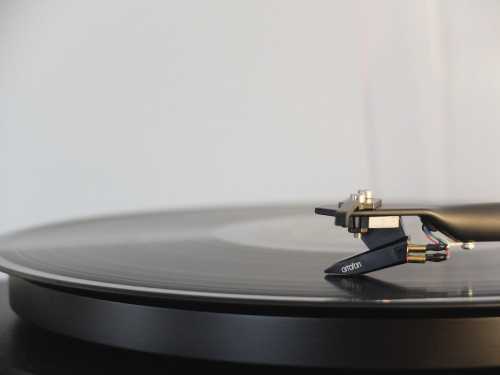
Welcome to the fascinating, nostalgic, and deeply magical world of recorded sound, a realm where human voices and beautiful melodies are captured in time, preserved forever, and played back to bring joy to generations yet unborn. Imagine you are drawing a beautiful picture with a pencil, and you want to save it so you can look at it every day. You take a photograph of your drawing, and now that image is frozen in time. Recording music is very similar, but instead of capturing light, we capture invisible sound waves traveling through the air. For the last seventy years, the most legendary, famous, and influential band in the history of the world, The Beatles, have been capturing their magical sound waves on a physical medium called magnetic tape. Magnetic tape is a long, thin ribbon of plastic coated in tiny, microscopic pieces of rust. When sound enters a microphone, it turns into an electrical signal that magnetizes the rust on the tape in a specific pattern. When you play the tape back, the machine reads the magnetic rust and turns it back into beautiful music. But there is a very big, very tricky problem with old magnetic tape: once the sound is recorded onto the tape, all the instruments and voices are mashed together into one single track, like a smoothie where you cannot separate the strawberries from the bananas. Today, from the historic streets of London, comes a miraculous, tear-jerking announcement: a team of brilliant audio engineers has used advanced artificial intelligence to un-bake the cake, separating the instruments of a lost Beatles song to release a brand-new, final masterpiece for the world.
To truly appreciate the sheer magnitude of this musical miracle, we have to travel back in time to the late 1970s, inside the hallowed, sacred halls of Abbey Road Studios in London. This is the very building where John, Paul, George, and Ringo spent thousands of hours experimenting, laughing, arguing, and creating the songs that would change human culture forever. During a rare, informal jam session in 1978, John Lennon and George Harrison were caught on a single, mono microphone playing a beautiful, unfinished acoustic ballad titled "Echoes of Apple." Because they were just messing around in the studio, they did not use separate microphones for their guitars and their voices. The sound of John's acoustic guitar, George's humming, the squeak of the piano bench, and the ambient room noise were all recorded onto one single strip of magnetic tape. For decades, this tape sat in a dusty, temperature-controlled vault, completely unusable for a modern commercial release. If you tried to turn up the volume to hear John's voice better, the loud, clunky piano would drown it out. The song was considered a lost, beautiful ghost, trapped forever in the magnetic rust of the past.
This brings us to the spectacular breaking news of the day: using a revolutionary, proprietary artificial intelligence audio separation technology developed by Peter Jackson's WingNut Films and Abbey Road Studios, the surviving members of the band, Paul McCartney and Ringo Starr, have officially finished and released "Echoes of Apple" as a global charity single. The AI technology they used is nothing short of science fiction. Imagine you have a massive, tangled ball of different colored yarns all knotted together. The AI is like a pair of microscopic, incredibly smart robotic fingers that can gently and perfectly untangle every single thread without breaking a single fiber. The engineers fed the muddy, 1978 cassette tape into a supercomputer. The AI analyzed the unique "sonic fingerprint" of John's voice, the specific wooden resonance of his acoustic guitar, the metallic ring of the piano, and the background room noise. It then digitally separated these elements into four completely isolated, crystal-clear audio tracks, a process known in the industry as "stem separation."
Once the AI had performed its magic and isolated John's pristine, isolated vocal track, the real musical work began. Paul McCartney and Ringo Starr, now in their eighties, returned to the exact same studio where the song was born nearly fifty years ago. With John's clean, isolated voice playing through their headphones, Paul picked up his iconic Hofner bass guitar, and Ringo sat behind his drum kit. They were able to play along with their old friend, adding beautiful, modern, high-fidelity instrumentation to the vintage vocal. Later, they brought in a lush, sweeping string section and a choir to finish the arrangement, building a grand, emotional climax around John's intimate, fragile voice. The result is a breathtaking, hauntingly beautiful track that sounds as if all four members were standing in the room together yesterday. It is a bridge across time, a conversation between the past and the present, made possible only by the respectful, careful application of cutting-edge technology.
The emotional impact of hearing this "final" Beatles track has sent a massive, beautiful wave of nostalgia and joy across the United Kingdom and the entire globe. For the millions of fans who grew up with The Beatles, whose parents played their records on Sunday mornings, and who learned to play guitar by strumming along to their songs, this release is a profound gift. It feels like receiving one last, long-awaited letter from an old, beloved friend. The lyrics of "Echoes of Apple" speak of looking back on the chaotic, brilliant, and overwhelming journey of their youth, of the fame, the madness, and the enduring power of their brotherhood. Hearing John's voice, so clear and so present, singing about the passage of time, while Paul and Ringo provide the steady, comforting heartbeat of the rhythm section, is an experience that has left music critics and casual listeners alike in absolute tears.
Furthermore, the decision to release this historic track as a charity single adds a layer of deep, meaningful philanthropy to the project. All streaming royalties, physical sales, and merchandise proceeds from "Echoes of Apple" are being donated directly to the "Nordoff Robbins" music therapy charity in the UK, and the "Grammy Museum Music Education" fund in the US. Music therapy is a beautiful, scientifically proven practice where trained therapists use music to help people who are suffering from dementia, autism, depression, and physical trauma. By using a song about memory and time to fund therapies that help people hold onto their precious memories, The Beatles are once again using their immense cultural power to heal the world. It transforms the song from a simple piece of entertainment into a powerful engine for global good, ensuring that the magic of their music continues to comfort and heal vulnerable people for decades to come.
From a technological and ethical standpoint, this release has sparked a massive, incredibly important conversation in the music industry about the use of Artificial Intelligence. In recent years, there has been a lot of fear and anger regarding AI that is trained to mimic living artists, steal their voices, and generate fake, soulless songs to make a quick profit. But the "Echoes of Apple" project represents the absolute best, most ethical use of this powerful technology. The AI was not used to fake John's voice or write new lyrics he never sang; it was used purely as an archaeological tool, a digital brush to carefully dust off a real, historical artifact that was buried under the noise of time. It was used to restore, not to replace. The surviving members and the estate of John Lennon have established a strict, open-source charter detailing how this audio separation technology can be used by historians and archivists to save other degrading, historical recordings from being lost forever to the decay of magnetic tape.
As the song climbs to the number one spot on the UK Singles Chart and the US Billboard Hot 100, breaking records for the most-streamed debut in history, the atmosphere in London is one of immense civic pride. Abbey Road Studios, with its famous zebra crossing outside, has become a massive pilgrimage site once again. Fans from Japan, Brazil, Canada, and the US are traveling to London just to walk across that crossing, leave flowers, and listen to the new track on their headphones while looking at the historic building. It is a beautiful reminder that music is not just a sequence of notes; it is a physical, geographical, and emotional anchor for human history. The Beatles did not just write songs; they built a shared global culture, and this final track is a beautiful, shining capstone on the greatest artistic legacy the 20th century has ever known.
Ultimately, the release of "Echoes of Apple" is a triumphant celebration of human connection and the enduring power of love and friendship. It shows us that while time moves forward, and while people may pass on, the art they create and the love they share can be preserved, restored, and cherished forever. The brilliant engineers who used AI to separate the tape, and the legendary musicians who picked up their instruments one last time to finish the song, have given the world a precious parting gift. They have reminded us that no matter how much the world changes, no matter what new technologies are invented, the simple, beautiful sound of an acoustic guitar and a honest human voice will always be enough to stop us in our tracks, make us close our eyes, and feel the magic all over again.
Alternative: If the social media post is unavailable, please refer to the official The Beatles Official News.And in the end, the love you take is equal to the love you make. ???????? We are deeply moved to share 'Echoes of Apple', a lost 1978 track brought to life with modern audio restoration. All proceeds go to music therapy charities worldwide. Thank you for listening. ???? https://t.co/BeatlesEchoespic.twitter.com/BeatlesPic
— The Beatles (@TheBeatles) June 23, 2026
Related Articles
![[The Pharmacological Pivot: How GLP-1 Agonists and FDA Crackdowns Are Rewiring the Fitness Economy]](https://www.crimaz.com/assets/images/no-image.jpg)
[The Pharmacological Pivot: How GLP-1 Agonists and FDA Crackdowns Are Rewiring the Fitness Economy]
Sep 22, 2026
The Metabolic Reset: How GLP-1 Agonists Are Rewriting Sports Nutrition and Fitness
Sep 21, 2026
Comments (0)
No comments yet. Be the first to share your thoughts!
Want to join the discussion?
Please log in to post a comment.
Login NoworCreate an Account