
The Beauty Industry Extinction Event: How Gig-Economy Logistics and Regulatory Moats Are Consolidating Prestige Cosmetics

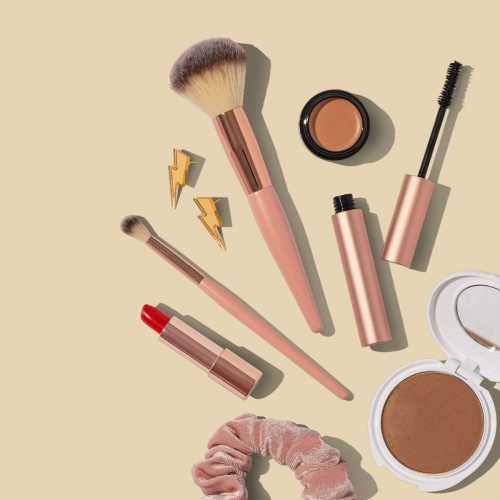
Imagine a Michelin-starred restaurant that suddenly partners with a gig-economy delivery app to ship its signature tasting menu in cardboard boxes. The food might arrive hot, but the exclusivity, the ambiance, and the fundamental justification for the premium price tag evaporate the moment it crosses the threshold. This is the precise structural paradox currently unraveling the prestige beauty sector in late 2026. The industry is aggressively cannibalizing its own high-touch retail mystique in a desperate bid for frictionless volume, while simultaneously facing a regulatory extinction event that is wiping out the very indie brands that drove its last decade of growth.
The Instant-Gratification Paradox and Margin Compression
The core catalyst for this market dislocation is the rapid normalization of hyper-convenience in prestige cosmetics. In May 2026, Ulta Beauty and Uber Eats formalized a nationwide partnership to deliver both mass and prestige beauty essentials on-demand, effectively reducing a $150 luxury serum to the same logistical category as fast food [[30]]. Mainstream coverage frames this as an omnichannel triumph, yet it ignores the severe margin compression and brand dilution it triggers. Prestige beauty relies on the "theater" of the retail environment—the lighting, the consultation, the tactile sampling—to justify a 70% gross margin. When a consumer orders a luxury foundation via a gig worker alongside their dinner, the product is instantly commoditized. Concurrently, NielsenIQ’s 2026 analysis highlights a violent migration of shopper priorities, demonstrating that consumers are increasingly abandoning experiential brick-and-mortar in favor of pure-play, frictionless digital consumption [[16]]. This shift strips legacy retailers of their primary defensive moat: the ability to control the physical point of sale.
The Algorithmic Blind Spot in Diagnostic Retail
As physical retail footprints contract, brands are pivoting heavily toward AI-driven diagnostic tools to replicate the in-store consultation experience. However, this technological substitution is introducing severe digital equity liabilities. A pivotal 2026 study by O’Higgins on AI and social sustainability in beauty retail explicitly warns that without fairness-aware governance, algorithmic diagnostic tools systematically misdiagnose diverse skin tones and undertones, alienating the exact demographics driving market growth [[17]]. When a brand’s flagship AR foundation-matching tool consistently fails consumers with higher melanin levels, it does not merely result in a lost sale; it generates viral, brand-damaging social proof that destroys customer lifetime value (CLV). The unseen implication is that the rush to deploy generative AI in beauty retail is creating a hidden liability of algorithmic bias that will inevitably trigger regulatory scrutiny from consumer protection agencies.
Counter-Argument: The Volume Defense of Hyper-Convenience
Proponents of the on-demand delivery model argue that hyper-convenience is the only viable mechanism to capture impulse purchases from time-poor, high-net-worth consumers. From this perspective, the marginal brand dilution is an acceptable trade-off for the sheer volume of incremental, top-of-funnel sales that gig-economy integration provides. They contend that a consumer who needs a luxury setting powder for an evening event will pay a premium for 30-minute delivery, generating high-velocity revenue that offsets the loss of the in-store "theater." While this argument holds mathematical validity for high-frequency, low-consideration consumables like mascara or setting sprays, it fundamentally misapplies to high-consideration, prestige skincare. A consumer will impulse-buy a $30 lip gloss on Uber Eats; they will not impulse-buy a $350 cellular repair cream without the tactile validation of a physical counter.
The Indie Beauty Extinction Event
Beneath the retail maneuvering lies a profound structural reset driven by the enforcement of the Modernization of Cosmetics Regulation Act (MoCRA) and aggressive global bans on per- and polyfluoroalkyl substances (PFAS). For the past decade, the "clean beauty" movement thrived in a regulatory gray zone, allowing undercapitalized indie brands to launch rapidly with minimal safety substantiation. That era has definitively ended. The mandatory adverse event reporting, facility registration, and rigorous safety substantiation requirements of MoCRA impose a fixed compliance cost that is mathematically incompatible with the margins of micro-brands. Furthermore, the complex, global phase-out of PFAS—often used inadvertently in waterproof mascaras and long-wear foundations—requires complete supply chain audits that only legacy conglomerates can afford. The result is a mass extinction event for independent beauty brands, which are being forced to either sell to private equity at distressed valuations or cease operations entirely.
Echoes of the Craft Beer Consolidation
This trajectory perfectly mirrors the craft beer consolidation bust of the late 2010s. Between 2010 and 2015, the "drink local" movement exploded, driven by consumers seeking authentic, small-batch alternatives to macro-breweries. However, as distribution laws tightened, input costs rose, and shelf space became saturated, the vast majority of these indie brewers lacked the capital to scale. The market subsequently underwent a brutal correction, with macro-conglomerates acquiring the surviving indie brands at pennies on the dollar, while hundreds of others simply collapsed. The historical lesson for the beauty sector is unequivocal: a fragmented, low-barrier-to-entry market inevitably consolidates when regulatory and logistical overhead scales. The legacy beauty conglomerates are currently waiting out the indie extinction event, preparing to acquire the surviving intellectual property and formulations once the distressed valuations hit their floor.
Counter-Argument: The Public Health Imperative
Conversely, industry watchdogs and consumer advocacy groups argue that the aggressive enforcement of MoCRA and PFAS bans is a long-overdue public health imperative that legitimizes the entire sector. They contend that the "clean beauty" marketing machine relied heavily on fear-mongering and unverified safety claims, allowing untested botanical preservatives and endocrine disruptors to flood the market. From this viewpoint, the collapse of undercapitalized indie brands is not a market failure, but a necessary correction that weeds out unsafe, "greenwashed" startups. While the public health argument is empirically sound regarding heavy metals and PFAS, it ignores the disproportionate burden placed on minority-owned and female-founded micro-enterprises, effectively pulling up the ladder and cementing the monopoly power of legacy houses that can absorb the compliance overhead.
Strategic Imperatives for Market Participants
For Legacy Conglomerates and Private Equity: Establish distressed-asset acquisition pipelines immediately. Monitor the cash burn rates of highly visible but undercapitalized indie skincare brands; their intellectual property and social media audiences will soon be available at liquidation pricing.
For Independent Founders: Pivot immediately away from direct-to-consumer (DTC) physical goods. Transition your business model into intellectual property licensing, selling your proprietary formulations and brand aesthetics to legacy houses that possess the infrastructure to navigate MoCRA compliance and global PFAS bans.
For Local Retail Operators and Med-Spas: Abandon the race to the bottom on transactional convenience. Double down on high-touch, service-based revenue models—such as clinical extractions, bespoke compounding, and in-person diagnostic consultations—that cannot be replicated by a gig-economy delivery driver or a biased AI algorithm.
The Six-Month Horizon: Bifurcation and Compliance
Within the next two quarters, the beauty landscape will sharply bifurcate into two distinct operational tiers. We will witness the first major wave of MoCRA-related bankruptcies among mid-tier indie brands, triggering a consolidation phase that will reduce the number of active SKUs on prestige retail shelves by an estimated 20%. Simultaneously, the first class-action lawsuits targeting beauty brands for algorithmic bias in their AI diagnostic tools will be filed, forcing the industry to adopt standardized, third-party audits for digital equity. The era of frictionless, unregulated indie beauty is over; the era of forensic compliance and consolidated market share has begun.
Related Articles

The Fiat Currency of Hype: How Financialization and Regulatory Whiplash Are Dismantling Streetwear
Sep 22, 2026
The Streetwear Repricing: How Resale Collapse and Corporate Consolidation Are Rewriting the Hype Playbook
Sep 21, 2026
Comments (0)
No comments yet. Be the first to share your thoughts!
Want to join the discussion?
Please log in to post a comment.
Login NoworCreate an Account