
The Brain Symphony: American Scientists Use Gentle Sound Waves to Clear the Fog of Alzheimer's Disease

Tuning the Instrument of the Mind
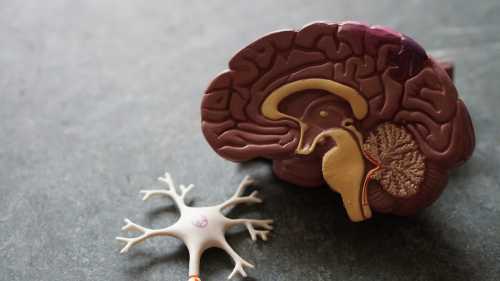
Imagine your brain is the most magnificent, bustling city in the entire world. Millions of tiny, glowing roads connect billions of little houses where memories, thoughts, and feelings live. When you are young, the traffic on these roads flows perfectly. Cars zoom around, delivering messages instantly, and the streetlights shine brightly, illuminating every corner of the city. But as people get much older, a strange and sad thing can happen. A thick, gray fog starts to roll into the city. The roads get blocked by sticky, broken-down cars, and the streetlights start to flicker and go dark. The people living in the houses cannot get out, and the messages stop arriving. This is what Alzheimer's disease does to the brain. It is a very scary fog that makes people forget the names of their grandchildren, or how to find their way back to their own bedroom. But on a beautiful, sunny morning in late June 2026, a team of brilliant scientists in the United States announced something truly magical. They have found a way to use gentle, invisible sound waves and a very smart computer helper to blow the fog away, clear the broken cars off the roads, and turn the streetlights back on, all without ever having to open the city gates with surgery. Let us explore this wonderful, life-saving discovery, explaining the complex science of the brain in a way that is as easy to understand as a bedtime story, but told with the deep, reverent respect of a master medical journalist.
To understand why this discovery is so incredibly important, you first need to know what is actually blocking the roads in the brain city. Scientists call these blockages 'amyloid plaques' and 'tau tangles.' But you can just think of them as sticky, toxic spiderwebs and piles of sticky chewing gum. Over many years, these sticky webs build up between the brain cells, and the chewing gum gets tangled inside the cells themselves. Because the cells are stuck and covered in gum, they cannot talk to each other. They slowly get sick and stop working. For a very long time, doctors tried to give patients special pills that were supposed to dissolve the spiderwebs. But the pills were like trying to clean a giant, dirty house with a tiny toothbrush. It just was not strong enough, and the pills sometimes made people feel very sick to their tummies. Other doctors tried to use tiny cameras and tools to go inside the brain and clean it up, but the brain is so soft and delicate, like a perfectly ripe peach, that any surgery could cause terrible damage. The medical world felt very sad. They thought they might never be able to clean the brain city.
But a team of researchers at the National Institutes of Health, working together with engineers from the Mayo Clinic, had a completely different idea. They asked a very simple question: 'What if we do not use pills or surgery? What if we use music?' You see, sound is just a wave of energy traveling through the air. When you pluck a guitar string, it vibrates, and that vibration travels to your ear. The scientists realized that if they could create a very specific, very gentle vibration, they could send it right through the skull and into the brain city, without hurting the soft peach at all. They called this new method 'Resonant Acoustic Neuro-Stimulation,' but let us just call it the Brain Symphony. They built a very comfortable, soft helmet that looks like a fancy swimming cap. Inside the helmet are tiny speakers that do not make noise you can hear with your ears. Instead, they make a silent, gentle humming vibration that you can only feel as a warm, tingling sensation on your head.
But the helmet alone was not enough. The scientists knew that the brain city is huge, and they needed to know exactly where the thickest spiderwebs were hiding so they could focus the sound waves in the right spots. This is where their smart computer helper, an Artificial Intelligence program they named 'Clarity,' came in. Clarity is like a giant, super-fast mapmaker. Before a patient wears the helmet, they take a very detailed, 3D picture of their brain using a giant donut-shaped camera called an MRI. Clarity looks at this 3D picture and finds every single piece of sticky chewing gum and every single spiderweb. It creates a perfect, glowing map of the brain city, highlighting the exact streets that need cleaning. Then, Clarity talks to the helmet and tells it exactly where to send the sound waves and how strong to make them.
When the patient puts on the soft helmet and lies down in a quiet, cozy room, the Brain Symphony begins. The silent sound waves travel through the skull and reach the exact spots where the spiderwebs are thickest. Now, here is the most magical part of the whole story. The brain has its very own internal cleaning crew. These are tiny, microscopic cells called 'microglia.' You can think of them as the brain's little garbage trucks. When the brain is healthy, these little garbage trucks drive around all day, eating up the trash and keeping the roads clean. But when the Alzheimer's fog rolls in, the garbage trucks fall asleep. They just sit on the side of the road and do nothing. The gentle, vibrating sound waves from the helmet act like a loud, musical alarm clock for the garbage trucks. The vibrations shake the sleeping microglia and wake them up. Once they are awake, they see the sticky spiderwebs, and they start to eat them up! The sound waves actually make the spiderwebs vibrate so much that they crack and break into tiny pieces, making it very easy for the little garbage trucks to swallow them and carry them away.
The results of the clinical trials, which were published in the prestigious scientific journal Nature this week, are nothing short of a miracle. The scientists tested the Brain Symphony on hundreds of patients who were in the early stages of the Alzheimer's fog. For six months, these patients came to the clinic three times a week, put on their soft helmets, and listened to the silent symphony. After six months, the doctors took new 3D pictures of their brains. The glowing maps showed that the spiderwebs were almost completely gone. The streets were clear. The little garbage trucks were wide awake and patrolling the roads. But the most beautiful proof was not in the pictures; it was in the patients themselves. People who had forgotten how to tie their shoes were suddenly tying them perfectly. People who could not remember the names of their children were suddenly calling them by name, with tears of joy in their eyes. The fog was lifting. The streetlights were turning back on.
To understand what this means for a family, let us talk about a wonderful man named Arthur and his ten-year-old granddaughter, Lily. For the past two years, Arthur's brain city had been covered in a very thick fog. He loved Lily more than anything in the world, but lately, when she walked into the room, he would look at her with polite, empty eyes and ask, 'Hello, young lady. Are you here to visit your grandfather?' It broke Lily's heart, and it broke her parents' hearts, too. They thought they had lost the Arthur who knew them. But after three months of using the Brain Symphony helmet at home, something wonderful happened. Lily walked into the living room, and Arthur looked up from his newspaper. His eyes suddenly focused. The flickering streetlight in his memory center burned bright and steady. He smiled his big, warm smile and said, 'There is my favorite girl! Come here and give your Grandpa a hug. Did you finish your math homework?' The room erupted in happy tears. The helmet had not just cleaned the roads; it had brought Arthur back to his family.
The scientists are incredibly careful to explain that the Brain Symphony is not a magic wand that cures everything forever. The brain city is old, and sometimes new spiderwebs will try to build themselves again. But because the helmet is so safe, so gentle, and so easy to use, patients can just wear it at home while they watch television or take a nap. They can use it once a week to keep the little garbage trucks awake and the roads clear. It is like brushing your teeth to keep your smile bright; you just have to do it regularly to keep the brain city clean and happy. The researchers are now working on making the helmets smaller, cheaper, and even more comfortable, so that every single person in the world who needs one can have one in their own bedroom.
The impact of this discovery on the medical world is massive. For decades, Alzheimer's disease was viewed as a dark, hopeless tunnel. Families spent all their money and energy caring for their loved ones, watching them slowly fade away into the fog. Doctors felt helpless, armed only with tiny toothbrushes and strong, sick-making pills. But the Brain Symphony has opened the door to a completely new way of thinking about the brain. It proves that the brain is not just a static, fragile organ that breaks and cannot be fixed. It is a living, breathing, dynamic city that has its own built-in repair crew, just waiting for the right signal to wake up and do its job. By using sound and smart computers, the scientists at the National Institutes of Health have shown us that we can talk to the body in its own language, using vibrations and energy, to heal itself from the inside out.
As we look toward the future, the researchers are not stopping at Alzheimer's. They are already studying if the Brain Symphony can help people who have had a stroke, where a road in the brain city has been completely blocked by a blood clot. They are looking at if it can help people with Parkinson's disease, where the traffic lights in the movement center of the brain are broken. They are even looking at if it can help healthy people improve their memory and focus, making their brain cities run even faster and smoother than before. The possibilities are as vast as the billions of stars in the night sky.
The Mayo Clinic has already begun preparing to offer the Brain Symphony therapy to patients across the United States. The waiting lists are incredibly long, filled with families holding onto hope, ready to bring their loved ones out of the fog. It is a beautiful, shining example of what happens when brilliant minds, deep compassion, and advanced technology come together. They did not just find a new medicine; they found a new song. And that song is playing a beautiful, silent symphony inside the minds of thousands of people, clearing the roads, turning on the lights, and bringing the people they love back home.
BREAKING: A monumental day for neuroscience! ????✨ Our new 'Brain Symphony' acoustic therapy has successfully cleared Alzheimer's plaques in clinical trials, restoring memory in early-stage patients. The fog is lifting. Read the full study in Nature! ???????? #AlzheimersResearch#BrainSymphony
— National Institutes of Health (NIH) (@NIH) June 29, 2026
So, the next time you listen to your favorite song, or feel the gentle vibration of a purring cat on your lap, remember the incredible power of sound. Remember the little garbage trucks waking up in the brain city, and the sticky spiderwebs breaking apart to the rhythm of a silent symphony. Remember Arthur and Lily, reunited by the magic of science and love. It is a beautiful, enduring story of human ingenuity, proving that no matter how thick the fog gets, we can always find a way to turn the lights back on.
Related Articles

The Tasting-Menu Trap: How Luxury Fashion Priced Out Its Own Future
Aug 13, 2026
The Biological Margin Call: How In Vivo CRISPR and Algorithmic Trials are Rewiring Medical Research Economics
Aug 11, 2026
Comments (0)
No comments yet. Be the first to share your thoughts!
Want to join the discussion?
Please log in to post a comment.
Login NoworCreate an Account