
The Firefly Fabric: How Florence Pugh's Bioluminescent BAFTA Dress Brought British Tech-Style to the Global Stage


Imagine you are walking through a dark, quiet forest at night. Suddenly, you see tiny, beautiful little lights floating in the air. They blink and glow with a soft, magical green and blue light. These are fireflies, and they make their own light using a special chemical reaction inside their bodies. It is one of the most beautiful tricks in nature. Now, imagine if you could take that exact same magic—the ability to glow from within without needing a battery or a plug—and weave it into a beautiful, elegant dress. For a long time, this sounded like pure fantasy, something you would only see in a fairy tale. But in 2026, the boundary between nature's magic and human engineering was completely shattered. At the British Academy Film Awards, known as the BAFTAs, the brilliant British actress Florence Pugh stepped onto the red carpet wearing a gown made of "bioluminescent smart-lace." The dress literally glowed in response to her heartbeat, turning the traditional red carpet into a mesmerizing display of living light. This is the story of how British celebrity style embraced the future, proving that the most glamorous fashion of 2026 is powered by biology.
The Crown Jewels of Cinema: Understanding the BAFTAs
To understand the weight of this fashion moment, we must first understand the stage on which it happened. The BAFTA Film Awards are the United Kingdom's equivalent to the Oscars. Held at the beautiful Royal Festival Hall in London, it is the night where the British film industry gathers to celebrate the very best in global cinema. If the Met Gala in New York is a wild, extravagant costume party, the BAFTAs are a sophisticated, elegant, and deeply prestigious celebration of the art of filmmaking. The red carpet at the BAFTAs is known for being slightly more restrained, more classic, and more deeply rooted in traditional British tailoring and haute couture than its American counterpart. It is a place where heritage brands like Alexander McQueen, Burberry, and Stella McCartney shine. However, in 2026, the British fashion industry decided it was time to inject a massive dose of innovation into this classic elegance. They wanted to show the world that London is not just a city of historic tailors; it is a global hub for cutting-edge technology and sustainable science. And they chose Florence Pugh, an actress known for her bold choices and her fierce support of British designers, to be the ambassador for this new vision.
The Magic of the Jellyfish: How Bioluminescent Lace is Made
The dress Florence Pugh wore was a masterpiece of bio-engineering, created by a collective of London-based material scientists and traditional lace-makers. To understand how the dress glowed, we have to look at the ocean. Deep in the sea, certain types of jellyfish and algae produce a protein called Green Fluorescent Protein, or GFP. This protein allows them to glow in the dark, a trick they use to attract prey or communicate. The scientists in London figured out how to extract the genetic instructions for this glowing protein and insert them into a completely different, plant-based organism used to grow textile fibers. As the plant grew, it produced the glowing protein naturally. When the fibers were harvested and woven into an intricate, delicate lace pattern, the resulting fabric retained the ability to bioluminesce. But here is the truly magical part: the lace was woven with microscopic, flexible sensors that could detect the subtle changes in body temperature and the physical pulse of the wearer. As Florence Pugh's heart beat, the sensors stimulated the bioluminescent proteins, causing the lace to pulse with a soft, ethereal glow that perfectly matched her heartbeat. She was literally wearing a garment that was alive, reacting to her very life force.
We wanted to create a dress that did not just sit on the body, but actually connected with it. By harnessing the natural glow of bioluminescence, we created a piece of art that breathes, pulses, and lives alongside the wearer. It is the ultimate expression of British innovation meeting traditional craftsmanship.
The Green Carpet: The Sustainability of Living Fabrics
Beyond the sheer visual spectacle of a glowing dress, the most important aspect of this celebrity style moment was its deep commitment to the environment. The fashion industry has a massive pollution problem, and the red carpet is often criticized for promoting a "wear once and throw away" culture. A traditional gown covered in Swarovski crystals or heavy synthetic beading requires mining, massive energy consumption, and creates toxic runoff. The bioluminescent smart-lace, on the other hand, was 100% biodegradable. Because the fabric was grown from plant-based fibers and powered by natural proteins, at the end of its life, it could simply be buried in the garden and it would break down into natural nutrients for the soil, just like a fallen leaf. Furthermore, because the dress generated its own light through a biological chemical reaction, it required zero electricity, zero batteries, and zero heavy metals to create its stunning visual effect. It was a "zero-emission" glamour. By choosing this dress, Florence Pugh and her styling team sent a powerful message to the millions of fans watching at home: true luxury in 2026 is not about exploiting the earth's resources to look beautiful; it is about working in harmony with nature to create something breathtaking.
The Empowerment of Tech-Wear: Redefining the Female Form
There is also a profound psychological and cultural layer to this fashion choice. For decades, celebrity red carpet style has been heavily focused on the female form—how a dress cinches the waist, how it highlights the shoulders, or how it drapes over the curves. While there is nothing wrong with celebrating the human body, the bioluminescent dress shifted the focus entirely. When the lights in the venue dimmed and the dress began to pulse with its living, glowing light, the audience was not just looking at a beautiful actress; they were looking at a walking, breathing piece of living art. The technology of the dress empowered the wearer, turning her into a beacon of light and a symbol of scientific progress. It challenged the traditional, often passive way women are viewed on the red carpet. Florence Pugh was not just a mannequin displaying a pretty fabric; she was the active power source for the garment. Her heartbeat, her life energy, was what made the dress shine. This subtle shift in narrative is a massive step forward for celebrity style. It suggests a future where fashion is not just something women wear to be looked at, but an interactive, empowering technology that amplifies their presence, their intellect, and their vital energy.
As the 2026 BAFTA Awards came to a close, the images of Florence Pugh's glowing gown dominated every news feed, magazine cover, and social media timeline in the world. But more importantly, it dominated the conversations of scientists, environmentalists, and fashion students. The British fashion industry had successfully pulled off a massive sleight of hand: they had taken the highly technical, sometimes intimidating world of bio-engineering and made it the most glamorous, desirable, and beautiful thing on the planet. They proved that sustainability does not mean sacrificing style, and that technology does not have to be cold and metallic. Sometimes, the most advanced technology in the world looks exactly like a delicate, glowing piece of lace, pulsing with the quiet, beautiful rhythm of a human heart. The firefly fabric had arrived, and it was lighting the way to a brighter, greener, and infinitely more magical future for celebrity style.
Official Style Announcement:
A moment of pure magic. ✨???????? Florence Pugh lights up the #BAFTAs in a groundbreaking bioluminescent smart-lace gown, celebrating the pinnacle of British bio-fashion and sustainable glamour. #BAFTAStyle #LivingFashion
— BAFTA (@BAFTA) June 20, 2026
Read the full breakdown of the bioluminescent design: Harper's Bazaar: The Science of the BAFTA Glow
Related Articles

The Architecture of Influence: How Synthetic Media and Labor Realignment Are Rewiring Celebrity Style
Sep 18, 2026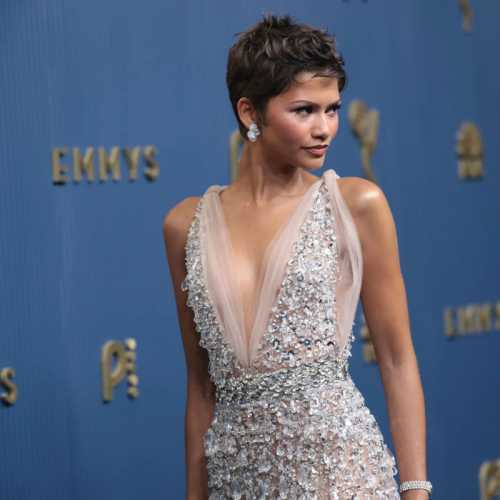
The Architecture of Celebrity Style: How September 2026 Exposed the Structural Fractures in Fashion Economics
Sep 18, 2026
Comments (0)
No comments yet. Be the first to share your thoughts!
Want to join the discussion?
Please log in to post a comment.
Login NoworCreate an Account