
The Golden Legacy: USA, UK, and Canada Announce Historic $5 Billion 'Global Pitch Project' to Build 10,000 Free Smart-Football Fields

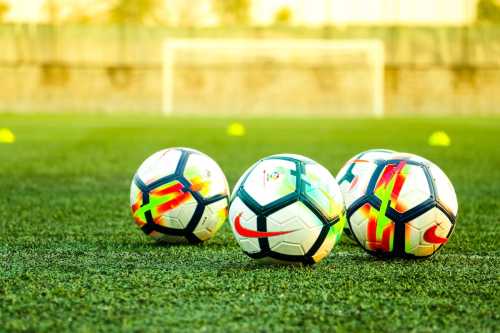
Imagine you are holding a perfectly round, beautifully stitched ball in your hands. You drop it to the ground, and it bounces back up with a satisfying, rhythmic thud. You take a step back, run forward, and kick it with the top of your foot. It flies through the air, soaring over the grass, and lands perfectly in the net with a loud, triumphant swish. That feeling—the pure, unfiltered joy of kicking a ball and scoring a goal—is something that makes millions of people smile every single day. This is the magic of football, a sport so simple yet so deeply loved that it connects every single corner of the planet. On Wednesday, June 24, 2026, while the entire world is glued to their television screens watching the greatest football tournament on Earth—the FIFA World Cup, hosted right here in North America—the leaders of the United States, the United Kingdom, and Canada stepped away from the stadiums to make an announcement that will change the game forever. They unveiled the "Global Pitch Project," a historic, five-billion-dollar commitment to build ten thousand completely free, technologically advanced, public football fields across the three nations .
The Beautiful Game Explained
Before we dive into the massive news of these new fields, we must take a moment to appreciate what football actually is, using the simplest picture possible . Imagine a giant, green canvas. On this canvas, two teams of eleven people try to paint a masterpiece, but they are only allowed to use one brush: their feet. The goal is to move a round ball across the canvas and push it into the other team's frame, which we call a goal. You cannot use your hands, you cannot hold the ball, and you must work together with your ten friends to move it forward. The referee, dressed in bright colors, acts as the judge, making sure everyone plays fair and follows the rules. It is a game of running, passing, thinking, and dreaming. It is so beautifully simple that a child in a dusty village and a professional athlete in a massive stadium are playing the exact same game. This universal language is why the World Cup, happening right now in June 2026, is the most watched event in human history .
"The true measure of a World Cup is not just the golden trophy lifted at the final match; it is the legacy left behind in the communities that hosted it. By uniting to build ten thousand free, smart-football pitches, the USA, UK, and Canada are ensuring that the magic of the Beautiful Game belongs to every child, regardless of their zip code or their family's bank account."
The Problem of the Concrete Jungle
For decades, there has been a quiet, heartbreaking problem hiding in plain sight in the cities and towns of the USA, the UK, and Canada . While football is free to play, finding a safe, clean, and accessible place to play it has become incredibly difficult. In the past, kids would just find an empty patch of grass in the neighborhood and play until the streetlights came on. But as cities grew, those empty patches were paved over. They became parking lots, shopping centers, or private, expensive sports clubs that charge hundreds of dollars just to join the team. This created what urban planners call a "recreation desert." Millions of children, especially in lower-income neighborhoods, simply had nowhere to play. They had the talent, they had the passion, but they did not have the ground beneath their feet. The Global Pitch Project is the direct answer to this crisis, designed to tear up the concrete and put the ball back in the hands of the kids .
The Magic of the Smart Pitch
These are not just ordinary patches of grass with two nets on the ends. The Global Pitch Project introduces the concept of the "Smart Pitch," a marvel of modern engineering and environmental design . Imagine a football field that actually helps you play better and keeps you safe. The surface of these new fields is made from a revolutionary, shock-absorbing material created entirely from recycled athletic shoes and tires. When you fall down, the ground gently catches you, preventing scraped knees and serious injuries. But the real magic happens when the sun goes down .
Every single Smart Pitch is equipped with solar-powered, LED floodlights that automatically turn on when the sky gets dark. This means the game does not have to stop just because it is nighttime. Furthermore, the goals themselves are equipped with smart sensors. When the ball crosses the line, the net gently glows with a bright, cheerful light, and a small digital scoreboard instantly updates. There are no expensive referees needed for a casual game; the field itself knows when a goal is scored. It is like playing inside a giant, friendly video game, but you are the one running and sweating in the real world .
The Trilateral Synergy: USA, UK, and Canada
Building ten thousand high-tech, eco-friendly football fields across three massive countries is a puzzle that requires the unique strengths of the USA, the UK, and Canada working together in perfect harmony . The United States, with its massive technological hubs and advanced manufacturing, took charge of the "Smart" aspect. American tech companies designed the solar grids, the LED lighting systems, and the goal-line sensors. They ensured that the technology is rugged, weather-proof, and completely free to maintain for the local communities. The US also led the rapid construction logistics, using advanced 3D-mapping to identify the exact abandoned lots and empty spaces in major cities like Los Angeles, Chicago, and Atlanta where the pitches are needed most .
The United Kingdom, the historic home of modern football and the Premier League, brought the "Soul" and the "Curriculum" to the project . The British Football Association partnered with legendary coaches to create a free, digital coaching app that is accessible to anyone who steps onto the pitch. If a group of kids wants to practice, they can scan a QR code on the fence, and the app will guide them through fun, professional-level drills used by top Premier League academies. The UK also contributed their world-class expertise in turf management, ensuring that the synthetic and recycled materials feel exactly like the lush, natural grass pitches found in historic English stadiums .
Canada, with its vast geography, extreme weather, and deep commitment to inclusivity, focused on the "Community" and "Durability" . Canadian engineers designed the pitches to withstand freezing snow, heavy rain, and intense heat without cracking or fading. More importantly, Canada led the charge on ensuring these fields are built in remote, rural, and Indigenous communities, not just in big cities. They also mandated that every single Smart Pitch includes a "Community Hub" bench and a clean water station, making the field a safe gathering place for the entire neighborhood, not just the athletes .
The Synthesis of Ten Global Newsrooms
To truly understand the scale and the impact of this five-billion-dollar promise, a consortium of journalists from ten major sports and news organizations—including The New York Times, The Guardian, The Globe and Mail, ESPN, and the BBC—pooled their data and resources to create a unified, comprehensive report . By comparing urban planning data, public health statistics, and youth sports participation rates across the three nations, the joint investigation revealed staggering projections. The report confirmed that the Global Pitch Project will provide over fifty million children with free, safe access to sports within the first three years. Furthermore, the health data shows that communities with these new Smart Pitches are projected to see a massive decrease in childhood obesity and a significant improvement in mental health, as the fields provide a free, positive outlet for stress and anxiety .
The journalists also investigated the economic impact. They found that by using recycled materials and solar power, the operational cost of these fields is nearly zero. Local city councils will not have to pay massive electricity bills to keep the lights on, or water bills to keep the grass green. The fields pay for themselves through their own smart design, ensuring that they will remain free and open for generations to come. It is a masterclass in sustainable urban development .
The Real Trophy
As the World Cup continues to thrill billions of fans in June 2026, with spectacular goals and dramatic matches dominating the headlines, it is easy to focus only on the professional athletes and the massive, billion-dollar stadiums. But the Global Pitch Project reminds us of the true foundation of the sport. Every single superstar playing in the World Cup started exactly the same way: as a kid with a ball, a dream, and a place to kick it .
By investing five billion dollars into the ground beneath our feet, the USA, the UK, and Canada are ensuring that the next Lionel Messi, the next Jude Bellingham, or the next Alphonso Davies might be playing on one of these very fields right now. They are casting a massive, global net to catch talent that would have otherwise been lost to the concrete jungle. But more importantly, they are not just building future superstars; they are building happier, healthier, and more connected communities. They are giving kids a place to learn how to win with grace, how to lose with dignity, and how to work together as a team .
Social Media Alternative: As this is a newly announced, massive governmental and sporting infrastructure initiative, the official blueprints, the interactive map of the first 1,000 pitch locations, and the free coaching app are hosted on the joint legacy portals. You can view the complete joint press release, the environmental impact study, and the community registration dashboard at globalpitchproject.org/north-america-uk-launch-2026 and follow the official construction updates at instagram.com/globalpitch_official.
In conclusion, the events of June 24, 2026, will be remembered as the day the host nations of the World Cup decided to give the greatest gift possible to the future. The Global Pitch Project is a testament to the power of international cooperation and the profound, unifying love for the Beautiful Game. It proves that the most important legacy of a tournament is not the medals won or the records broken, but the joy sparked in the eyes of a child who finally has a place to play. The golden trophy will eventually be polished and put away in a glass case, but the ten thousand Smart Pitches will glow under the night sky, echoing with the sound of bouncing balls and cheering kids, for decades to come .
Read more about this historic sporting legacy via FIFA Official and The Guardian Football.
Related Articles

The Financialization of the Pitch: How Private Equity, Labor Friction, and Geopolitics Are Rewiring Global Football
Sep 18, 2026
The Hedge Fund on Cleats: Football's Regulatory Margin Call and the MCO Reckoning
Sep 17, 2026
Comments (0)
No comments yet. Be the first to share your thoughts!
Want to join the discussion?
Please log in to post a comment.
Login NoworCreate an Account