
The Great American Concert Paradox: Why Live Music Revenue is Skyrocketing While Streaming Growth Slows Down in 2026

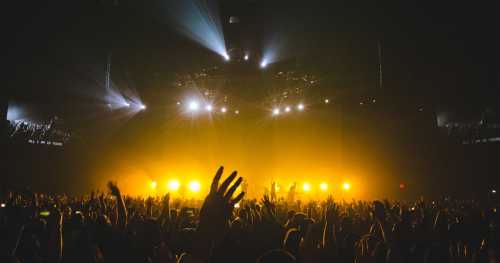
Imagine you have a magical jukebox in your house. For a few dollars a month, you can press a button and listen to almost any song ever recorded. This is what we call "streaming." It is incredibly convenient, and for a long time, it was the undisputed king of the music industry. But there is a secret about this magical jukebox: every time you press the button, the singer and the songwriter only get a tiny, tiny fraction of a penny. To make a real living, artists used to need millions and millions of streams. But in 2026, the American music industry is experiencing a massive, fascinating paradox. While the growth of streaming is starting to slow down, the amount of money being made from live concerts is exploding to all-time highs. Let us break down exactly what is happening, why a concert ticket costs so much more than it used to, and how the "mega tour" trend is completely rewriting the rules of the music business.
The Industry Shift: In 2025 and heading into 2026, the music industry faces exceptional challenges, including slowing streaming growth and all-time high concert ticket prices, even as live event revenues shatter previous records variety.com .
The Math of Streaming vs. The Magic of Touring
To understand this paradox, we first need to understand how artists actually make money. Think of streaming like renting an apartment. You pay a small amount every month, and you get to live there, but you do not own the building. The landlord (the streaming platform) keeps the vast majority of the money. When you stream a song on Spotify or Apple Music, the payout to the artist is roughly three-tenths of a cent. If an artist has a moderate hit song that gets one million streams, they might only take home about $3,000. That sounds like a lot, but remember that the record label, the producer, and the songwriter all need a piece of that $3,000. By the time it reaches the singer, it might only be enough to buy a nice dinner.
Now, think of a concert ticket like buying a house. It is a massive, one-time purchase. When a fan buys a ticket to see their favorite artist, the revenue is enormous. A single ticket might cost $150, and if the artist is playing a stadium that holds 50,000 people, that is $7.5 million in gross revenue for just one night. This is why, for the last decade, artists have complained that they have to tour constantly just to survive. The streaming pays for the coffee; the touring pays for the mortgage. But recently, the touring side of the business has stopped being just a survival tactic and has become a massive, booming empire.
The "Mega Tour" Phenomenon Explained
In the past, when an artist released a new album, they would go on a traditional tour. They would play in theaters that hold 2,000 people, then maybe some arenas that hold 15,000 people, and they would do this for a year and a half, visiting almost every city in the country. This was exhausting, expensive, and logistically difficult. Moving a massive truck convoy of instruments, lights, and costumes from city to city every single day costs a fortune.
Enter the "mega tour" trend. Instead of playing 100 small shows, the biggest artists in the world are now playing only 40 or 50 massive stadium shows imusician.pro . They stay in one city for three, four, or even five nights in a row. This is incredibly efficient. The massive, multi-million-dollar stage setup only has to be built once. The crew only has to travel once. And because the stadiums are so huge, the number of tickets available is astronomical. This shift in strategy is the primary reason why the financial numbers for live music look so incredible right now.
The Numbers: The increase in revenue is staggering, with 2025's per-show average reflecting a massive 32.1 percent jump over the prior year, driven by these highly efficient stadium runs news.pollstar.com .
The Fan Experience: Attendance is Up, But at What Cost?
You might think that if tickets are so expensive, people would stop going to concerts. But the exact opposite is happening. According to industry data, concert attendance actually rose by 20 percent compared to pre-pandemic levels, with total revenue rising by 36 percent overall www.thembj.org . Why? Because humans are social creatures. After years of being isolated behind screens and in our homes, there is a deep, psychological craving to gather together, to sing along with 50,000 other people, and to feel the bass in our chests. Live music provides an emotional release that a smartphone simply cannot replicate.
However, this massive demand has created a severe affordability crisis. Because everyone wants to go, and there are only so many seats in a stadium, ticket prices have reached all-time highs variety.com . Artists and promoters have introduced "dynamic pricing," which works exactly like airline tickets. If a lot of people are trying to buy tickets for a specific night, the computer automatically raises the price. A seat that was originally $80 might suddenly become $400 in a matter of minutes. This has led to massive frustration among fans, who feel priced out of seeing the artists they love. The industry is currently having a very difficult conversation about how to balance the massive costs of putting on a stadium show with the need to keep music accessible to everyday people.
Where Does All That Money Actually Go?
When you pay $200 for a concert ticket, it is easy to assume the singer is buying a third yacht with that money. But the economics of a live show are incredibly complex. First, the venue takes a massive cut for the use of the stadium. Then, the local government takes taxes. Then, you have to pay the hundreds of union workers who build the stage, rig the lights, and run the soundboards. You have to pay for the insurance, the security guards, the medical tents, and the massive generators that power the event.
After all those expenses are paid, the remaining profit is split between the promoter (the company that takes the financial risk of organizing the show) and the artist. Even for the biggest superstars in the world, the profit margin on a single show is only a fraction of the gross revenue. The reason artists continue to tour is not because they are greedy; it is because the physical production of a modern stadium show requires an army of people and a mountain of capital. The "mega tour" is a high-stakes business venture, and the 36 percent revenue increase is necessary just to keep the lights on and the crew employed.
The US Market: The United States remains the world's single largest recorded music market, but the live sector is currently outpacing the digital sector in terms of pure revenue growth and cultural impact www.ifpi.org .
The Psychological Shift in Music Consumption
This paradox between streaming and touring tells us something profound about how we value art in the 21st century. We have become so used to digital content being cheap, or even free, that we have forgotten the physical reality of music. A song is not just a file on a server; it is the result of years of practice, emotional vulnerability, and creative struggle. When we stream a song, we are consuming it passively. But when we buy a concert ticket, we are participating in an active, shared ritual.
The fact that people are willing to pay all-time high prices for live music shows that we still value real, human connection above all else. We might not want to pay $20 for a digital album anymore, but we will gladly pay $200 to stand in a crowd and feel the music together. The music industry is adapting to this reality. They are realizing that the future of music is not just about getting a song on a playlist; it is about creating an unforgettable, physical experience that people are willing to save up for and travel to see.
What Happens Next for the Industry?
As we move deeper into 2026, the industry is trying to find a balance. Promoters are experimenting with fan-first ticketing systems, requiring fans to register in advance to prevent bots and scalpers from buying up all the tickets. Artists are trying to offer more "pit" or general admission tickets at lower price points to ensure that younger fans can still afford to attend. Meanwhile, the mid-level artists—the ones who are not quite big enough to play stadiums but too big to play small clubs—are struggling. The gap between the mega-stars and the working musicians is wider than ever.
The great American concert paradox is a story of incredible success and significant growing pains. The live music industry is more financially powerful than it has ever been in human history, but it is also facing a reckoning about fairness, accessibility, and the true cost of entertainment. As the lights go down and the crowd roars at the next stadium show, we are reminded that while the way we listen to music may have changed, the human need to gather around a shared rhythm is as strong as it has ever been.
Official Industry Analysis: Pollstar released a comprehensive mid-year business analysis highlighting the massive 32.1 percent jump in per-show averages, confirming the dominance of the stadium tour model in the modern music economy.
Mid-Year Business Analysis: 2025's Mixed Results. The increase is even more pronounced with ticket sales, as 2025's per-show average reflects a massive 32.1 percent jump over the prior year. The era of the mega-tour is officially here.
— Pollstar (@Pollstar) June 2025
Related Articles
![[The Systemic Recalibration: How PBM Reform, Medicaid Unwinding, and Telehealth Squeezes Are Rewiring Healthcare Economics]](https://www.crimaz.com/assets/images/no-image.jpg)
[The Systemic Recalibration: How PBM Reform, Medicaid Unwinding, and Telehealth Squeezes Are Rewiring Healthcare Economics]
Sep 22, 2026
The Healthcare Policy Fracture: How September 2026 Exposed the Structural Limits of Market Consolidation
Sep 18, 2026
Comments (0)
No comments yet. Be the first to share your thoughts!
Want to join the discussion?
Please log in to post a comment.
Login NoworCreate an Account