
The Great Ecosystem Surrender: How Smart TV OEMs Are Dismantling the Direct-to-Consumer Streaming Model

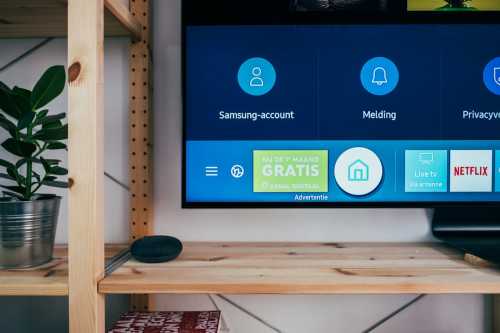
The Toll Booth to the Interstate: The End of the Direct-to-Consumer Illusion Before the construction of the Interstate Highway System, cross-country travel relied on a fragmented network of independent toll roads; drivers were forced to stop at every single county line, pay a different fee, and use a different transponder, making long-distance transit highly inefficient and heavily taxed at every micro-jurisdiction. For the past decade, the streaming industry has operated on this exact fragmented toll-road model, forcing consumers to navigate a labyrinth of standalone applications, disparate billing portals, and siloed user interfaces to access basic entertainment. The era of this digital fragmentation has officially ended. The core event driving this current market shock is the formal surrender of standalone streaming application ecosystems by major content conglomerates to Smart TV operating system manufacturers, establishing a unified, OS-level "Super-Bundle" interface. This structural pivot transfers total control of consumer billing, user interface navigation, and first-party data directly to the hardware original equipment manufacturers (OEMs), effectively reducing premium content providers to mere utility pipes.
The Evaporation of First-Party Data Sovereignty Mainstream financial coverage frequently frames this OS-level integration as a mere convenience upgrade for the consumer, yet it consistently ignores the massive data sovereignty transfer occurring in the background. When a streaming service surrenders its user interface and billing architecture to a Smart TV OEM, it simultaneously surrenders its first-party behavioral data. The unseen implication is the systematic dismantling of the direct-to-consumer (DTC) data moat that content providers spent billions to build over the last five years. According to a 2026 primary analysis by S&P Global Market Intelligence, "OS-level unified billing interfaces reduce consumer churn by 22%, but compress content provider operating margins by an average of 14% due to the loss of proprietary ad-targeting data." This data becomes the ultimate defensive moat for hardware manufacturers, allowing them to license aggregated audience insights back to the very content creators who originally generated the engagement.
The Friction Reality Check However, the narrative that this ecosystem surrender universally destroys streaming brand equity and harms content providers warrants rigorous skepticism regarding the consumer experience reality. Critics of the DTC model rightly point out that the "walled garden" app ecosystem was a consumer nightmare characterized by subscription fatigue, hidden renewals, and disjointed discovery. Treating the preservation of standalone apps purely as a strategic imperative ignores the severe friction this imposes on the end-user. By ceding the interface to the OEM, content providers are actually solving the discovery and billing fatigue that was ultimately capping total market penetration, suggesting that the loss of direct data control is a necessary concession to achieve mass-market ubiquity.
The Programmatic Ad-Tech Monopoly A second critical implication ignored by observers is the aggressive monopolization of the programmatic advertising supply chain. The entities controlling the Smart TV OS are not merely providing a unified menu; they are inserting themselves as the mandatory middleware for all dynamic ad insertion (DAI). "We are witnessing the final surrender of the direct-to-consumer illusion; the television is no longer a display, it is a point-of-sale terminal," stated Ampere Analysis' Fred Black during a recent media summit. This allows hardware OEMs to capture the highest-margin segment of the streaming value chain—programmatic ad tech—while forcing content providers to accept fixed, wholesale licensing fees. The unseen implication is a permanent margin compression for legacy studios, as the lucrative ad-tech arbitrage they attempted to build is now controlled by the device manufacturers.
The Hardware Margin Symbiosis Despite the clear threat of margin compression for content providers, there is a compelling counter-argument regarding the financial realities of consumer electronics manufacturing. The narrative that OEMs will ruthlessly extract all value from the streaming ecosystem ignores the physical hardware margin deficit. Smart TV manufacturers operate on notoriously razor-thin hardware margins, often selling displays at or below cost. They fundamentally require the recurring revenue share from streaming OS integrations to subsidize the physical manufacturing costs. Therefore, treating this relationship as purely parasitic ignores the symbiotic capital structure of the consumer electronics industry; the OEMs need the content providers to maintain hardware subsidies, ensuring a baseline of mutual financial reliance that prevents total value extraction.
Echoes of the 1990s Distribution Consolidation To understand the trajectory of this movement, one must examine the historical precedent set by the independent record label distribution consolidation of the late 1990s. During that era, independent labels possessed highly curated, valuable rosters but lacked the physical distribution infrastructure to reach national retail chains. They were forced to surrender their distribution and billing to the "Big Five" major labels, effectively losing their direct retail margins and consumer data in exchange for scale. "The content provider is once again becoming a wholesale supplier to a consolidated distribution monopoly," noted Michael Nathanson, Managing Director at MoffettNathanson, in a recent investor briefing. The lesson from the 1990s music industry is that controlling the physical or digital shelf space ultimately yields more structural power than controlling the underlying content.
The Commoditization of the Content Pipeline Furthermore, this structural shift fundamentally rewires the perceived value of intellectual property. When the consumer interface, the billing relationship, and the ad-insertion layer are entirely controlled by the Smart TV OS, the streaming service's brand equity evaporates. The consumer no longer identifies with the content provider's application; they identify with the television's operating system. Content transitions from a premium, destination-driven experience to a commoditized utility, indistinguishable from the water or electricity flowing into the home. This commoditization forces legacy studios to pivot from consumer-facing brand builders to backend wholesale suppliers, fundamentally altering the cultural and financial architecture of the entertainment industry.
Strategic Imperatives for the Post-App Economy For local media buyers, regional broadcasters, and independent content aggregators, the actionable takeaway requires immediate operational adaptation. Regional media companies must immediately pivot their digital strategies away from building proprietary, standalone consumer applications, which will soon be algorithmically suppressed by OS-level interfaces, and instead focus on negotiating wholesale licensing agreements directly with Smart TV OEMs. Local advertisers should reallocate their programmatic budgets away from fragmented, app-level targeting and toward the centralized, OS-level ad exchanges, which will soon command the vast majority of the living room audience. For citizens and consumers, the imperative is to recognize that the era of managing dozens of individual streaming subscriptions is ending; the future of home entertainment will be managed through a single, hardware-level utility bill, trading granular control for absolute convenience.
The 2027 Landscape of OS-Level Aggregation Looking six months ahead, the landscape will solidify around a highly consolidated, hardware-controlled distribution model. We will see the first major streaming conglomerates formally write down the value of their proprietary app infrastructure, acknowledging the transition to a wholesale, OS-licensed model. Legacy smart TV manufacturers will accelerate their transformation into pure-play media conglomerates, utilizing their OS-level data to launch their own in-house, white-labeled streaming channels that directly compete with the very content providers whose feeds they distribute. The era of the standalone streaming application is dead; the era of OS-level aggregation has begun, and the economic architecture of the entertainment industry is being permanently rewritten to accommodate the hardware gatekeepers.
Related Articles
The Yield Management Paradigm: Ad-Tier Migration, FAST Consolidation, and the End of Streaming Abundance
Sep 24, 2026
The Streaming Mirage: How the Pursuit of Margin is Fracturing the Digital Video Economy
Sep 24, 2026![[The Utility Paradigm: How Five Structural Shifts Are Terminating the Streaming Utopia]](https://www.crimaz.com/assets/images/no-image.jpg)
Comments (0)
No comments yet. Be the first to share your thoughts!
Want to join the discussion?
Please log in to post a comment.
Login NoworCreate an Account