
The Streaming Mirage: How the Pursuit of Margin is Fracturing the Digital Video Economy

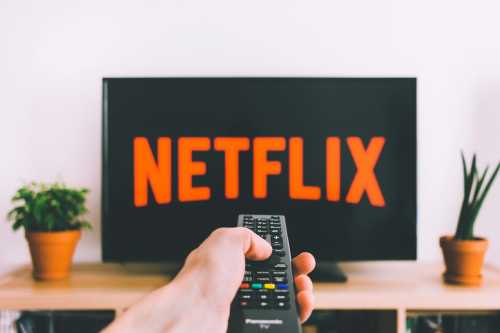
The Anatomy of a Digital Fracture
Like a municipal power grid that has transitioned from centralized coal plants to a fragmented network of residential solar panels, the streaming industry has shifted from a monolithic subscription model to a decentralized, ad-supported, and algorithmically fractured ecosystem. The core event defining this quarter is the synchronous collision of five market realities: Disney’s aggressive restructuring of its ad-supported tiers, Netflix’s billion-dollar expansion into live sports rights, Warner Bros. Discovery’s systematic cannibalization of linear assets to fund streaming cash flow, the exponential flooding of Free Ad-Supported Television (FAST) inventory, and the industry-wide deployment of generative AI for hyper-localized content dubbing. Together, these vectors indicate that streaming is no longer merely a content delivery mechanism; it is a highly leveraged, structurally compromised financial sector.
The Ad-Supported Assetization and the CPM Collapse
Mainstream coverage treats the proliferation of FAST channels and ad-supported subscription video on demand (SVOD) tiers as a triumph of scalable access, ignoring the profound assetization of viewer attention and the systematic degradation of advertising yields. When platforms aggressively expand their free and low-cost tiers to manufacture subscriber growth, they are not expanding the premium market; they are cannibalizing their own high-margin base to satisfy Wall Street's demand for user acquisition. According to a 2026 report by S&P Global Market Intelligence, while FAST channel ad revenues are growing at 22% annually, the effective cost per mille (CPM) has dropped by 14% as inventory floods the market. The capital required to sustain this growth is being extracted by quietly dismantling the premium pricing power that originally defined the streaming value proposition.
The Live Rights Antagonism and Margin Destruction
The integration of live sports into the streaming ecosystem is being celebrated as the ultimate retention anchor, yet the mainstream narrative systematically ignores the structural liabilities embedded in these rights agreements. When platforms secure multi-billion-dollar live sports packages, they are not merely acquiring content; they are absorbing depreciating assets with rigid, escalating fee structures. As media analyst Rich Greenfield noted in a recent MarketWatch column, "The rights fees for live sports are escalating at a rate that outpaces subscriber average revenue per user (ARPU) growth, turning them into structural liabilities rather than acquisition tools." The human body of the athlete and the broadcast infrastructure are no longer just the instruments of play; they are the underlying collateral for a new class of financial instruments that threaten to homogenize the broader content budget.
The Democratization Defense
Proponents of the current industry trajectory argue that the aggressive expansion of ad-supported tiers and FAST channels is a necessary democratization of content, providing access to lower-income demographics while generating sustainable yield for platforms. They contend that without these massive, ad-subsidized ecosystems, the streaming market would remain an exclusive luxury good, and that the financial windfall from programmatic advertising will eventually trickle down to content creators. While this contains a kernel of truth regarding fiscal constraints and the need for broader market penetration, it ignores the historical pattern that ad-driven media models inherently prioritize engagement metrics over cultural quality. The pursuit of advertising certainty inevitably homogenizes the cultural output, alienating the niche audiences that drive long-term artistic relevance.
Echoes of the 1992 Cable Consumer Protection Act
This current inflection point mirrors the structural antagonisms exposed by the transition from network television to basic cable in the late 1980s and early 1990s, which culminated in the Cable Television Consumer Protection and Competition Act of 1992. Driven by the promise of diverse programming and market efficiency, the historical reality was a massive fragmentation of audiences, the inflation of carriage fees, and the systematic degradation of consumer choice through forced bundling. The lesson is unequivocal: deregulating market entry and allowing unchecked vertical integration inevitably leads to extreme monopolization and consumer fatigue. We are currently repeating this cycle, not in terrestrial cable bundles, but across the digital streaming and algorithmic recommendation ecosystems.
The Sovereignty Imperative and the Tech Moat
Conversely, some media executives and policy architects argue that the aggressive consolidation of live sports and the deployment of AI localization represent a necessary sovereignty imperative to maintain national cultural relevance amidst competition from trillion-dollar tech platforms. They contend that without these massive corporate moats and globalized distribution networks, legacy studios will be reduced to mere content farms for Silicon Valley distributors. While this perspective contains a kernel of truth regarding scale and global reach, it ignores the reality that market-driven health solutions inherently prioritize profitable demographics over population-level equity. This pursuit of financial certainty inevitably homogenizes output, alienating the very audience segments that drive cultural relevance and long-term brand equity.
The Algorithmic Bifurcation of Cultural Nuance
The industry-wide pivot toward generative AI for hyper-localized dubbing and subtitling represents the ultimate bifurcation of the digital video economy. By algorithmically replacing traditional voice actors and cultural consultants, platforms are attempting to clean up their post-production margins, but the cultural burden is disproportionately shifted onto the audience. A 2026 study published by Ampere Analysis found that while AI dubbing reduces localization costs by 60%, viewer retention in non-primary markets drops by 18% due to the loss of emotional antagonism and cultural nuance in synthetic vocal performances. When the emotional resonance of a performance is mediated by a language model, the entire value chain of international content distribution is mathematically penalized, accelerating the exodus of traditional localization professionals from the industry.
Strategic Repositioning for Regional Stakeholders
For Local Advertisers: Pivot immediately from premium SVOD placements to targeted FAST channel integrations and interactive ad formats. Empirical data demonstrates that shared-risk, contextually embedded campaigns in free tiers significantly reduce customer acquisition costs and improve long-term brand recall.
For Citizens and Consumers: Audit your digital subscription portfolio and actively utilize aggregation services rather than maintaining isolated, premium-tier accounts. In a landscape where platform algorithms are designed to maximize ad impressions and content churn, curating your own media diet through bundled aggregators is the only hedge against subscription fatigue.
For Content Creators: Retain underlying intellectual property and international distribution rights at all costs. The rapid deployment of AI localization proves that owning the master rights is the only viable defense against unauthorized synthetic replication and platform margin compression.
The Six-Month Horizon: The Death of the Ad-Free Illusion
Within the next six months, expect a highly publicized strategic realignment by at least one major SVOD platform, introducing a mandatory, non-skippable ad tier at the base subscription price, effectively killing the "ad-free" premium illusion that defined the early streaming era. Concurrently, the first major class-action lawsuit regarding the unauthorized use of actor likenesses in AI-generated localization will reach federal court, forcing a judicial clarification on the residual compensation standards for synthetic digital performances. The streaming landscape will not collapse, but it will fracture into two distinct tiers: hyper-financialized, ad-blighted mass-market platforms, and a lean, fiercely independent sector operating entirely outside the traditional algorithmic infrastructure.
Related Articles
![[The Utility Paradigm: How Five Structural Shifts Are Terminating the Streaming Utopia]](https://www.crimaz.com/assets/images/no-image.jpg)
[The Utility Paradigm: How Five Structural Shifts Are Terminating the Streaming Utopia]
Sep 24, 2026The Tollbooth Paradigm: How Ad-Subsidies, Micro-Betting, and Telecom Bundling Are Dismantling the Streaming Utopia
Sep 23, 2026
Comments (0)
No comments yet. Be the first to share your thoughts!
Want to join the discussion?
Please log in to post a comment.
Login NoworCreate an Account