
The Great Entertainment Reckoning: How Five September 2026 Earthquakes Exposed Hollywood's Existential Paradox

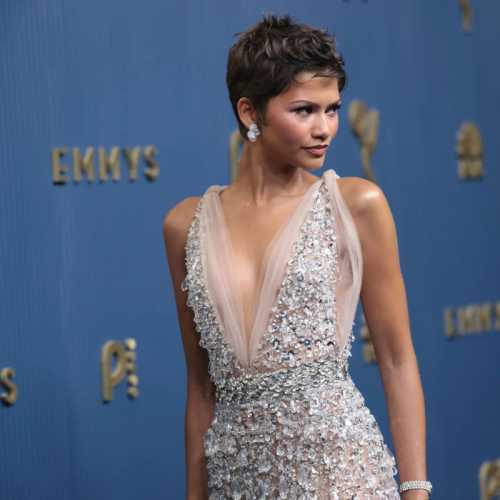
Managing a modern entertainment portfolio resembles navigating a ship through contradictory weather patterns: one moment you're charting record-breaking box office winds, the next you're battling streaming headwinds that threaten to capsize decade-old business models. September 2026 has delivered five seismic shifts that expose this fundamental tension: the 78th Primetime Emmy Awards crowned streaming originals while theatrical attendance surged to unprecedented heights, Netflix stock languishes 34% below its peak even as summer box office shattered all-time records with $4.76 billion, and Gen Z—demographically written off as digital natives—emerged as cinema's most devoted acolytes [[43]][[31]][[87]].
The Emmy Paradox: Streaming Dominance Meets Theatrical Resurgence
The September 14, 2026 Emmy Awards delivered verdicts that should confuse strategic planners: Apple TV+'s "Widow's Bay" dominated with 14 wins including comedy series, while HBO Max's "The Pitt" repeated as drama series champion, yet these streaming triumphs occurred alongside a theatrical renaissance that generated $4.76 billion in domestic box office revenue [[13]][[31]]. Matthew Rhys made history as the first actor to win two lead actor Emmys in a single season, claiming trophies for both "Widow's Bay" and Netflix's "The Beast in Me," while Sally Field, Jean Smart, and Noah Wyle added their names to the honor roll [[9]].
The unseen implication mainstream coverage ignores: this isn't a zero-sum competition between theatrical and streaming. Rather, it signals the emergence of a bifurcated consumption model where audiences simultaneously crave communal theatrical experiences for event cinema and intimate streaming content for serialized storytelling. The Emmy dominance of streaming platforms—Apple TV+, HBO Max, Netflix—alongside record theatrical revenues suggests consumers aren't choosing one over the other; they're demanding both, forcing studios to maintain dual distribution strategies that strain production budgets and creative resources.
The Gen Z Anomaly: Digital Natives Reject Digital-First Entertainment
Perhaps the most counterintuitive development: Gen Z, the demographic presumed to prefer smartphone consumption, has emerged as cinema's salvation. A 2026 Fandango study reveals that 87% of Gen Z attended theatrical screenings in the past year, making them the most active moviegoing demographic—surpassing Millennials, Gen X, and Baby Boomers [[87]]. This cohort treats cinema as a social ritual, over-indexing on premium formats like IMAX and Dolby, and viewing moviegoing as an experiential antidote to their digitally saturated lives.
Industry Data Point: "Generations are shrugging off streaming as a destination of preference. Netflix's stock is sinking, and if you look at the latest findings of their viewership report, streaming is bound to be the basic cable of home entertainment. The novelty has worn off," according to one studio executive quoted in Deadline's post-summer analysis [[31]].
Counter-Argument: The Affordability Blind Spot
However, this Gen Z moviegoing renaissance narrative requires critical scrutiny. Critics argue that framing young audiences as cinema saviors ignores the affordability crisis: with average ticket prices exceeding $12 in major markets and concession costs rivaling actual meal prices, Gen Z's theatrical enthusiasm may prove unsustainable. The demographic faces unprecedented economic pressures—student debt, housing costs, wage stagnation—that could rapidly curtail discretionary entertainment spending. What appears as a cultural shift might simply be post-pandemic pent-up demand that will normalize once economic realities reassert themselves.
Executive Exodus: Disney's Schrier Departure Signals Strategic Recalibration
Eric Schrier's September 7, 2026 announcement that he's stepping down as President of DTC International Originals to pursue a producing deal with Disney Entertainment Television represents more than routine executive turnover [[31]]. Schrier's departure—moving from direct-to-consumer strategy to content production—signals Disney's recognition that its streaming-first approach requires course correction. The executive shuffle occurs as Disney's theatrical division posted $1.034 billion in summer revenue while streaming operations face mounting losses and subscriber acquisition costs.
This personnel move mirrors broader industry recalibration: studios are shifting resources from streaming infrastructure to content creation, acknowledging that platform ownership alone doesn't guarantee competitive advantage. The strategic pivot suggests Disney and competitors are preparing for a hybrid future where theatrical windows extend (Universal recently expanded to five weekends in 2026) and streaming serves as secondary monetization rather than primary distribution [[75]].
Echoes of 2019: The Pre-Pandemic Peak as Blueprint
The current entertainment landscape mirrors the 2019 pre-pandemic apex, when theatrical revenues reached $11.4 billion domestically and streaming existed as complementary rather than competitive. The critical lesson from that era: content quality trumps distribution methodology. Summer 2026's record-breaking performance—driven by "Spider-Man: Brand New Day" ($923.2M), "The Odyssey" ($589M), and "Toy Story 5" ($479.9M)—demonstrates that audiences will leave their homes for exceptional experiences [[31]].
Market Reality: Admissions exceeded 322 million in summer 2026 versus 275 million in 2025, definitively refuting the narrative that box office growth stems solely from ticket price inflation [[31]]. This 17% increase in actual attendance proves that content, not convenience, drives consumption decisions.
Counter-Argument: The Concentration Risk
Yet celebrating aggregate box office figures obscures a troubling concentration risk: just three franchises ("Spider-Man," "The Odyssey," "Toy Story") accounted for over 40% of summer 2026's total revenue [[31]]. This reliance on tentpole properties creates systemic vulnerability—if any single franchise underperforms, studio economics collapse. The middle-budget film has effectively disappeared, with studios either investing $200M+ in potential blockbusters or sub-$20M in prestige awards plays. This bifurcation threatens creative diversity and limits opportunities for emerging filmmakers, potentially creating a content pipeline crisis within five years.
Strategic Imperatives: Actionable Intelligence for Stakeholders
For Independent Filmmakers: Abandon the streaming-first strategy. Theatrical exclusivity—even limited 45-day windows—generates superior economics and cultural cachet. Partner with boutique distributors like A24, whose "Backrooms" grossed $197.5M through theatrical-first release [[31]].
For Theater Operators: Invest in premium formats (IMAX, Dolby, 4DX) that Gen Z prioritizes. The social experience premium justifies higher ticket prices and differentiates from home viewing.
For Investors: Avoid pure-play streaming stocks. Netflix's 34% decline from 52-week highs reflects structural challenges, not temporary headwinds [[43]]. Prioritize studios with balanced theatrical/streaming portfolios.
For Content Creators: Develop properties with dual-format potential. Serialized storytelling suits streaming; event narratives demand theatrical presentation.
The Six-Month Forecast: Consolidation and Clarification
By March 2027, expect: (1) At least two mid-tier streaming platforms to announce mergers as subscriber acquisition costs become unsustainable; (2) Theatrical windows to standardize at 45-60 days industry-wide, with Universal's five-weekend model becoming the benchmark; (3) Netflix to announce major theatrical distribution partnerships, effectively abandoning pure streaming exclusivity; (4) Gen Z moviegoing to plateau as economic pressures intensify, forcing theaters to introduce value-priced programming; (5) Emmy categories to split between streaming and traditional television, acknowledging the format divergence that the 2026 ceremony exposed.
September 2026's entertainment earthquakes don't signal industry collapse—they reveal maturation. The false dichotomy between theatrical and streaming has dissolved, replaced by a sophisticated ecosystem where content quality, distribution strategy, and audience psychology intersect. Stakeholders who recognize this complexity will thrive; those clinging to outdated paradigms will face existential threats.
Related Articles
The Great Streaming Consolidation: How Five Industry Shifts Are Rewriting Entertainment's Future
Sep 17, 2026
The Hollywood Yield Shift: How AI Guardrails, Mid-Budget Resurgence, and Streaming Bundles Are Rewiring Entertainment Economics
Sep 17, 2026
Comments (0)
No comments yet. Be the first to share your thoughts!
Want to join the discussion?
Please log in to post a comment.
Login NoworCreate an Account