
The Hollywood Yield Shift: How AI Guardrails, Mid-Budget Resurgence, and Streaming Bundles Are Rewiring Entertainment Economics


Treating the modern Hollywood studio system like a venture capital portfolio has yielded predictable results: a decade of speculative, $200-million franchise bets that occasionally print money but frequently bleed capital. Just as the 2008 housing market corrected from speculative flips to yield-generating rental properties, the entertainment industry is undergoing a structural recalibration. The September 2026 convergence of stringent AI labor agreements, a mid-budget box office resurgence, and aggressive streaming consolidation signals that the era of unchecked blockbuster speculation is over, replaced by a ruthless focus on margin stability and verifiable audience retention.
The Algorithmic Elephant in the Editing Room
While public relations campaigns champion human creativity, the operational reality of film production tells a different story. Industry insider Matthew Belloni noted simply that "everyone is doing it" when questioned about the quiet integration of generative AI into pre-production and visual effects pipelines [[42]]. The recent ratification of SAG-AFTRA’s 2026 AI rules, which build upon previous digital replica protections, represents a necessary but reactive regulatory moat [[38]]. The unseen implication is a rapid bifurcation of the labor market: top-tier talent will command steep premiums for contractually guaranteed "AI-free" productions, while below-the-line workers will face compressed wages as studios deploy algorithmic tools to accelerate storyboarding, asset generation, and preliminary editing.
Counter-Argument: The Democratization Dividend
However, framing AI solely as a labor-displacing threat ignores its current utility as a democratizing force for independent creators. As noted in recent industry analyses, the commercial applications of AI in film production in 2026 are largely augmenting workflows—such as automating rotoscoping or managing dailies—rather than outright replacing creative roles [[41]]. The true bottleneck remains high-end creative decision-making and emotional resonance, which algorithms still fail to replicate, meaning the technology currently serves as a productivity multiplier rather than a wholesale replacement.
The Mid-Budget Resurgence and the Indie Profit Squeeze
Mainstream box office reporting fixates on franchise tentpoles, ignoring the quiet financial revolution occurring in the $30 million to $80 million tier. The North American box office in early 2026 demonstrated a 14 percent year-over-year increase, a growth metric driven disproportionately by adult-oriented, mid-budget films [[57]]. The over-35 demographic, previously written off by studio executives as permanently migrated to streaming, is returning to theaters for character-driven narratives. Concurrently, micro-budget independent films are achieving astonishing profitability, effectively squeezing out the traditional mid-tier film by offering studios significantly higher risk-adjusted returns and faster turnaround times [[58]]. This creates a barbell economy in theatrical distribution: massive franchise spectacles on one end, and lean, highly targeted indie productions on the other, leaving the middle class of cinema financially endangered.
The Bundle Trap: Streaming’s Illusion of Choice
The core event anchoring this macroeconomic shift is the recent wave of Q3 2026 earnings reports, exemplified by The Walt Disney Company posting strong results fueled by theme park attendance, streaming profitability, and the $4 billion global box office success of "Toy Story 5" [[30]], [[34]]. To sustain this streaming profitability and combat subscriber churn, platforms are aggressively pivoting toward telecommunications and cross-platform bundle deals, with some packages offering up to 35 percent savings to lock in long-term subscribers [[50]].
This mirrors the historical precedent of the early 2000s cable television bundling era. Just as consumers were forced to purchase expansive, un-a-la-carte cable packages to access a few premium channels, the modern streaming ecosystem is re-aggregating into monolithic bundles. The lesson from the cable era is clear: bundling temporarily suppresses churn and stabilizes revenue, but it inevitably breeds consumer resentment and invites regulatory scrutiny over anti-competitive market consolidation.
Counter-Argument: The Scale Imperative
Critics of the bundling strategy argue that it represents a regression to the very linear television model that streaming originally disrupted, potentially stifling niche content creators who cannot negotiate placement in these mega-packages. Yet, from a capital allocation perspective, bundling is the only mathematically viable path to achieving the subscriber scale required to fund the $150 million-plus original series that define platform prestige, making it a necessary structural evolution rather than a malicious regression.
Prestige Over Spectacle: The Emmy Verdict
The 2026 Primetime Emmy Awards, where character-driven series like "The Pitt" secured Outstanding Drama and "Widow's Bay" made history, validated the audience's growing fatigue with hollow IP spectacles [[64]], [[68]]. For local businesses and citizens, the actionable takeaway is to pivot engagement strategies away from broad, algorithmic demographic targeting. Independent theaters and regional distributors should capitalize on the mid-budget resurgence by hosting curated, community-focused screening events that emphasize the communal, theatrical experience streaming cannot replicate. For consumers, this is the optimal moment to audit and cancel redundant standalone streaming subscriptions, migrating exclusively to bundled telecom offerings to minimize monthly entertainment overhead while maximizing content access.
The 2027 Horizon: Consolidation and the New Studio System
Within six months, the entertainment landscape will undergo accelerated consolidation. We will see at least two major mid-tier studios or streaming platforms merge to achieve the critical mass necessary to compete in the bundled ecosystem. Furthermore, the "AI-free" certification will emerge as a premium marketing label, akin to "organic" in the food industry, allowing discerning filmmakers to command higher theatrical valuations. The industry will not collapse, but it will permanently shed its speculative excesses, operating instead as a highly disciplined, yield-focused utility that prioritizes predictable returns over artistic moonshots.
Sources: Matthew Belloni Industry Analysis, SAG-AFTRA 2026 Contract Ratification, North American Box Office Q1 2026 Data, Disney Q3 FY2026 Earnings Report, 78th Primetime Emmy Awards Results.
Related Articles

The Inflation Mirage: How Hollywood’s Record Revenues Mask a Structural Collapse
Sep 16, 2026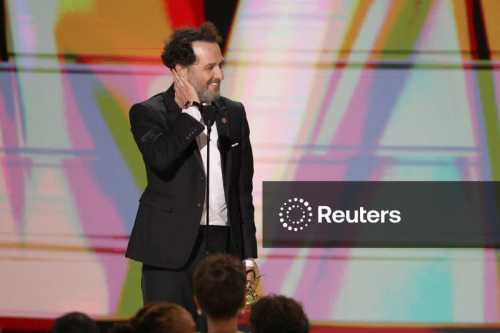
The Casino Model of Modern Hollywood: Consolidation, AI, and the Illusion of Cinema's Rebound
Sep 16, 2026
Comments (0)
No comments yet. Be the first to share your thoughts!
Want to join the discussion?
Please log in to post a comment.
Login NoworCreate an Account