
The Great Streetwear Correction: Why Nike's Comeback and Supreme's Sale Signal the End of the Drop Era

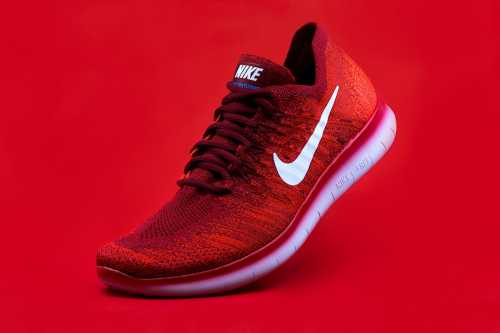
When the music industry realized that single-track streaming was cannibalizing album sales, it didn't kill the single — it made singles gateways back to full-length projects. Streetwear's 2026 reset follows the same playbook. The drop, the hype queue, the bot-infested sneaker release — all are being downgraded from business model to marketing expense, while brands that spent years chasing the weekly Thursday drop are quietly rebuilding around seasonal collection cycles. On StockX's "Big Facts 2026" report, Nike searches rose 5,811 percent year-over-year — not because of a single viral shoe, but because Jordan Brand rebuilt its seasonal architecture and performance basketball regained cultural relevance. In the same window, the brand that defined the drop economy for a generation, Supreme, was sold to EssilorLuxottica for $1.5 billion after its revenue fell from $561.5 million to $523.1 million in a single fiscal year under VF Corporation. The two stories are not unrelated; they are two sides of the same correction.
What the Resale Barometer Actually Measures
StockX CEO Greg Schwartz summed up the new calculus precisely: "brands set for success this year are those that understand scarcity, storytelling, and community — not just scale." That sentence is a quiet obituary for the 2018-2022 streetwear operating system, which ran on scale-first, scarcity-second, and storytelling rarely. The resale platforms themselves have been caught in the same reset: StockX and GOAT are now valued at $3.8 billion and $3.7 billion respectively, a narrowing spread that reflects the market's growing doubt that either will capture the same margin on apparel that they captured on sneakers. Sneaker resale was a volume game; streetwear apparel resale is an authentication game, which carries lower velocity and higher return rates. That distinction is why resale spreads on Supreme box logos have compressed while resale premiums on vintage Stüssy pieces — whose revenue hit $66.3 million from its website alone in 2023 and is projected to grow 5-10 percent in 2026 — have held firm. The market is telling us, in real-time bid-ask data, which brands survived the drop era with their equity intact.
Counterpoint: The Drop Isn't Dead, It's Just Been Priced In
The narrative that the drop is dying overstates its decline. Weekly limited releases remain a cost-effective customer-acquisition channel for mid-tier labels, and the Lindy effect is working in the drop's favor — twenty-plus-year-old drop calendars at Palace and BAPE still sell out. What has actually died is the drop as a premium-pricing vehicle. Brands can still drop; they can no longer price the drop at three times retail and expect resale premiums to cover the marketing gap. The correction is in pricing power, not in product cadence, and brands that understand that distinction will survive; those that keep pricing like it's 2020 will find their sell-through rates collapsing into Q4.
The 2017 Inflection: When Louis Vuitton Taught Supreme Its Lesson
The last time streetwear ran a structural reset this large was 2017, when Louis Vuitton's collaboration with Supreme collapsed the category's cultural hierarchy in a single season. In that cycle, heritage luxury absorbed streetwear's equity, and brands like Off-White and A-Cold-Wall* rode the wave into nine-figure acquisitions. What the mainstream coverage missed at the time was that the 2017 moment was also the peak of the drop economy; from that point forward, the brands that grew fastest were not the ones dropping most often, but the ones converting drop energy into collection-level storytelling. Moncler's Genius project, launched in 2018, and Prada Linea Rossa's relaunch both outperformed Supreme in compound revenue growth across the intervening decade by abandoning the weekly drop in favor of curated monthly chapters. The 2026 reset is, in essence, 2017 arriving at its logical conclusion — the brands that absorbed streetwear's vocabulary are now being asked to prove they also absorbed its discipline, and many cannot. EssilorLuxottica's acquisition of Supreme is a bet that a brand stripped of its drop-era hype can become a permanent eyewear-adjacent lifestyle label, exactly the transformation Moncler pulled off a decade ago.
Counterpoint: Conglomerates Aren't the Problem — Execution Is
The easy read of Supreme's sale is that VF Corporation proved conglomerates can't run streetwear brands. That's half-right. VF failed because it applied athletic-merchandising discipline to a cultural-licensing business; the brand's $38.4 million revenue decline under VF was less a function of corporate ownership than a function of corporate misunderstanding. The counter-example is LVMH's stewardship of Rimowa and, arguably, Tiffany — conglomerate ownership paired with genuine cultural deference. EssilorLuxottica is not a fashion conglomerate; it is an eyewear and optical infrastructure company. That may actually be Supreme's advantage — an owner whose primary competency is distribution and whose brand DNA is not built on seasonal creative cycles. The lesson for the industry is not "conglomerates kill streetwear." It is "conglomerates kill streetwear when they try to run it like a sneaker brand." The coming M&A window will reveal which acquirers learned that distinction.
What Independent Brands Should Do Before Q4
- Convert drop calendars into seasonal chapters. Brands running weekly drops should consolidate to monthly "chapters" with a narrative arc — the Moncler Genius model — which reduces customer fatigue, restores editorial coverage, and rebuilds resale premiums around story rather than scarcity.
- Price for sell-through, not resale premium. A brand whose resale premium has collapsed below 20 percent of retail should reduce retail price, not marketing spend. The market is pricing in the end of the hype cycle; fighting that signal with more hype only accelerates margin erosion.
- Build community infrastructure, not follower counts. Schwartz's triad — scarcity, storytelling, community — puts community last for a reason. Community is the hardest to build and the easiest to fake; the brands that invested in Discord servers, regional meetups and collector programs between 2022 and 2025 are the ones whose resale premiums have held.
- Treat StockX and GOAT as data sources, not sales channels. The narrowing valuation gap between the two platforms suggests neither will be the dominant secondary-market utility of 2030. Use them as sentiment indicators — bid-ask spreads, search velocity, return rates — but diversify your authenticated resale presence across at least three platforms.
- Local retailers: buy vintage, not current-season hype. Independent streetwear boutiques should shift buying dollars from current-season hyped drops to authenticated vintage Stüssy, BAPE and early Supreme pieces. The Lindy effect works in the boutique's favor: older product has already proven its demand, carries higher margin, and attracts the collector demographic that spends more per visit than the drop-day customer.
February 2027: The New Streetwear Hierarchy
Six months from now, the category will look visibly different. Nike's comeback will have fully consolidated around seasonal performance releases tied to FIFA World Cup and Olympic qualification cycles, and the sneaker calendar will read more like a sports season than a fashion drop. Supreme, under EssilorLuxottica, will have quietly shuttered at least one flagship location and begun licensing its logo into eyewear and accessories — the exact playbook that converted a streetwear brand into a permanent lifestyle asset a decade earlier. Stüssy will have reported its strongest fiscal year in a decade, and the "Stüssy over Supreme" thesis will move from blog posts to quarterly earnings calls at publicly traded streetwear operators. Resale platforms will announce at least one consolidation — most likely a StockX acquisition of a smaller authenticated marketplace — and the $10 billion global sneaker-resale addressable market will be reclassified to include "authenticated lifestyle goods" as a growth driver. The brands that will compound through the reset are the ones already rebuilding around seasonal storytelling rather than weekly scarcity, and the ones that understand, as Schwartz put it, that scale alone is no longer the answer. Streetwear isn't dying; it's growing up, and the tuition for that lesson has just come due.
Related Articles
The Algorithmic Drop is Dead: How Wholesale Saturation and Guerrilla Tailoring are Rezoning the $218B Streetwear Economy
Aug 13, 2026
The Liquidation of Synthetic Scarcity: How Streetwear Conglomerates are Weaponizing the Secondary Market
Aug 13, 2026
Comments (0)
No comments yet. Be the first to share your thoughts!
Want to join the discussion?
Please log in to post a comment.
Login NoworCreate an Account