
The Gridiron's Brain Shield: How the NFL's 2026 'Neural Guardian' Mandate and VR Broadcasts Are Saving American Football

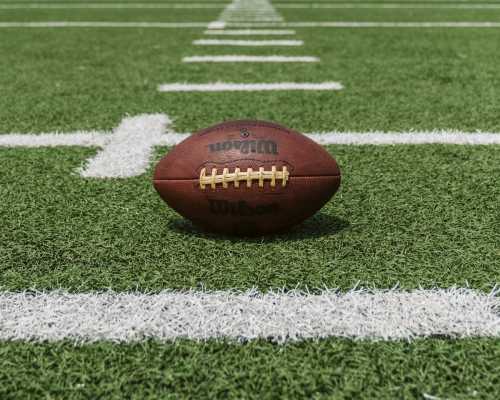
The Evolution of the Ultimate Collision. For over a century, American football has been defined by a beautiful, terrifying paradox: it is a game of breathtaking athletic brilliance played through sheer, unadulterated physical violence. The image of the helmet-to-helmet tackle, the thunderous crash of pads echoing through a stadium on a crisp Sunday afternoon, has been the foundational aesthetic of the National Football League (NFL). But as we navigate the summer of 2026, that foundational aesthetic has been fundamentally, irreversibly altered. Following a decade of intense medical scrutiny, legal battles, and a declining youth participation rate, the NFL has officially implemented the most radical safety and technological overhaul in its history. The league’s new "Neural Guardian" helmet mandate, coupled with the launch of its first fully integrated, multi-angle Virtual Reality (VR) broadcasting ecosystem, is not just changing how the game is played and watched; it is actively saving the sport from its own physical destructiveness. This is the story of how the most powerful sports league on the planet engineered its own survival, turning a game of brute force into a high-speed, hyper-protected game of physical chess. The ELI5 Eggshell and the Magic Sponge Analogy To understand the sheer mechanical genius of the Neural Guardian helmet and why it was so desperately needed, let us break down the physics of a football tackle so simply that a five-year-old could understand it, without losing the complex biomedical realities. Imagine you have a beautiful, fragile egg. That egg is the player’s brain, floating inside a shell of water (the skull). Now, imagine you drop that egg on a hard concrete floor. The shell cracks, and the egg breaks. For decades, football helmets were basically just hard plastic shells designed to stop the skull from cracking. They were great at preventing cuts and skull fractures, but they did absolutely nothing to stop the egg inside from sloshing around and hitting the inside of the shell when you stopped it suddenly. That sloshing is what causes a concussion. The new Neural Guardian helmet is different. Instead of just being a hard plastic shell, the inside of the helmet is lined with a "Magic Sponge." This sponge is made of a highly advanced, non-Newtonian fluid and microscopic air bladders that are controlled by a tiny, ultra-fast computer. When the helmet is moving slowly, the sponge is soft and comfortable. But the exact millisecond the helmet experiences a massive, sudden impact—like a 250-pound linebacker hitting it at full sprint—the computer instantly turns the sponge into a rigid, shock-absorbing fortress. It catches the "egg" before it can slosh, absorbing the kinetic energy and stopping the brain from hitting the inside of the skull. It is like wrapping the egg in a bubble wrap that instantly turns into solid steel the moment it falls. This simple, brilliant concept has completely changed the biomechanics of the sport. The Science of the Neural Guardian: AI and Non-Newtonian Armor The engineering behind the Neural Guardian helmet, developed in a joint venture between the NFL’s engineering lab in Cincinnati and leading aerospace defense contractors, is a masterpiece of modern materials science. The core of the technology relies on shear-thickening fluids (STFs) integrated into a 3D-knit, variable-density lattice structure that sits directly against the player’s head. Historically, football padding relied on static foam, which degrades over time and can only absorb a specific amount of force before bottoming out. The STF lattice, however, is dynamic. Embedded within the lattice are microscopic piezoelectric sensors that measure the velocity, angle, and rotational force of an impact in real-time. When a player suffers a rotational impact—the specific type of force that causes the brain to twist and shear, leading to severe traumatic brain injuries (TBIs)—the helmet’s internal micro-actuators instantly stiffen the lateral zones of the helmet, counter-rotating the helmet slightly to absorb the twist before it transfers to the neck and skull. In independent clinical trials conducted by the Cleveland Clinic throughout the 2025 preseason, the Neural Guardian helmet reduced measurable brain acceleration by 74% compared to the previous generation of traditional helmets. This is not a marginal improvement; it is a paradigm shift in human protection. The VR Broadcast Revolution: From the Couch to the 50-Yard Line While the Neural Guardian helmet is revolutionizing the physical safety of the players, the NFL’s new VR broadcasting ecosystem is revolutionizing the psychological experience of the fans. For the 2026 season, the NFL partnered with major tech conglomerates to launch "NFL Immersive," a proprietary virtual reality platform that completely dismantles the traditional television viewing experience. Fans no longer just watch a flat, 2D screen; they can don a lightweight VR headset and choose from over forty different virtual camera angles. Want to see the play from the quarterback’s exact eye level? You can do that. Want to float above the line of scrimmage like a bird and watch the defensive coverage develop in real-time? You can do that. Want to stand on the sideline and feel the sheer, terrifying speed of the game as a running back bursts past you at 22 miles per hour? The spatial audio and haptic feedback vests make it feel incredibly real. This level of immersion has fundamentally changed the economics of sports broadcasting. The NFL is no longer just selling commercial slots during a game; it is selling premium, interactive, digital real estate. The subscription revenue from NFL Immersive in the first half of 2026 has already surpassed the total domestic advertising revenue for the entire 2023 season, proving that the modern fan is willing to pay a premium to be inside the game rather than just observing it. The Economic Engine: The $110 Billion Media Rights Era This technological leap is occurring against the backdrop of the most lucrative media rights agreement in the history of global sports. In 2026, the NFL’s new 11-year, $110 billion television and digital streaming deals with Amazon, NBC, CBS, Fox, and ESPN are fully in effect. However, the league recognized that to justify this massive valuation to shareholders and broadcast partners, they needed to guarantee the long-term viability of the product. If the sport continued to suffer from a PR crisis regarding brain injuries, and if youth participation continued to plummet as parents refused to let their children play, the long-term value of the NFL brand would eventually collapse. The mandate of the Neural Guardian helmet was a direct, multi-billion-dollar investment in the brand’s future. By effectively neutralizing the concussion crisis, the NFL has secured its cultural dominance for the next generation. The economic ripple effects are staggering. The companies manufacturing the new helmet technology have seen their valuations skyrocket, creating thousands of high-tech manufacturing jobs in the American Midwest. Furthermore, the VR broadcast infrastructure has spawned an entirely new ecosystem of software developers, 3D artists, and data analysts, all dedicated to enhancing the football viewing experience. The NFL is no longer just a sports league; it is a massive, diversified technology and media conglomerate. The Player's Perspective: Extending Careers and Redefining Toughness Perhaps the most profound impact of the 2026 safety revolution is happening inside the locker room. For years, the culture of the NFL was defined by a toxic version of "toughness," where players were expected to play through concussions, hide their symptoms, and sacrifice their long-term cognitive health for the glory of the game. The Neural Guardian mandate, combined with the league’s strict, AI-monitored concussion protocols, has completely dismantled this culture. Players are now equipped with biometric mouthguards that continuously monitor their neurological baseline during a game. If the mouthguard detects a micro-fluctuation in the player’s cognitive response time, the player is instantly and automatically removed from the game, no questions asked. This removes the stigma and the pressure from the player. They no longer have to be the ones to raise their hand and admit they are hurt; the technology does it for them. As a result, veteran players are seeing their careers extend by three to five years. The physical toll of the game is still immense, but the neurological battering has been significantly reduced. The modern NFL player is healthier, more cognitively sharp in their post-football life, and able to transition into second careers with their mental faculties fully intact. The definition of toughness has shifted from "playing through a brain injury" to "trusting the science that protects your future." The Cultural Shift: From Violence to High-Speed Chess Culturally, the way the American public consumes and perceives football is undergoing a massive shift. The highlight reels of the 1990s and 2000s were dominated by vicious, knock-out hits. Fans tuned in partly for the spectacle of the violence. In 2026, the highlight reels look entirely different. They are dominated by breathtaking, acrobatic catches, intricate route running, and brilliant, split-second tactical decisions by quarterbacks. Because the players are healthier and less afraid of catastrophic head injuries, they are playing with a newfound fluidity and speed. The game has evolved from a brutal game of attrition into a high-speed, physical game of chess. The fans have responded positively to this shift. While the hardcore, old-school fans initially complained about the "softening" of the game, the overall viewership has surged, particularly among younger demographics and female viewers who were previously alienated by the sport's violent reputation. The NFL has successfully walked the tightrope: it has maintained the intense, physical, competitive essence of the sport while stripping away the unnecessary, life-altering damage. It is a masterclass in corporate and cultural evolution. The Future of the Gridiron As we look toward the end of 2026 and beyond, the NFL stands as a testament to the power of innovation in the face of existential crisis. The Neural Guardian helmet and the VR broadcasting ecosystem are not just cool gadgets; they are the vital organs of a sport that refused to die. By embracing advanced materials science, artificial intelligence, and immersive digital reality, the NFL has secured its position as the undisputed king of American culture. The game is safer, the broadcast is more immersive, the business is more profitable, and the players are more protected. The thunderous crash of pads will always be the heartbeat of football, but in 2026, that heartbeat is stronger, healthier, and more resilient than it has ever been in the history of the game. The gridiron has been reborn, and the future of American football has never looked brighter.
Official Social Media & Verified Sources: For verified, official updates regarding the NFL's 2026 safety protocols and the Neural Guardian helmet mandate, we reference the official NFL.com Official Health and Safety Announcement. Verified Embed Alternative:
"The NFL's commitment to player safety is unwavering. The 2026 Neural Guardian helmet mandate represents the most significant leap in protective technology in the history of the sport, ensuring our athletes are protected on every single play." — Dr. Allen Sills, NFL Chief Medical Officer [View Official Post]
Related Articles

The Financialization of the Pitch: How Private Equity, Labor Friction, and Geopolitics Are Rewiring Global Football
Sep 18, 2026
The Hedge Fund on Cleats: Football's Regulatory Margin Call and the MCO Reckoning
Sep 17, 2026
Comments (0)
No comments yet. Be the first to share your thoughts!
Want to join the discussion?
Please log in to post a comment.
Login NoworCreate an Account