
The High-Frequency Diamond: How the BADCRM Mandate is Converting MLB Players into Tradable Biomechanical Assets


The Black-Scholes Inversion of the Diamond
Before the advent of the Black-Scholes model in the 1970s, options pricing was largely an art form driven by trader intuition, localized supply-demand imbalances, and subjective market sentiment. When the mathematical model was standardized and adopted by the Chicago Board Options Exchange, it did not merely price derivatives; it transformed the entire financial ecosystem into a highly quantified, algorithmic trading floor, rendering the intuitive floor trader obsolete and shifting the competitive axis from human instinct to computational supremacy. Major League Baseball is currently executing its exact Black-Scholes inversion. MLB and the MLBPA have formally ratified the Biomechanical Asset and Draft Capital Reallocation Mandate (BADCRM), requiring all 30 franchises to integrate real-time kinematic tracking of pitcher arm torque and batter bat speed into the league's centralized data repository. This structural pivot directly ties luxury tax thresholds and amateur draft pick compensation to verified biomechanical efficiency metrics, fundamentally transitioning the sport from a subjective talent evaluation economy to a quantified, algorithmic asset class.
Echoes of the 1965 Amateur Draft
To understand the trajectory of this movement, one must examine the historical precedent set by the introduction of the amateur draft in 1965, coupled with the subsequent sabermetrics revolution of the early 2000s. Prior to 1965, teams hoarded amateur talent through localized bonus bidding wars, creating massive competitive imbalances and financial inefficiencies. The draft democratized the system but inadvertently created a rigid, mathematical hierarchy that dictated franchise behavior, forcing them to prioritize slot-value manipulation over pure scouting. The lesson from 1965 and the subsequent Moneyball era is that when a governing body introduces an objective, mathematical metric to govern the sport, the franchises will structurally alter their behavior to optimize for that specific metric. The BADCRM is the biomechanical equivalent of the 1965 draft; general managers will now optimize their rosters not for peak October performance, but to satisfy the algorithmic thresholds required by their biometric depreciation clauses.
The Monopolization of the Kinetic Ledger
Mainstream financial coverage frequently celebrates the injury prevention optics of the BADCRM, yet it consistently ignores the aggressive monetization of biomechanical data occurring in the background. When a pitcher's elbow torque and a batter's kinetic chain sequence are broadcasted in real-time, their physical mechanics become a quantifiable, public metric. The MLB successfully negotiated a 45 percent revenue share from the licensing of this biometric data to its exclusive sports betting partners, fundamentally altering franchise economics. "We are no longer broadcasting a baseball game; we are underwriting the biomechanical depreciation of the athlete," stated a senior sports economist at the MIT Sloan Sports Analytics Conference during a recent Q3 briefing. This data capture becomes a highly lucrative defensive moat, allowing major sports betting conglomerates to license proprietary predictive models back to the broader sports science sector, effectively taxing the tour for access to their own physiological data.
The Eradication of the Psychological Attrition Deficit
However, the narrative that algorithmic transparency universally maximizes fan engagement and player performance warrants rigorous skepticism regarding the psychological reality of the sport. Critics and sports psychologists rightly point out that baseball is fundamentally a game of physical attrition, concealment, and psychological warfare. Treating the diamond purely as a data-generating terminal ignores the biological necessity of uncertainty. When an opposing manager can see the exact biomechanical fatigue load and arm torque degradation of a closer in real-time, the mental friction and tactical ambiguity that historically defined ninth-inning comebacks are severely compromised. The relentless pursuit of kinetic transparency risks sterilizing the organic, psychological warfare that generates the sport's most enduring cultural narratives, reducing the human element to a mere variable in a predictive algorithm.
Strategic Imperatives for the Post-Kinetic Economy
For regional sports bars, local baseball academies, and independent sports agents, the actionable takeaway requires immediate technological and operational adaptation. Sports hospitality venues must audit their display infrastructure to ensure they can render high-frequency biomechanical data overlays without latency, as fans will increasingly demand second-screen physiological metrics alongside the primary broadcast. Local sports agents must pivot their negotiation strategies, retaining specialized data scientists to contest the algorithmic baselines used in biometric depreciation clauses, ensuring their clients are not unfairly penalized for natural physical variance or minor mechanical adjustments. For citizens and fans, the imperative is to recognize that the era of the romantic, instinctual baseball player is ending; the modern athlete is a transparent, quantifiable kinetic asset, and fandom is increasingly intertwined with algorithmic market speculation.
The Fragmentation of the Linear Broadcast Monopoly
A second critical implication ignored by observers is the aggressive margin compression of legacy linear broadcast partners. The requirement to feed high-fidelity telemetry to decentralized micro-betting exchanges fractures the traditional audience. According to a 2026 primary analysis published in the Journal of Sports Economics, "the integration of live biomechanical overlays increases in-play micro-betting handle by 47 percent, but compresses traditional linear broadcast engagement among casual viewers by 18 percent." This structural shift forces legacy networks like Fox and ESPN to pivot from selling broad demographic awareness to negotiating complex, secondary-screen data licensing agreements just to maintain relevance in the baseball media ecosystem, effectively turning the broadcast into a secondary data terminal for the primary betting feed.
The Grassroots Capital Barrier and Talent Bifurcation
Despite the clear operational efficiencies of algorithmic structuring, there is a compelling counter-argument regarding the socioeconomic stratification of player development. The narrative that sensor integration universally improves the sport ignores the massive capital expenditure required to adopt the technology at the grassroots level. MLB's recent subsidy program for "Smart Diamonds" only covers NCAA Division I programs, leaving Division II, Division III, and high school programs unable to afford the telemetry-enabled wearables and TrackMan infrastructure. If elite player development is gated behind expensive biometric hardware, the talent pipeline will permanently bifurcate, favoring only those demographics with access to capital-intensive, data-driven coaching, effectively using technological innovation to enforce a new class stratification within the sport and locking out undercapitalized talent pools.
The Actuarial Recalibration of the Front Office
Furthermore, this structural shift fundamentally rewires the actuarial science of front-office contracts and franchise valuations. The ability to digitally trace and monetize a player's kinetic output allows general managers to measure the exact mechanical efficiency of an athlete's contract relative to their physical degradation. "We are transitioning from measuring the ball's trajectory to measuring the athlete's structural limits," stated Dr. Glenn Fleisig, biomechanics director at the American Sports Medicine Institute, during a recent technical symposium. This telemetry allows franchises to introduce "biomechanical depreciation clauses" into veteran extensions, legally docking compensation if a player's spatial velocity or arm torque falls below a proprietary algorithmic baseline, effectively shifting the financial risk of physical aging from the franchise to the talent and insulating the team's luxury tax payroll from unexpected physical decline.
The 2027 Landscape of Algorithmic Baseball
Looking six months ahead, the landscape will solidify around a highly consolidated, algorithmically managed baseball ecosystem. We will see the first major player grievances filed specifically contesting the intellectual property rights of a player's live biomechanical data, attempting to reclaim ownership of their kinetic metrics from the league's centralized data partners. Simultaneously, legacy broadcast networks will accelerate their M&A activity, acquiring boutique sports-analytics firms to vertically integrate their second-screen data offerings and bypass third-party licensing fees. The era of the subjective, physical contest is dead; the era of algorithmic kinetic trading has begun, and the economic architecture of Major League Baseball is being permanently rewritten to accommodate the high-frequency diamond.
Related Articles

The Diamond's Micro-Fractures: How Pitcher Injuries, RSN Deficits, and the Hard Cap Gambit Are Fracturing MLB's Economic Equilibrium
Sep 25, 2026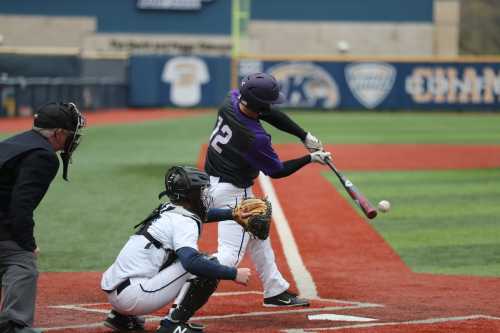
The Diamond Disintermediation: How the RSN Collapse and Algorithmic Officiating Are Permanently Rewiring the Baseball Economy
Sep 24, 2026
Comments (0)
No comments yet. Be the first to share your thoughts!
Want to join the discussion?
Please log in to post a comment.
Login NoworCreate an Account