
The Liquidity Crisis in Hype: How Wholesale Collapse, Authentication Mandates, and Quiet Luxury Are Liquidating the Streetwear Speculation Economy

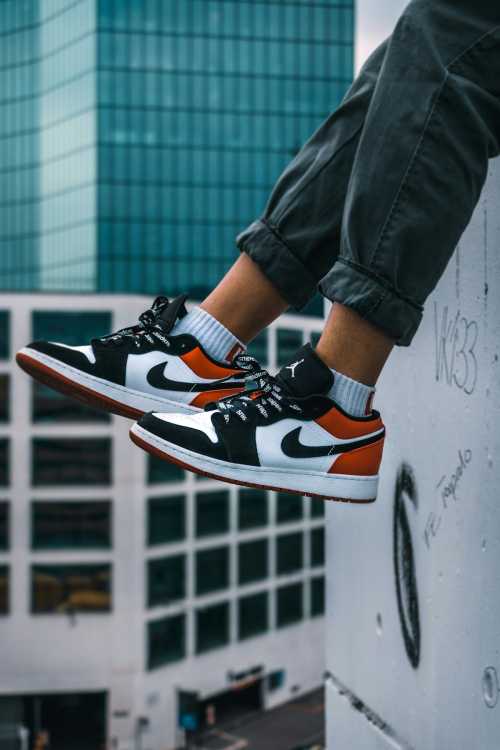
When the Dutch tulip bulb market imploded in February 1637, the crash did not destroy the flower. It destroyed the speculative infrastructure that had inflated a commodity far beyond its material worth. The global streetwear economy in late 2026 is experiencing its own Haarlem moment—not a collapse of the garment itself, but a violent repricing of the artificial scarcity mechanisms that sustained a $185 billion secondary market for the better part of a decade.
The Wholesale Guillotine and the DTC Monoculture
Nike's accelerated withdrawal from over 40% of its wholesale accounts, a strategic pivot initiated under former CEO John Donahoe and deepened through 2026, has fundamentally severed the distribution arteries that fed streetwear culture for three decades. Retailers like Foot Locker, JD Sports, and independent skate shops that once served as cultural incubators for limited releases are being systematically defunded. The unseen implication is not merely a shift in channel economics—it is the destruction of the geographic randomness that made streetwear culturally credible. When a kid in Tulsa could walk into a local shop and stumble upon a limited SB Dunk, the product carried organic cultural weight. When that same shoe is only available through the SNKRS app to a user with a verified purchase history in Manhattan, the product becomes a data-optimized loyalty reward, stripped of its subcultural authenticity. According to a 2026 Cowen & Company retail analysis, Nike's DTC revenue now accounts for over 44% of total brand sales, up from 33% in 2021, but the firm's overall sneaker resale premium on platforms like StockX has declined 28% year-over-year—a direct correlation between distribution control and hype erosion.
The 1994 Supreme Precedent: When Scarcity Was Earned, Not Engineered
To understand the structural rot in the current model, one must return to 1994, when James Jebbia opened a 300-square-foot shop on Lafayette Street with a deliberately limited inventory not as a marketing strategy, but as a financial constraint. Supreme's original drop model was born from cash-flow limitations, not algorithmic demand suppression. The brand produced what it could afford, and the resulting scarcity was genuine, not manufactured. That historical distinction matters enormously because the current streetwear ecosystem has inverted the formula: brands now produce excess inventory and artificially restrict distribution through raffle systems, bot filters, and geo-fenced releases to simulate the scarcity that once occurred organically. The lesson from 1994 is that consumers possess an intuitive detector for engineered scarcity, and when the mechanism becomes visible—when the SNKRS app "L" becomes a meme rather than a disappointment—the cultural capital evaporates. Jebbia himself noted in a rare 2024 interview that "the moment you start making product for the resale market, you've lost the plot," a statement that reads less like nostalgia and more like an indictment of the entire secondary economy.
The Authentication Panopticon: EU Digital Passports Hit the Resale Floor
The European Union's enforcement of the Ecodesign for Sustainable Products Regulation (ESPR), which mandates digital product passports for all textiles sold within the bloc by 2027, is quietly detonating the business models of StockX, GOAT, and Vestiaire Collective. These platforms built billion-dollar valuations on proprietary authentication processes that functioned as black boxes—consumers trusted the platform's verification without understanding the methodology. The ESPR requirement that every garment carry a scannable, blockchain-linked provenance record from raw material to retail effectively commoditizes authentication, transferring trust from the platform to the product itself. The unseen implication is a massive devaluation of the intermediary layer. If a consumer can independently verify a sneaker's supply chain origin by scanning an embedded NFC chip, the $15 authentication fee that StockX charges per transaction becomes indefensible. A 2026 report from the Boston Consulting Group estimates that digital product passports could reduce the addressable revenue of resale authentication platforms by up to 35% within 24 months of full EU enforcement, forcing these companies to pivot from authentication-as-a-service to data-brokerage models that monetize consumer purchasing behavior rather than product legitimacy.
The Quiet Luxury Counterweight: When Logos Become Liabilities
The simultaneous ascendance of "quiet luxury" streetwear—brands like Aimé Leon Dore, JJJJound, and Noah that prioritize fabric quality and silhouette over graphic branding—represents a consumer revolt against the logo-saturation model that defined the 2017-2022 hype cycle. The unseen implication is a fundamental repricing of brand equity in the streetwear sector. When a consumer pays $400 for an unbranded JJJJound New Balance collaboration, they are purchasing cultural signaling that is legible only to an in-group, a far more durable form of status than a Supreme box logo readable from across a football stadium. This shift mirrors the broader luxury market's migration away from monogram-heavy designs, but in streetwear it carries additional weight because the category's entire value proposition was built on visible brand identification. The quiet luxury pivot suggests that the next generation of streetwear consumers views overt branding as a sign of financial insecurity rather than cultural fluency, a perception that could permanently depress resale premiums for logo-forward product.
The Resilience Defense: Why Hype Is Not Dead, Just Relocating
Proponents of the existing hype model argue that declarations of streetwear's demise are cyclical and historically premature. They point to the continued sell-through rates of Travis Scott x Jordan collaborations and the sustained demand for limited Nike SB releases as evidence that the speculation economy remains functional. From this perspective, the DTC pivot and authentication mandates are not destroying hype but refining it, filtering out casual resellers and bot operators to create a more efficient, higher-margin secondary market. The argument holds that streetwear has survived the 2008 financial crisis, the 2020 pandemic retail shutdown, and the 2022 crypto-NFT collapse, each time emerging with stronger brand equity and higher resale premiums. The current repricing, they contend, is a healthy correction that will ultimately strengthen the category's long-term viability by eliminating the speculative froth that attracted non-endemic capital.
The VF Corp Reckoning: Supreme's Valuation Write-Down and the Conglomerate Trap
VF Corp's ongoing struggles with Supreme—acquired for $2.1 billion in 2020 and reportedly generating diminishing cultural returns by 2026—expose the fundamental incompatibility between streetwear's counter-cultural DNA and publicly traded conglomerate quarterly earnings expectations. The unseen implication is a chilling effect on future streetwear acquisitions. When the market watches VF Corp struggle to justify Supreme's valuation amid declining hype metrics and brand dilution from over-distribution, it signals to every private equity firm and luxury conglomerate eyeing the next Palace or Corteiz that the streetwear acquisition playbook is broken. Streetwear brands derive value from perceived independence and scarcity; the moment they appear on a 10-K filing alongside The North Face and Vans, the cultural arbitrage that justified the premium collapses. This does not mean streetwear M&A will cease, but it suggests that future deals will be structured as minority investments or licensing agreements rather than full acquisitions, preserving the illusion of independence that the category requires to function.
The Democratic Distribution Argument: Why Wholesale Still Matters
Conversely, defenders of Nike's DTC strategy argue that the wholesale model was never as democratic as its nostalgists claim. Independent skate shops and regional sneaker boutiques, while culturally significant, served a geographically limited and demographically narrow consumer base. The DTC model, they contend, actually democratizes access by allowing a consumer in rural Mississippi the same theoretical chance at a limited release as a consumer in Brooklyn, provided they can navigate the digital infrastructure. The argument posits that the cultural gatekeeping of the wholesale era was itself a form of artificial scarcity, enforced not by algorithms but by geography and social capital, and that the current system, while imperfect, represents a more equitable distribution of cultural product.
Capital Allocation for the Post-Hype Economy
For local streetwear retailers, the immediate imperative is to abandon the lottery-ticket model of limited-release dependency and pivot toward curated, high-margin quiet luxury inventory that cannot be commoditized by SNKRS raffles or bot networks. Invest in fabric-forward, unbranded product from emerging designers who lack the distribution scale to be picked up by Nike or Adidas DTC channels. For consumers and resale investors, the strategic shift involves liquidating logo-heavy holdings from the 2019-2022 hype cycle—Supreme box logos, Off-White zip-ties, Travis Scott Jordans—before the ESPR authentication mandates and declining cultural premiums erode their secondary market value further. Redirect capital toward archival pieces from the pre-2015 era, which carry genuine scarcity and are increasingly viewed as collectible artifacts rather than speculative instruments. For local sneaker shops, the survival strategy is experiential: transform retail space into community hubs with repair services, customization stations, and cultural programming that cannot be replicated by an app.
The March 2027 Landscape: A Bifurcated Market
Six months from now, the streetwear market will have cleaved into two distinct strata. The upper tier will consist of quiet luxury streetwear brands operating on a direct-to-community model, selling unbranded, high-quality product at premium prices to culturally literate consumers who view logos as vulgar. The lower tier will be a hyper-financialized, algorithm-driven speculation market dominated by Nike and Adidas DTC platforms, where limited releases function less as cultural artifacts and more as synthetic financial instruments with declining premiums. The middle market—the logo-heavy, mid-tier streetwear brands that defined the 2017-2022 boom—will face an extinction event, unable to compete with the cultural credibility of the quiet luxury tier or the distribution infrastructure of the DTC giants. The brands that survive this bifurcation will be those that understood, early and correctly, that streetwear was never about the garment. It was about the story. And the story has changed.
Related Articles
The Institutionalization of the Hype Cycle: How Regulatory Friction, Archival Pivots, and the Swoosh Vacuum Are Restructuring Streetwear
Sep 23, 2026
The Beauty Industry Extinction Event: How Gig-Economy Logistics and Regulatory Moats Are Consolidating Prestige Cosmetics
Sep 23, 2026
Comments (0)
No comments yet. Be the first to share your thoughts!
Want to join the discussion?
Please log in to post a comment.
Login NoworCreate an Account