
The Montreal International Jazz Festival: A Symphony of Sounds Paints the Summer Sky of Canada

The City That Sings in the Sun
Imagine you are walking down a busy street in a beautiful city. The sun is shining, the trees are full of green leaves, and the air smells like fresh bread from a nearby bakery. Suddenly, you hear a sound. It is not the noise of cars or the shouting of people. It is a smooth, sweet, dancing sound. It sounds like a trumpet crying, or a piano laughing, or a saxophone whispering a secret. You follow the sound, turning a corner, and you find a giant crowd of people sitting on the grass, on the sidewalks, and on the steps of the buildings. They are all listening to a group of musicians playing their hearts out. There is no ticket booth, no velvet rope, and no bouncer checking names. The music is just floating in the air, a free gift from the city to anyone who wants to listen. This is the beautiful, magical reality of the Montreal International Jazz Festival. In late June 2026, the wonderful, bilingual city of Montreal, Canada, once again shut down its streets to host the largest jazz festival on the entire planet. Let us explore this magnificent celebration of sound, explaining what jazz is, why Montreal is its northern capital, and how music can turn a city into a giant, happy family, told with the soulful grace of a journalist who knows that music is the universal language.
To understand the magic of this festival, you first need to understand what jazz music actually is. If you read a story from a book, you have to read the words exactly as they are written. You cannot change the words, or the story will not make sense. But jazz is different. Jazz is like telling a story with your instruments, but you are making it up as you go along. It is called improvisation. The musicians start with a simple melody, a little tune that everyone knows. Then, one musician takes a turn to play a solo. They change the notes, they add new rhythms, they bend the sounds in ways that were never written down on the paper. They are having a conversation with their instruments, and the other musicians listen and answer back. It is a musical conversation, full of surprises, emotions, and spontaneous creativity. No two jazz performances are ever exactly the same. It is alive, breathing, and completely unique to that exact moment in time.
The city of Montreal is the perfect place for this kind of music. Montreal is a city of islands, sitting in the wide, sparkling Saint Lawrence River. It is a city where people speak French and English, and dozens of other languages, blending together in a beautiful cultural mosaic. It is a city that loves to eat, loves to argue, and most importantly, loves to celebrate. When the long, cold, snowy Canadian winter finally ends, and the warm, golden days of summer arrive, the people of Montreal do not just go back to work. They pour out into the streets. They believe that life is meant to be lived outside, in the sunshine, sharing food and music with your neighbors. The Jazz Festival, which has been running for over forty years, is the crown jewel of this summer celebration.
For ten days and ten nights, the downtown core of Montreal is transformed. The cars are banished from the streets, and the asphalt is covered with bright red carpet. The area becomes a massive, pedestrian-only playground. There are outdoor stages set up on every corner. Some stages are huge, with giant screens so the people in the back can see the musicians' fingers flying over the piano keys. Other stages are tiny, tucked away in quiet alleys or inside small, cozy parks. The beauty of the Montreal Jazz Festival is that most of the outdoor shows are completely free. You do not need to be rich, and you do not need to buy a ticket in advance. You just need to show up. This means that the audience is a perfect reflection of the city. You will see businessmen in sharp suits sitting next to teenagers in ripped jeans. You will see grandparents holding hands, and babies sleeping in strollers, all united by the rhythm of the music.
The festival features over three thousand artists from more than thirty different countries. They bring their own unique styles of jazz. You can hear the traditional, swinging jazz of New Orleans, where the music sounds like a happy parade. You can hear the complex, electric jazz fusion from Europe, where the musicians use synthesizers and loud guitars. You can hear the soulful, poetic blues from the American South, and the rhythmic, Afro-Cuban jazz that makes your hips want to move. The musicians stay in hotels all over the city, and often, late at night, they will sneak into the small, underground jazz clubs just to listen to each other play. The festival is not just a series of concerts; it is a giant, global jam session where the best musicians in the world come to learn from each other.
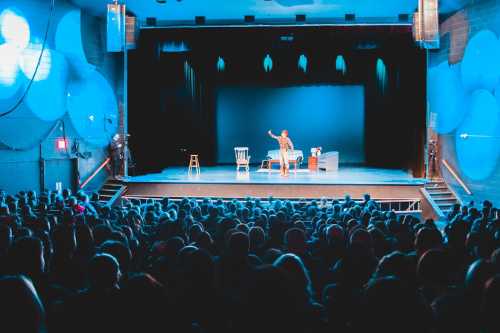
One of the most spectacular venues is the Maison Symphonique, a massive, indoor concert hall with perfect acoustics. When a famous, world-renowned jazz singer steps up to the microphone in this hall, the room is so quiet you can hear a pin drop. The singer closes her eyes, and a note comes out of her mouth so pure, so full of pain and joy, that people in the audience start to cry. Jazz is the music of human emotion. It was born from hardship, from the struggles of people who needed a way to express their feelings when they did not have the words. When a jazz musician plays a sad song, they are not just playing notes; they are sharing their soul. And when the audience listens, they are offering their empathy. It is a deeply intimate connection, even in a room with three thousand people.
But the festival is not just about the music; it is about the atmosphere. The streets are filled with the smell of incredible food. Because Montreal is a foodie paradise, the festival grounds are surrounded by pop-up restaurants and food trucks. You can eat a classic Canadian poutine, which is french fries covered in cheese curds and hot gravy. You can eat a warm, sweet maple syrup pie, or a savory meat pie from the countryside. People buy their food and sit on the grassy lawns of the Place des Arts, the cultural center that acts as the heart of the festival. As the sun sets, the sky turns a brilliant shade of purple, and the city lights twinkle on. The outdoor stage lights up, and a massive brass band starts playing a joyful, upbeat tune. The crowd claps along, the children dance, and the feeling of pure, unadulterated happiness is palpable.
The economic and cultural impact of the festival on Montreal is enormous. It brings millions of visitors to the city, filling the hotels, the restaurants, and the shops. But more importantly, it fills the souls of the locals. It gives them a sense of pride. They see their city celebrated on the world stage, recognized as a capital of culture and art. The festival also runs extensive educational programs. They bring musicians into the schools, teaching children how to play the trumpet, the bass, and the drums. They teach them that jazz is about listening to each other, about taking turns, and about supporting the person who is soloing. These are not just musical lessons; they are lessons in democracy, in cooperation, and in respect.
As the 2026 festival reached its final weekend, the energy in the city was electric. The final night always features a massive, outdoor gala that lasts until the early hours of the morning. The streets are packed shoulder to shoulder. When the final chord is struck, and the cymbals crash for the last time, a giant cheer rises up from the crowd. It is a cheer of gratitude. Gratitude for the music, for the summer, for the city, and for each other. The musicians pack up their horns, the stages are taken down, and the cars slowly return to the streets. But the feeling remains. The city has been cleansed and renewed by the power of sound.
The Montreal International Jazz Festival is a testament to the belief that art belongs to everyone. It is a rejection of the idea that beautiful things must be locked behind paywalls or velvet ropes. It is a declaration that a city can be a stage, that its citizens can be the audience, and that the soundtrack of our lives is best when it is shared. The Globe and Mail arts section will continue to celebrate this magnificent Canadian institution, reminding us that as long as there is breath in our bodies and sunshine in the sky, there will always be a song waiting to be played.
Merci Montréal! ???????????? What an incredible 10 days of music, sun, and joy. The 2026 Festival International de Jazz de Montréal has come to a close, but the music lives on in our hearts. See you next summer! ????☀️ #FIJM#MontrealJazz
— Festival International de Jazz de Montréal (@jazzmontreal) June 29, 2026
So, the next time you are walking down the street and you hear a faint, beautiful melody drifting through the air, stop and listen. Follow the sound. You might just find a group of musicians sharing their souls, and a crowd of strangers sharing a moment of perfect harmony. Remember the green hills of Glastonbury, the bright lights of Broadway, and the warm, jazz-filled streets of Montreal. Remember that entertainment is not just about being distracted; it is about being connected. It is about the beautiful, messy, wonderful symphony of being human, played together, one note at a time.


Comments (0)
No comments yet. Be the first to share your thoughts!
Want to join the discussion?
Please log in to post a comment.
Login NoworCreate an Account