
The Secret Handshake of the Masters: How Burberry’s 'Academy of Future Heritage' in London is Saving British Craftsmanship Through Digital Magic

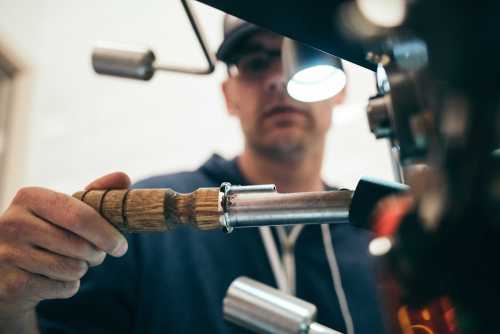
Imagine you are learning how to build the most magnificent, complicated wooden castle. You have a grandfather who is a master builder. He knows exactly how to cut the wood so it fits perfectly without any nails, how to carve the tiny little flags, and how to paint the moat so it looks like real water. He learned these secrets from his grandfather, and his grandfather learned them from his. It is a beautiful, unbroken chain of knowledge, a secret handshake passed down through generations. But one day, you realize that your grandfather is getting older, and the young people in your village do not want to learn how to carve wood anymore; they want to build castles inside computer games. The old secrets are in danger of being forgotten forever. This is exactly what was happening to the legendary British tailoring and leatherworking crafts in the United Kingdom. But in the summer of 2026, the iconic luxury brand Burberry has stepped in to save the secret handshake. They have opened the 'Academy of Future Heritage' in London, a place where the old masters and the young computer wizards are working together to ensure the magic of British craftsmanship never dies.
To understand why this Academy is such a vital, monumental project, we have to understand what 'heritage' means in the world of luxury fashion. When you buy a very expensive Burberry trench coat, you are not just buying a piece of fabric to keep the rain off your shoulders. You are buying a piece of history. You are buying the fact that this exact same pattern was worn by pilots in the First World War, by detectives in old movies, and by kings and queens. The value of the coat comes from the 'heritage,' the deep, rich story of the brand. And that story is written by the hands of the artisans—the men and women who know how to stitch the gabardine fabric perfectly, how to cut the leather so it never frays, and how to check every single button. But these artisans are retiring, and for a long time, the fashion industry relied on importing cheap, mass-produced clothes from factories overseas, forgetting how to make things by hand in Britain.
Burberry’s Academy of Future Heritage, located in a beautifully restored, historic brick building in the heart of London’s East End, is a direct response to this crisis. It is not just a school; it is a massive, multi-million-pound investment in the human brain and the human hand. The Academy takes young, talented students who are brilliant at digital design—kids who can create amazing 3D models of clothes on their computers—and it pairs them with the master craftsmen who have been working with their hands for forty years. The goal is to create a new type of luxury artisan: someone who has the soul and the skill of an old-world tailor, but who also speaks the language of the future.
The most mind-blowing technology being taught at the Academy is something called 'Digital Twin Pattern Making.' To explain this to a child, imagine you want to sew a very complicated jacket. In the old days, the master tailor would take a giant roll of paper, draw the shapes of the sleeves and the back with a pencil, cut them out, and pin them to the fabric. If they made a mistake, they wasted the fabric. At the Academy, the students put on special virtual reality glasses. They see a hologram of the jacket floating in the air in front of them. They use their hands to shape the digital fabric, pulling and stretching it in the computer. The computer calculates exactly how the real fabric will drape, how it will move when the person walks, and how much material is needed. It is like having a magic crystal ball that shows you the future of the coat before you even cut a single piece of cloth. This saves thousands of yards of wasted fabric, making the process incredibly sustainable.
But the Academy does not just rely on computers; it fiercely protects the physical, tactile skills. The students spend half their time in the digital lab, and the other half in the 'Atelier,' which is a giant, sunlit room filled with heavy wooden tables, heavy iron sewing machines, and the smell of wool and leather. Here, the master tailors teach them the 'secret handshake.' They teach them how to feel the tension of a thread just by holding it between their fingers. They teach them how to use a heavy, hot iron to press a seam so flat it looks like it was painted on. They teach them that a luxury coat must feel like a gentle, protective hug, and you cannot program a computer to understand the feeling of a hug; you have to feel it yourself. This blending of the hyper-digital and the deeply physical is creating a completely new standard for luxury manufacturing.
The economic impact of the Academy on the United Kingdom’s luxury sector is profound. For years, the UK fashion industry suffered from a massive 'skills gap.' Brands wanted to make high-end, expensive clothes in Britain to justify the luxury price tag, but they could not find enough skilled workers to do it. The Academy is solving this by creating a pipeline of world-class talent. Graduates of the Academy are not just getting jobs; they are being headhunted by every major luxury house in the world. They are becoming the new master builders. Furthermore, by keeping this high-level manufacturing in London, Burberry is supporting a massive ecosystem of local businesses. The companies that make the special threads, the companies that forge the brass buttons, the companies that dye the fabrics—all of these local, British suppliers are thriving because the Academy is producing enough high-end garments to keep them in business.
Culturally, the Academy is a massive point of pride for the British public. It is a statement that the UK is not just a place where old history is kept in museums; it is a place where history is actively being reinvented. The government has heavily supported the initiative, recognizing that the luxury fashion sector is one of the few areas where Britain has a massive, unbeatable global advantage. French brands have their leather, Italian brands have their silk, but British brands have their heritage, their tailoring, and their unique, quirky sense of style. By investing in the Academy, Burberry is ensuring that the 'British' in British luxury remains authentic, verifiable, and world-class.
The students at the Academy are also being taught the business of luxury. They learn about 'brand equity,' which is a fancy way of saying 'how much people trust and love your name.' They learn that if you sell a cheap, badly made coat with the Burberry check on it, you are not just making a bad product; you are breaking the promise of the secret handshake. You are insulting the grandfather who taught you how to build the castle. They are taught that true luxury is about integrity. It is about knowing that the coat you made will still look beautiful, still keep the rain out, and still feel perfect twenty years from now, when the student who made it is a master teacher themselves.
As the summer of 2026 progresses, the first collection entirely designed and produced by the Academy’s new generation of 'hybrid artisans' is being prepared for London Fashion Week. The industry is buzzing with anticipation. Critics and buyers are eager to see if the digital patterns and the hand-stitched seams can create something that feels both completely futuristic and deeply, historically British. The Academy of Future Heritage is more than just a school; it is a time machine. It is reaching back into the past to grab the beautiful, essential skills of the old masters, and pulling them forward into the future, ensuring that the secret handshake of British craftsmanship will be passed down to the next generation, and the next, and the next, forever.
Official Burberry Academy Updates
Preserving the past, designing the future. The Burberry Academy of Future Heritage in London is now training the next generation of luxury artisans, blending master craftsmanship with cutting-edge digital design. https://t.co/burberryacademy#BurberryAcademy#BritishLuxury
— Burberry (@Burberry) June 15, 2026
Visit the official site at Burberry Official
Related Articles

The Financialization of the Pitch: How Private Equity, Labor Friction, and Geopolitics Are Rewiring Global Football
Sep 18, 2026
The Hedge Fund on Cleats: Football's Regulatory Margin Call and the MCO Reckoning
Sep 17, 2026
Comments (0)
No comments yet. Be the first to share your thoughts!
Want to join the discussion?
Please log in to post a comment.
Login NoworCreate an Account