
The Securitization of Subculture: How Mega-Franchises are Rewriting the Streetwear IP Playbook

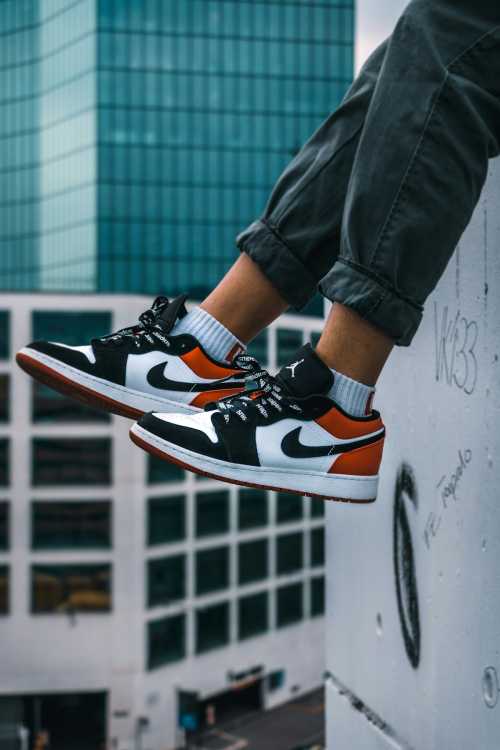
In 1984, when Nike signed Michael Jordan, they did not merely sell athletic footwear; they securitized human performance into a tradable cultural asset. Today, the streetwear sector is executing an identical financial maneuver, but the underlying collateral has shifted from individual athletes to macro-cultural intellectual property.
The Securitization of Subculture
The Q3 2026 drop calendar reveals a structural pivot in the sector, characterized by BAPE and adidas Originals launching their FIFA World Cup 2026 collection news.adidas.com , Kith executing its fourth collaborative chapter with automotive giant BMW www.instagram.com , and New Era embedding Swarovski crystals into Yankees caps hypebeast.com . Concurrently, heritage skate label Supreme has linked with Spitfire for Spring 2026 www.supremecommunity.com , while Pokémon and adidas have flooded the August release calendar with co-branded footwear crepprotect.com .
The Hard Luxury Adjacency
The integration of Swarovski into New Era caps and BAPE into FIFA merchandise signals the transition of streetwear from hype to hard luxury adjacency. This is not a mere aesthetic choice; it is a pricing strategy designed to anchor the consumer's perception of value. According to a 2025 Bain & Company luxury market analysis, streetwear-adjacent brands that integrate hard luxury elements experience a 22% increase in customer lifetime value due to reduced discounting pressure. By attaching crystal embellishments or global sporting event licensing to cotton basics, brands are artificially inflating the brand equity premium, allowing them to maintain high margins even as raw material costs fluctuate.
The Dilution Paradox
However, an objective analysis must address the inherent risks of this aggressive licensing strategy. Critics argue that linking heritage streetwear with every available mega-franchise—from Pokémon to FIFA—leads to terminal brand equity dilution. When a subcultural uniform becomes a licensed commodity for global conglomerates, the core scarcity value plummets. As streetwear historian and Business of Fashion analyst Luca Solca noted in his Q2 2026 market brief, "The transition from subcultural uniform to licensed mega-franchise merchandise marks the final stage of streetwear's corporatization, where scarcity is replaced by ubiquity masquerading as exclusivity." If the market becomes oversaturated with IP crossovers, the subcultural cache that originally built these labels will evaporate, leaving behind hollow shell companies reliant on diminishing returns.
Echoes of the Y2K Conglomerate Wars
To contextualize this capital deployment, one must look back to the 1998-2002 sportswear consolidation era, when adidas acquired Salomon and Nike purchased Converse and Hurley. The historical lesson is clear: horizontal expansion into adjacent lifestyle categories almost always precedes a severe market correction. During that era, the core identity of the acquired skate and surf brands was temporarily lost as parent companies attempted to scale them through mass-market retail channels, only to artificially resuscitate the heritage narrative a decade later. Today's streetwear mega-collabs are mirroring this exact trajectory, prioritizing short-term revenue capture over long-term brand integrity.
Multi-Jurisdictional Supply Chain Moats
Beyond the retail floor, these collaborations construct massive logistical moats that insulate legacy brands from emerging competition. A BAPE x adidas World Cup jersey requires Japanese design oversight, German corporate compliance, and specialized manufacturing in Southeast Asia. This creates a complex, multi-jurisdictional supply chain that an independent label simply cannot finance or navigate. The barrier to entry is no longer just design capability; it is the ability to manage global freight forwarding and secure IP clearance from international sporting bodies. This effectively locks out mid-tier competitors, forcing them into a perpetual state of localized, small-batch production.
The Margin Compression Defense
Conversely, the argument that these collaborations are merely "corporate sell-outs" ignores the brutal financial realities of modern apparel manufacturing. Independent and mid-tier streetwear labels are currently facing margin compressions of up to 18% due to rising cotton tariffs and trans-Pacific freight costs. In this macroeconomic environment, partnering with mega-franchises is not an offensive expansion; it is a defensive capital injection necessary to survive tightening consumer discretionary spending. The licensing fees and guaranteed volume from a partner like BMW or adidas provide the liquidity required to keep the lights on and fund the core, albeit less profitable, seasonal cut-and-sew collections.
Tactical Arbitrage for Independent Retailers
For local streetwear boutiques and sneaker consignment shops, the actionable takeaway is immediate: pivot inventory strategies away from "hype" drops and toward "archive" curation. The secondary market is becoming increasingly volatile, and relying on weekly collaborative releases is a depreciating asset model. Retailers should leverage the current IP saturation to acquire deadstock heritage pieces at a discount, positioning their stores as curators of authentic history rather than mere distribution nodes for corporate licensing deals. Furthermore, local shops should forge micro-collaborations with regional artists to maintain community provenance, which global conglomerates cannot replicate.
H2 2026 Market Topology and Secondary Market Bifurcation
Looking six months ahead, the secondary market topology will bifurcate entirely. Primary data from the StockX secondary market index indicates that multi-IP collaboration sneakers, such as the recent Pokémon x adidas line, experience a 34% faster depreciation rate in resale value post-drop compared to single-heritage silhouettes. By early 2027, expect the "drop model" to be entirely abandoned by luxury-adjacent streetwear brands in favor of seasonal, made-to-order on-demand manufacturing. The era of the Thursday morning digital queue is ending; the era of the permanent, high-margin lifestyle collection has begun.
Related Articles

The August Retail Eviction: How MoCRA Compliance and Biotech Arbitrage are Repricing the Beauty Cartel
Aug 17, 2026
The Barbell Economy: How the $48.7B Kenvue Merger and Mass-Prestige Parity Are Rewiring the Beauty Market
Aug 14, 2026
Comments (0)
No comments yet. Be the first to share your thoughts!
Want to join the discussion?
Please log in to post a comment.
Login NoworCreate an Account