
The $82 Billion Pivot: How Streaming’s Consolidation Phase is Recreating the Cable Monopoly

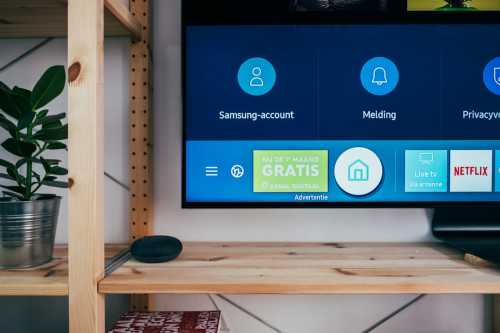
Imagine purchasing a sleek, modern smartphone only to discover that every individual application requires a separate, non-transferable monthly subscription just to function. This is the precise trajectory of the modern digital entertainment landscape. The promise of à la carte streaming has collapsed under the weight of its own economic gravity, giving way to a consolidated, hyper-monetized ecosystem that mirrors the very cable monopolies it once vowed to destroy.
The $82 Billion Pivot: Content Meets Distribution
The foundational shift in the media landscape is no longer theoretical; it is capitalized. Netflix’s proposed $82.7 billion acquisition of Warner Bros. Streaming and Studios represents a paradigm shift from content licensing to absolute vertical integration [[51]]. Concurrently, Paramount Global and Warner Bros. Discovery are actively exploring a unified streaming service that would merge HBO Max and Paramount+ into a single, monolithic platform [[56]]. This is not merely corporate reshuffling. It is a defensive fortification. By absorbing legacy studio assets, generalist streamers are attempting to control both the pipeline and the product, insulating themselves from the volatile licensing market that has historically eroded their EBITDA margins.
The Illusion of Consumer Choice in Mega-Mergers
Proponents of these mega-mergers argue that consolidation yields operational efficiencies, ultimately stabilizing prices for the end consumer. However, this perspective warrants rigorous skepticism. While the headline subscription fee may remain artificially suppressed to evade antitrust scrutiny, the true cost is displaced. We are witnessing the proliferation of hidden fee structures, aggressive ad-tier inflation, and the systematic stripping of legacy content libraries to maximize short-term tax write-downs. The argument that consolidation benefits the consumer is a compliance theater trap; it ignores the systemic reduction in market competition that inevitably leads to degraded service quality and fewer innovative content risks.
Cable 2.0: The Bundling Boomerang
The most ironic outcome of the streaming wars is the resurrection of the bundle. Consumers who fled cable television in the 2010s to escape bloated, irrelevant channel packages are now being funneled back into identical structures. The market has seen the rapid normalization of hybrid packages, such as the Hulu, Disney+, and ESPN+ Unlimited bundle, which are now the default retention mechanism for major platforms [[12]]. Even more aggressive are the cross-platform alliances, such as the proposed integration of Now TV, Netflix, Peacock, and Apple TV+ into a single $30 monthly tier [[10]]. This is Cable 2.0. The delivery mechanism has changed from coaxial cable to IP, but the economic model of forcing consumers to subsidize underperforming assets to access premium content remains entirely intact.
The Sports Rights Arms Race and the CAC Crisis
Live sports have transitioned from a supplementary content vertical to the primary Customer Acquisition Cost (CAC) driver for streaming platforms. The financial commitment is staggering. Streaming platforms are projected to spend more than $14.2 billion on sports rights in 2026, with generalist streamers now representing 44% of that total expenditure, a significant jump from previous years [[6]]. This trend is underpinned by a broader market trajectory: industry forecasts indicate that by 2030, the value of global sports rights will reach $78 billion, marking a 20% increase from 2025 levels [[2]]. Platforms are no longer bidding for sports to enhance their libraries; they are bidding to prevent subscriber churn and boost Lifetime Value (LTV). The ROI model has fundamentally shifted from direct profitability on sports content to using live events as a loss-leader to sustain overall platform valuation.
The First-Party Data Imperative: Why Vertical Integration Survives
Conversely, a compelling counter-argument exists for this aggressive vertical integration. In a post-third-party-cookie digital ecosystem, first-party data is the most valuable commodity a media company can possess. Industry analysts note that recent strategic moves are explicitly designed to "gain a leading connected TV platform and a direct relationship with millions of streaming subscribers" [[52]]. Without owning the distribution pipe, legacy studios are reduced to mere content farms, renting their intellectual property to tech giants who harvest the underlying viewer data. Therefore, from a purely strategic standpoint, owning the end-to-end user journey is not a monopolistic luxury; it is an existential necessity for long-term survival in an algorithm-driven advertising market.
Echoes of 2000: The AOL-Time Warner Ghost
Historical precedent offers a sobering lens through which to view this consolidation. The current wave of media mergers bears a striking resemblance to the 2000 AOL-Time Warner merger, which was similarly heralded as the ultimate convergence of new-world distribution and old-world content. That $164 billion deal ultimately resulted in a $99 billion write-down and a messy divorce. The lesson from that era is that cultural friction between tech-centric distribution teams and legacy media creative divisions is notoriously difficult to reconcile. While today’s balance sheets are more disciplined, the fundamental risk of overpaying for synergies that fail to materialize remains a persistent threat to shareholder value.
The Fragmentation of Local Sports and the DTC Mirage
Beyond the macro-level studio mergers, the micro-level impact on regional sports is equally disruptive. The collapse of traditional Regional Sports Networks (RSNs) has forced a fragmented Direct-to-Consumer (DTC) reality. For example, DAZN recently acquired exclusive local streaming rights to NHL Los Angeles Kings games, pulling them away from broader regional cable packages [[28]]. Similarly, DAZN extended its partnership with Super League Basketball to bring every 2026/27 season game directly to fans worldwide [[25]]. While this empowers niche fanbases, it forces the average sports consumer to maintain a roster of hyper-specialized, geographically restricted subscriptions, exacerbating subscription fatigue and pricing out casual viewers.
Strategic Imperatives for Stakeholders
For local businesses and advertisers, the imperative is clear: audit media spend immediately. Shift programmatic video advertising budgets away from fragmented, standalone streaming apps and toward the emerging unified ad tiers of consolidated platforms. This guarantees reach and simplifies attribution modeling. For consumers and citizen advocates, the strategy is defensive auditing. Cancel standalone, single-sport applications. Historical market patterns suggest that within 18 months of these RSN collapses, a consolidated "sports-only" aggregator bundle will emerge. Waiting for this market correction will yield significant financial relief.
The Six-Month Horizon: Walled Gardens and Retaliatory Bundles
Looking ahead to the next two quarters, the landscape will harden into distinct, fortified ecosystems. Expect the first major regulatory hurdle or Department of Justice inquiry regarding the Netflix-Warner Bros. transaction, which will likely be framed around market concentration in live sports and news. In retaliation, the Disney-Fox-Comcast axis will accelerate its own bundling initiatives, creating a formidable counterweight. By mid-2027, the concept of "à la carte" streaming will be officially relegated to industry history books, replaced entirely by three or four monolithic, walled-garden platforms that dictate both price and content availability. The streaming revolution has not failed; it has simply matured into the very establishment it sought to disrupt.
Related Articles

The Digital Gold Rush: Algorithmic Consolidation and the End of the Unregulated Creator Economy
Sep 22, 2026![[The End of the Streaming Gold Rush: How Sports Rights, Churn, and Consolidation Are Rewiring Digital Media]](https://www.crimaz.com/assets/images/no-image.jpg)
[The End of the Streaming Gold Rush: How Sports Rights, Churn, and Consolidation Are Rewiring Digital Media]
Sep 22, 2026
Comments (0)
No comments yet. Be the first to share your thoughts!
Want to join the discussion?
Please log in to post a comment.
Login NoworCreate an Account