
The Terroir of the Arena: How Luxury Conglomerates are Financializing the Athletic Body

The Terroir of Modern Wealth
In the world of fine viticulture, the concept of terroir dictates that the soil, climate, and environment impart a specific, unreplicable valuation to the grape. In the third quarter of 2026, the global luxury conglomerates have definitively concluded that the terroir of modern cultural capital is no longer the Parisian salon or the Milanese piazza; it is the sweat-soaked, hyper-televised arena of elite sports. Over the past sixty days, a synchronized capital deployment has fundamentally rewired the intersection of fashion and athletics: Gucci executed a title partnership with the Alpine F1 Team, Miu Miu launched a luxury Wimbledon capsule with Coco Gauff and New Balance, Jannik Sinner was anointed as the new face of Gucci, the NFL formalized its "tunnel walk" into a league-wide strategic asset, and Caitlin Clark secured an unprecedented signature deal with Nike. These are not isolated marketing activations; they represent the total financialization of the athletic body as the ultimate luxury distribution channel.
The Paddock as the New Country Club
Mainstream business media frames Gucci’s Alpine F1 sponsorship as a standard logo-slapping exercise, ignoring the deeper structural shift in global luxury retail. The Formula 1 paddock has effectively replaced the private members' club as the primary networking node for ultra-high-net-worth individuals. By embedding themselves directly into the operational hierarchy of a racing team, luxury houses are not merely buying broadcast impressions; they are purchasing access to the sovereign wealth funds and tech billionaires who utilize the sport as a mobile boardroom. The deal is estimated to be worth upwards of $150 million, marking the first time a luxury brand has become a title partner in F1 www.facebook.com . This impacts the Fashion & Luxury Goods sector by shifting capital expenditure away from traditional flagship real estate in Tokyo and New York, redirecting it toward high-velocity, experiential environments where the conversion rate for six-figure timepieces and bespoke luggage is exponentially higher.
Market Intelligence: The F1 paddock has officially become a runway. Watch how Gucci is driving the luxury-sports convergence. View Verified Broadcast
Counterweight: The Dilution of the Maison
It is analytically convenient for heritage purists to argue that placing a double-G monogram on an F1 chassis or a tennis skirt inherently dilutes the exclusivity and artisanal mystique of the maison. This perspective relies on the outdated Veblen good theory, which assumes that luxury demand decreases as accessibility increases. However, it ignores the modern luxury paradigm where cultural ubiquity, rather than scarcity, drives the aspirational premium among Gen Z and Alpha demographics. The true risk of dilution does not stem from sports sponsorships, but from a failure to integrate the athletic narrative into the core design language of the house, resulting in disjointed merchandise rather than cohesive cultural statements.
Derivatives in the Tunnel
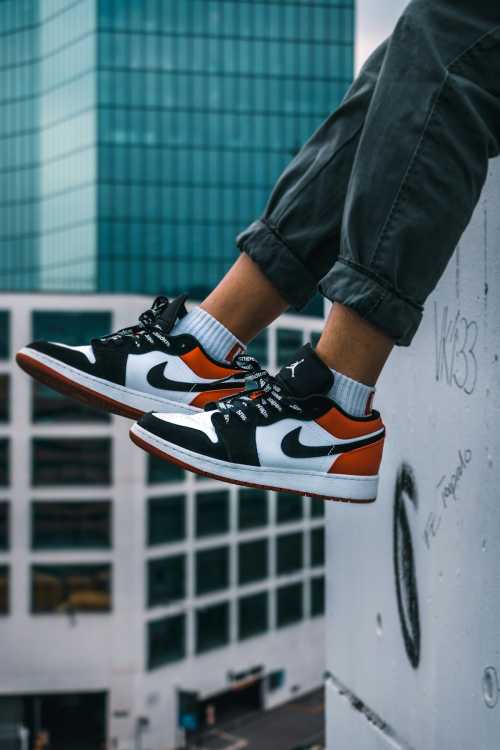
Simultaneously, the American gridiron has quietly established a real-time derivatives market for streetwear and high horology. What began as organic social media moments has evolved into a heavily regulated corporate apparatus, where the NFL's tunnel walk has transformed into a full-blown league strategy complete with dedicated brand partnerships willcolahan.substack.com . When a star quarterback steps off the bus wearing a rare Patek Philippe or a limited-edition Pelle Pelle leather jacket, he is not just expressing personal style; he is instantly repricing the secondary market value of those assets. This impacts the broader Fashion category by turning the pre-game ingress into a high-frequency trading floor. Luxury brands and sneaker syndicates now use athlete optics to manipulate consumer scarcity, utilizing algorithmic scraping to adjust dynamic pricing on their direct-to-consumer portals within minutes of a player's arrival at the stadium.
Echoes of the Nineties: When Armani Dressed the Pitch
To contextualize this capital deployment, one must look back to the mid-1990s, when Giorgio Armani and Prada began formally outfitting the English and Italian national football teams. That era marked the initial collision of bespoke tailoring and athletic celebrity, teaching the industry that an athlete's physical discipline translated perfectly to the drape of luxury wool. However, the 2026 iteration is vastly different in scope and financial engineering. Where the 1990s relied on the organic charisma of players like David Beckham to move units, today’s landscape is characterized by algorithmic targeting, direct-to-consumer supply chains, and multi-million-dollar title sponsorships. Furthermore, the 1990s collaborations were largely confined to off-field tailoring; the athletes wore Armani to the award ceremonies, but they wore Nike and Adidas on the pitch. The 2026 paradigm has breached the actual field of play. When Jannik Sinner steps onto the grass at Wimbledon, the luxury branding is woven directly into the performance textiles, blurring the line between technical equipment and high-fashion runway. The lesson from the nineties is that athletic authenticity is the most durable currency in fashion, but the modern application requires institutionalizing that authenticity into the corporate balance sheet.
The Gender-Liquidity Premium
Perhaps the most profound unseen implication is the aggressive leveraging of female athletes to unlock stagnant luxury demographics. The strategic elevation of Coco Gauff via Miu Miu’s Wimbledon collaboration and Caitlin Clark via Nike is a calculated maneuver to capture the female high-net-worth wallet, a segment that has historically been underserved by traditional, male-dominated sports marketing. Clark’s massive 8-year Nike contract, which includes a highly anticipated signature shoe line, signals a definitive pivot in how apparel giants value female intellectual property www.allstan.com . By positioning these athletes as the vanguard of luxury fashion, conglomerates are bypassing the saturated Hollywood A-list, utilizing the unscripted, meritocratic drama of women's sports to authenticate high-end apparel. This impacts the Fashion & Luxury Goods sector by fundamentally altering the omnichannel attribution models; a single match-point victory in a Miu Miu pleated skirt generates a higher immediate conversion rate on luxury e-commerce platforms than a heavily scripted Met Gala appearance.
Counterweight: The Sovereignty of the Athlete
Conversely, framing these athletes purely as corporate mannequins ignores the profound shift in labor leverage and intellectual property ownership. The modern elite athlete is no longer a passive endorser; they are equity partners, creative directors, and media conglomerates in their own right. The integration of high fashion into their daily routines is often driven by the athletes' own styling teams and management agencies, who use these partnerships to build personal brands that will outlast their physical prime. To view this dynamic solely as corporate extraction strips the athletes of their agency and ignores the lucrative, symbiotic wealth-generation occurring at the intersection of the locker room and the design studio.
Tactical Maneuvers for the Main Street Boutique
For local retail operators, regional fashion buyers, and independent boutique owners, the immediate directive is to pivot from traditional seasonal forecasting to "stadium-luxury" micro-capsules. You cannot outspend LVMH or Kering on global F1 activations, but you can capitalize on the localized demand generated by the tunnel walk and the tennis court. Independent retailers should aggressively monitor the ingress fits of regional sports franchises, utilizing social listening tools to identify emerging streetwear and luxury accessory trends before they hit mainstream distribution. Furthermore, local businesses must begin treating local collegiate and professional athletes not as charity cases for free merchandise, but as high-ROI micro-influencers, offering equity or revenue-share models to secure organic, localized placement in their daily routines.
The Q1 2027 Convergence
In six months, as we approach the first quarter of 2027, the boundary between the luxury holding company and the sports franchise will dissolve entirely. We will witness the first major acquisition where a European luxury conglomerate purchases a minority, operational stake in a top-tier sports team or athletic management agency, effectively merging the IP of the maison with the roster of the club. Furthermore, the secondary market for athlete-worn luxury will become fully institutionalized. We will see the launch of specialized auction houses and blockchain-verified registries dedicated exclusively to "tunnel-worn" and "match-worn" high fashion, creating a new alternative asset class that rivals fine art and vintage automobiles. The smart money is already moving into this space, recognizing that a Gucci-branded Alpine F1 steering wheel or a Miu Miu tennis skirt worn during a Grand Slam final holds more long-term cultural equity than a traditional limited-edition handbag. The entities that fail to view their athletic partnerships as structural equity plays, rather than mere marketing expenses, will find themselves priced out of the cultural zeitgeist, left holding depreciating inventory while their competitors own the very arenas in which the games are played.
Related Articles

The Tasting-Menu Trap: How Luxury Fashion Priced Out Its Own Future
Aug 13, 2026
The Biological Margin Call: How In Vivo CRISPR and Algorithmic Trials are Rewiring Medical Research Economics
Aug 11, 2026
Comments (0)
No comments yet. Be the first to share your thoughts!
Want to join the discussion?
Please log in to post a comment.
Login NoworCreate an Account