
The Tollbooth Economy: How Streaming Re-Bundling and Regulatory Friction Are Rewiring Digital Media

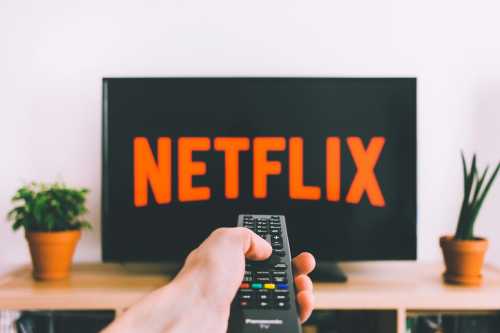
Just as the transition from public roads to privatized toll highways did not merely change how we commute but fundamentally rewired the economics of urban mobility, the current evolution of the streaming industry is no longer just about cutting the cord. It is actively reconstructing a fragmented digital landscape into a highly monetized, algorithmically governed tollbooth system.
The Catalyst: A Convergence of Monetization and Regulatory Friction
The core event is a synchronized market realignment characterized by Netflix surpassing 325 million global subscribers while projecting a 12-14% revenue growth and a 31.5% operating margin for 2026 [[43]]. Concurrently, aggressive password-sharing crackdowns have successfully converted millions of freeloaders into paying subscribers, prompting rival platforms to adopt similar restrictive measures [[45]]. This monetization push is compounded by the Free Ad-supported Streaming TV (FAST) market surging to a $14.33 billion global valuation [[18]], all while federal regulators actively scrutinize live sports streaming bundles under the archaic framework of the 1961 Sports Broadcasting Act [[24]].
The Illusion of the "Cord-Cutter's Utopia"
Mainstream coverage frequently celebrates the streaming revolution as a liberation from bloated cable packages, yet it systematically ignores the rapid re-bundling of these services into "Cable 2.0." As platforms introduce ad-supported tiers—Netflix has already seen its ad-supported tier users rise by 14%, signaling a broader industry pivot toward dual-revenue models—and crack down on password sharing, the initial promise of à la carte, commercial-free viewing has evaporated [[44]]. Consumers are now navigating a labyrinth of micro-subscriptions, where the cumulative cost of maintaining access to fragmented content libraries often exceeds traditional cable bills. This structural shift effectively transfers the financial burden of content acquisition directly onto the consumer, while platforms extract dual revenue streams through both subscription fees and targeted advertising, maximizing yield without proportionally increasing content investment.
The Data Harvest Behind the FAST Facade
The narrative surrounding the explosive growth of Free Ad-supported Streaming TV is often framed as a democratizing force for budget-conscious viewers. However, this perspective obscures the severe privacy implications and data commodification inherent in these platforms. Industry analysis confirms that the FAST sector is a $14.33 billion global market in 2026, on track to reach 131.4 million US viewers this year [[18]]. Behind this lean-back viewing experience lies a sophisticated apparatus of behavioral tracking. Unlike traditional broadcast television, FAST platforms capture granular, second-by-second engagement data, allowing advertisers to micro-target audiences with unprecedented precision. The unseen implication is that viewers are no longer the customers; they are the raw material being refined and sold to the highest bidder, effectively monetizing their attention and personal data without transparent compensation.
The Antitrust Paradox of Live Sports Bundling
While legacy studios consolidate their on-demand libraries, the migration of live sports to streaming platforms has triggered a profound regulatory paradox. The Department of Justice and the FCC are now questioning whether the 1961 Sports Broadcasting Act’s antitrust shield, originally designed for over-the-air broadcast, can legally justify exclusive, paywalled streaming bundles [[24]]. Legal experts warn that increasing coordination among major streaming competitors, especially where exclusive live sports rights are involved, raises significant concerns under Section 1 of the Sherman Act [[22]]. This creates a precarious environment where leagues and platforms are attempting to replicate the monopolistic pricing power of regional sports networks within a digital ecosystem that was ostensibly built to foster competition. The result is a bifurcated market where live sports become a luxury good, alienating the working-class demographic that historically formed the bedrock of fandom.
The Democratization Defense: A Necessary Counter-Perspective
Proponents of the current streaming architecture argue that ad-supported tiers and FAST channels are essential mechanisms for democratizing access to premium content. They contend that without these subsidized models, the escalating costs of content production would price out lower-income households entirely, creating an exclusive, high-cost entertainment enclave. Furthermore, they argue that password-sharing crackdowns are a legitimate enforcement of intellectual property rights, ensuring that creators are fairly compensated for their work. While these arguments hold merit regarding short-term accessibility and copyright enforcement, they conveniently ignore the long-term erosion of consumer trust. True democratization requires transparent pricing and robust public options, not merely the substitution of one form of extraction (subscription fees) for another (aggressive data harvesting and ad saturation).
Echoes of the 1996 Telecommunications Act
This current fragmentation and regulatory friction mirror the legislative battles surrounding the Telecommunications Act of 1996. At that time, deregulation was championed as a catalyst for competition and consumer choice, promising a golden age of diverse media ownership. History demonstrates that this optimism was misplaced; the Act instead triggered a wave of unprecedented media consolidation, reducing hundreds of independent voices to a handful of corporate conglomerates. The lesson for contemporary policymakers is clear: granting broad operational flexibility to digital platforms without stringent, enforceable consumer protection mandates inevitably leads to market consolidation. Just as the 1996 Act required baseline public interest obligations, any modern regulatory framework for streaming must mandate transparent pricing and data privacy standards to prevent the total financialization of the media product.
The Consumer Choice Imperative: Nuancing the Monopoly Narrative
Conversely, the prevailing argument that streaming re-bundling universally harms consumers overlooks the sovereignty imperative of market-driven content curation. The legacy cable model was notoriously rigid, forcing consumers to subsidize dozens of unwanted channels to access a handful of desirable ones. The current fragmentation, while financially taxing, at least allows consumers to rotate subscriptions based on immediate viewing preferences, exercising a degree of financial agency that was impossible under the old regime. Therefore, characterizing all platform consolidation as inherently anti-consumer ignores the fact that a dynamic, albeit complex, marketplace ultimately forces studios to compete on content quality rather than relying on captive, monopolistic audiences.
Strategic Imperatives for Market Participants
Local businesses and citizens must immediately adapt to this shifting digital landscape. Consumers should aggressively audit their monthly recurring charges, utilizing subscription rotation strategies to maintain access to desired content without succumbing to cumulative billing fatigue. For local businesses, particularly those in hospitality and retail, the imperative is to renegotiate commercial streaming licenses, ensuring compliance with the increasingly stringent public performance rights associated with ad-supported and password-restricted platforms. Additionally, independent content creators must prioritize building direct-to-consumer relationships through owned platforms, insulating themselves from the algorithmic volatility and revenue-share whims of mega-platforms.
The Six-Month Horizon
Within the next six months, expect federal regulators to issue formal guidance or initiate litigation targeting joint sports streaming ventures, temporarily freezing some high-profile bundle launches and forcing structural concessions on consumer pricing. Simultaneously, the market will witness a wave of consolidation among mid-tier FAST providers, as larger tech conglomerates acquire niche channels to bolster their programmatic advertising inventories. Ultimately, the industry will begin to price in a "churn premium," meaning platforms will be forced to offer more flexible, short-term contractual commitments to retain subscribers in an increasingly saturated and price-sensitive market.
Related Articles
The Architecture of Attention: How Mega-Mergers and Algorithmic Gatekeeping Are Rewiring Streaming
Sep 18, 2026
The Streaming Profitability Mandate: How Q3 2026 Exposed the Structural Fragility of Digital Video
Sep 18, 2026
Comments (0)
No comments yet. Be the first to share your thoughts!
Want to join the discussion?
Please log in to post a comment.
Login NoworCreate an Account