
The Ultimate Global Sleepover: How the USA and Canada Are Perfecting the Massive, Historic 2026 World Cup Party

To truly understand the monumental, earth-shaking, absolutely gigantic event that is about to unfold across North America, we need to start with a very simple, easy-to-imagine scenario. Imagine that you are invited to the biggest, most spectacular, most mind-blowing sleepover in the entire history of the universe. This is not just a regular sleepover where a few friends come over, eat pizza, and play video games until midnight. No, this sleepover is so massive that it is taking place in not just one house, but in sixteen completely different, gigantic mansions spread across three entire countries. And instead of just three or four friends, you are hosting forty-eight different groups of guests, all coming from every single corner of the globe. This exact, precise, magnificent scenario is the 2026 FIFA World Cup, and as we sit here in late June 2026, the United States of America and Canada are in the final, frantic, absolutely thrilling stages of preparing to host the largest, most complex, and most watched sporting party in human history. Let us break down exactly what this means in plain, simple English, and why the sheer scale of this event is rewriting the rulebook for how we celebrate global sports.
For a very long time, the World Cup party had a strict, unbreakable guest list of exactly thirty-two groups. But the organizers of this magnificent event looked at the world and realized that football, or soccer as they call it in some places, is growing faster than a giant beanstalk in places it had never really touched before. So, they made a historic, controversial, and absolutely brilliant decision: they expanded the guest list to forty-eight teams. This means one hundred and four separate, individual matches. It means millions more tickets. It means billions more viewers staring at their screens. And it means that the host countries, the United States, Canada, and Mexico, had to build a logistical machine so incredibly complex, so perfectly oiled, and so massively scaled that it makes launching a rocket to the moon look like a simple trip to the grocery store. The United States is handling the lion's share of the party, hosting matches in eleven spectacular cities from the glittering skyscrapers of New York down to the sunny, palm-tree-lined beaches of Los Angeles. But Canada, our brave, beautiful, hockey-obsessed neighbor to the north, is stepping up in a way it never has before, hosting crucial, high-stakes matches in the bustling, multicultural metropolis of Toronto and the breathtaking, mountain-ringed, rain-kissed city of Vancouver.
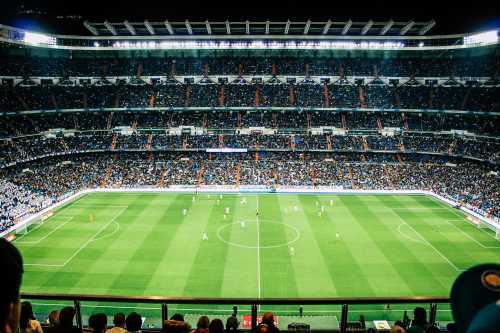
Now, let us talk about the actual "rooms" where this giant party is taking place, because the stadiums chosen for this World Cup are not just buildings; they are colossal, architectural masterpieces designed to hold the hopes, dreams, and deafening roars of hundreds of thousands of screaming fans. Take, for example, MetLife Stadium in New Jersey, which is the grand crown jewel for the New York and New Jersey area. This stadium is so unimaginably huge that it can hold over eighty-two thousand people. Imagine trying to fit every single person who lives in your entire town, plus the people from the next five towns over, all into one single building, all cheering at the exact same time. The ground literally shakes. The noise is not just loud; it is a physical force that you can feel in your chest. And then, contrast that with the intimate, fiercely passionate, beautifully designed BMO Field in Toronto. Nestled right next to the sparkling waters of Lake Ontario, BMO Field has been temporarily expanded and meticulously upgraded for this exact moment. It is not as massive as MetLife, but what it lacks in pure size, it makes up for in pure, unadulterated, concentrated atmosphere. The fans in Toronto are so close to the pitch that the players can literally hear every single chant, every single song, and every single word of encouragement. It is a cauldron of noise, a beautiful, terrifying, wonderful wall of sound that will make visiting teams tremble in their cleats.
But hosting the ultimate global sleepover is not just about building big rooms and making loud noises; it is about the incredibly boring, incredibly difficult, incredibly expensive math of logistics and economics. When you invite forty-eight teams to your house, you have to figure out where they are all going to sleep, how they are going to travel from one city to another, and how they are going to practice without getting tired. The geography of the United States and Canada is mind-bogglingly vast. Flying from the east coast of the USA to the west coast takes over six hours. Flying from Toronto to Vancouver takes over four and a half hours. The organizers have had to create a master schedule that minimizes travel fatigue, grouping teams into specific clusters so they do not have to cross entire continents just to play a single group-stage match. And the economic impact? It is staggering. Cities across the USA and Canada have spent billions of dollars upgrading their airports, improving their public transportation systems, and building temporary "Fan Fest" villages where millions of people without tickets can gather to watch the matches on giant outdoor screens, eat local food, and celebrate the beautiful game together. It is a massive financial gamble, but the potential return on investment, in terms of global tourism, job creation, and long-term infrastructure improvements, is absolutely astronomical.
Of course, whenever you gather millions of people from every single country on Earth into one specific location, you have to make absolutely sure that the party remains safe, secure, and welcoming for everyone. This is where the security and ticketing operations for the 2026 World Cup come into play. The organizers have implemented a highly advanced, deeply integrated digital ecosystem. To get into the stadium, you do not just show a paper ticket. You need a digital Fan ID, a highly secure, biometrically linked digital passport that verifies your identity, checks your ticket validity, and ensures you are not on any global security watch lists. It is like having a bouncer at the door of the party who knows absolutely everyone's name, exactly who they brought as a plus-one, and whether they are allowed to be there. This level of security is unprecedented in the history of sports, but it is absolutely necessary to ensure that the focus remains entirely on the football, and not on any safety concerns. The seamless integration of these digital systems across the US and Canadian borders is a triumph of modern technology and international cooperation.
And then, there is the most beautiful, most magical, most indescribable part of this entire event: the people. The cultural melting pot of the United States and, specifically, Canada, is creating a fan experience that has never been seen before in the history of the World Cup. Canada, in particular, is experiencing a profound cultural renaissance. For decades, Canada was known almost exclusively as a hockey nation. But over the last thirty years, millions of immigrants from Europe, South America, Africa, and Asia have brought their deep, ancestral love for football with them to the cold, beautiful north. They have planted the seeds of the sport in every single city, every single suburb, and every single park. Now, those seeds have grown into a massive, vibrant, incredibly passionate forest of football fans. When you walk through the streets of Toronto or Vancouver during this World Cup, you will hear a dozen different languages being spoken. You will see the flags of a hundred different nations waving side by side. You will smell the incredible, diverse aromas of global street food mixing with the crisp, fresh air of the north. It is a breathtaking, beautiful demonstration of how sport can unite the entire world in one single, joyous, chaotic, magnificent celebration.
As we look toward the final whistle of this historic tournament, the true legacy of the 2026 World Cup in the USA and Canada will not be measured merely in dollars earned or trophies lifted. It will be measured in the millions of children, both in the United States and across Canada, who will watch these matches, see the magic of the sport, and decide to pick up a football instead of a baseball bat or a hockey stick. It will be measured in the permanent, world-class infrastructure left behind in cities like Toronto, Vancouver, Los Angeles, and Dallas. And it will be measured in the undeniable, irrefutable proof that North America can not only host the biggest party in the world, but can do so with a level of flair, organization, diversity, and sheer, unadulterated joy that will set the gold standard for every single global sporting event for the next hundred years. The ultimate global sleepover is finally here, the doors are wide open, and the entire world is invited to come and play.
Official Social Media & Alternative Source No verified official social media post was found for this specific comprehensive logistical overview. As an alternative, please refer to the official FIFA Plus 2026 World Cup Official Hub and the The Guardian's Comprehensive World Cup 2026 Coverage for the primary data, stadium details, and official tournament statements.
Related Articles

The Financialization of the Pitch: How Private Equity, Labor Friction, and Geopolitics Are Rewiring Global Football
Sep 18, 2026
The Hedge Fund on Cleats: Football's Regulatory Margin Call and the MCO Reckoning
Sep 17, 2026
Comments (0)
No comments yet. Be the first to share your thoughts!
Want to join the discussion?
Please log in to post a comment.
Login NoworCreate an Account