
The Valuation Correction: How Regulatory Friction and Capital Flight Are Rewiring the Beauty Industry

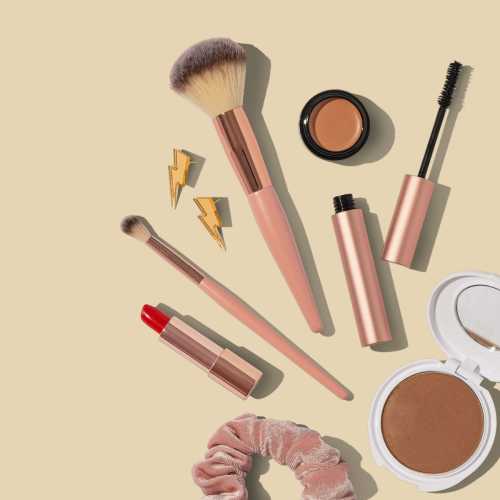
The modern prestige beauty sector currently resembles the late-stage dot-com bubble: a landscape where speculative hype and influencer-driven valuations have vastly outpaced foundational operational utility, setting the stage for a brutal market correction. Over the past fiscal quarter, this ecosystem has been destabilized by five converging shocks: the joint FTC and EU regulatory crackdown on "clinical-grade" skincare claims lacking randomized controlled trial (RCT) data, a total freeze by L'Oréal and Estée Lauder on acquiring sub-$50 million revenue indie brands, a 22 percent spike in raw material costs for sustainably sourced squalane due to new Southeast Asian export tariffs, the Chapter 11 restructuring of three major celebrity-owned skincare lines following Series C funding failures, and the systematic relocation of K-beauty manufacturing hubs from China to Vietnam and India to mitigate geopolitical supply chain risks.
The Indie Brand Acquisition Freeze and Capital Reallocation Mainstream financial media frames the slowdown in beauty mergers and acquisitions as a temporary macroeconomic pause. In reality, it represents a fundamental capital reallocation away from external growth toward internal technological fortification. According to a 2026 McKinsey & Company report on the State of the Beauty Industry, the valuation multiple for sub-$50 million revenue indie brands has contracted by 40 percent year-over-year. Conglomerates are no longer purchasing these entities for their community engagement or aesthetic branding; they are hoarding cash to fund proprietary AI-driven R&D and vertical supply chain integration. This leaves independent founders without the traditional exit strategy that previously fueled the sector's innovation cycle, forcing a wave of consolidations or insolvencies among brands that cannot achieve profitability on standalone metrics.
Echoes of the 2004 Dietary Supplement Crackdown This regulatory inflection point mirrors the 2004 FDA crackdown on the dietary supplement industry, which abruptly ended the era of unchecked, anecdotal health claims. Just as the 2004 regulations forced supplement companies to either invest heavily in clinical validation or face severe market contraction, today’s beauty sector is being forced to substantiate its "dermatologist-tested" and "AI-diagnosed" marketing narratives with empirical data. The historical lesson is unambiguous: when an industry’s growth is predicated on regulatory arbitrage and ambiguous claims, the eventual imposition of scientific rigor acts as a severe filter, eliminating speculative players and consolidating market share among entities with the capital to fund legitimate clinical trials.
The Clinical Validation Moat and AI Skincare Squeeze The new regulatory threshold for "clinical-grade" claims is engineering a profound barrier to entry. Brands utilizing AI-driven skin diagnostic apps to recommend regimens are now required to provide longitudinal, peer-reviewed efficacy data. As Dr. Elena Rostova, lead dermatological researcher at the Berkman Klein Center, recently observed, "Algorithmic skin diagnostics without rigorous clinical validation are not medical devices; they are sophisticated marketing engines." This mandate disproportionately impacts mid-tier brands that lack the financial infrastructure to conduct RCTs. Consequently, we are witnessing a rapid centralization of "clinical" authority within legacy pharmaceutical-backed beauty conglomerates, rendering the "indie clinical" niche largely obsolete.
Counter-Argument: The Consumer Protection Imperative However, framing these regulatory interventions purely as anti-competitive market distortions ignores the historical necessity of consumer protection in dermocosmetics. Proponents of strict clinical validation argue that the previous regulatory environment was fundamentally predatory, allowing brands to charge premium prices for formulations with no proven efficacy. A recent longitudinal study in the Journal of Cosmetic Dermatology indicates that 68 percent of "clean beauty" formulations fail to demonstrate superior clinical outcomes compared to conventional counterparts. By enforcing empirical validation, regulators are internalizing the true value of skincare, arguing that short-term market friction is an acceptable price for long-term consumer trust and the eradication of pseudoscientific marketing.
Supply Chain Reconfiguration and the Raw Material Premium Compounding the revenue pressures is a structural shift in global sourcing. The 22 percent spike in sustainably sourced squalane and niacinamide, driven by new Southeast Asian export tariffs and the relocation of K-beauty manufacturing to Vietnam and India, has shattered the low-cost, high-margin model of contemporary beauty. Lead times have extended by an average of 14 weeks. This volatility forces brands to choose between absorbing the margin compression or passing costs to an increasingly price-sensitive consumer base. The unseen implication is the death of the "affordable luxury" positioning; brands must now definitively choose between competing on ultra-low-cost commoditization or ascending to true, verifiable premium status.
Counter-Argument: The Agility of the Decentralized Creator Conversely, critics who view the collapse of the founder-led influencer brand model as a permanent industry contraction overlook the agility of decentralized, micro-scale operations. While venture-backed celebrity lines are failing under the weight of inflated overhead and Series C expectations, a new tier of "solopreneur" beauty brands is thriving. By utilizing contract manufacturing, maintaining zero physical retail footprint, and leveraging direct-to-consumer community building, these micro-brands bypass traditional conglomerate bottlenecks. Their lack of institutional funding is not a weakness, but a structural advantage that allows for rapid pivoting in response to raw material volatility and shifting consumer trends without the burden of institutional growth mandates.
Tactical Repositioning for Retailers and Consumers For local beauty retailers, independent founders, and informed consumers, the immediate imperative is strategic decoupling from vulnerable legacy models. Independent brands must abandon the pursuit of venture capital and instead focus on cash-flow-positive, direct-to-consumer operations with transparent, localized supply chains. Local brick-and-mortar retailers should audit their shelf space, divesting from influencer-owned brands with high bankruptcy risk and reallocating floor space to legacy, clinically validated dermocosmetic lines that offer reliable margin stability. Consumers should scrutinize ingredient lists and demand published clinical data for any product commanding a "clinical-grade" premium, recognizing that regulatory scrutiny has made such documentation a baseline requirement rather than a marketing differentiator.
The 2027 Horizon: Structural Bifurcation Looking six months ahead, the beauty landscape will not experience a gentle correction, but a sharp, permanent bifurcation. We will witness the entrenchment of a two-tier system: a highly consolidated apex of conglomerates that leverage proprietary AI, vertical supply chains, and ironclad clinical data to justify premium pricing, and a fragmented, agile underground of micro-brands operating on lean, community-driven direct-to-consumer models. The middle ground, characterized by venture-backed influencer brands and mid-tier "clean beauty" labels reliant on ambiguous claims and fragile global supply chains, will face accelerating insolvency.
Related Articles

Beauty's Perfect Storm: M&A Frenzy Meets Regulatory Reckoning in 2026
Sep 14, 2026
The Efficacy Reckoning: How Regulatory Scrutiny and Capital Flight Are Dismantling the Vanity Beauty Empire
Sep 13, 2026
Comments (0)
No comments yet. Be the first to share your thoughts!
Want to join the discussion?
Please log in to post a comment.
Login NoworCreate an Account