
World Cup 2026 Fashion Showdown: Adidas Outperforms Nike as Luxury Brands Miss Cultural Moment

NEW YORK — As the 2026 FIFA World Cup reaches its climax, a fierce rivalry off the pitch has revealed surprising victors in the fashion and sportswear marketing arena. According to comprehensive data analytics from Launchmetrics and CreatorIQ, Adidas has eclipsed traditional competitor Nike in earned media value, while luxury fashion houses have largely squandered what experts call a once-in-a-generation cultural moment.
The numbers tell a compelling tale: Adidas generated an earned media value (EMV) of $48.9 million from 6,700 posts and nearly 3,000 creators between June 1 and June 21, significantly outpacing Nike's $28.9 million from 4,400 posts and 1,900 creators. This disparity comes despite both brands investing heavily in star-studded campaigns—Adidas reportedly spending $67 million on its cinematic "Backyard Legends" film, while Nike deployed an extensive roster including Kim Kardashian, Kylian Mbappé, Central Cee, and LeBron James for its "Rip the Script" short.
Market Analysis: According to Launchmetrics, the competition's buildup from April 1 to June 10 generated a total media impact value (MIV) of $5.6 billion. Depop recorded a surge in searches for "world cup jersey" (+1,155%) and "soccer jerseys" (+954%) during the May-to-June period.
The hegemony of individual athletes as marketing vehicles became manifest through social media metrics. Argentine legend Lionel Messi's mere 10 social media posts between June 1 and June 21 accumulated a $2.5 million EMV and 751 million impressions for Adidas. Meanwhile, England star Jude Bellingham's two posts garnered 31.5 million impressions and a $328,000 EMV, affirming his status as a Gen Z icon.
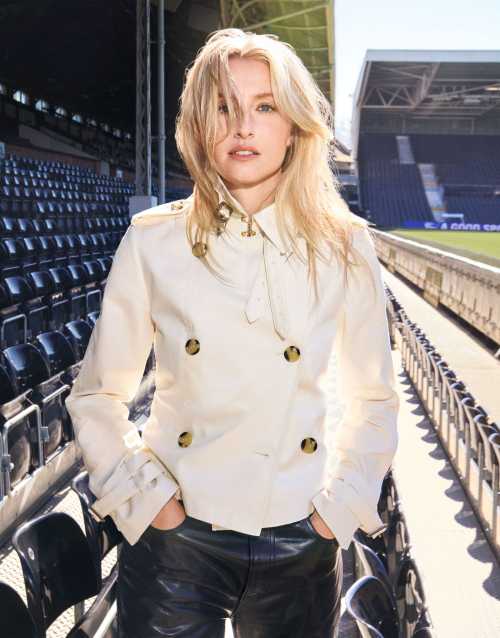
Beyond the duopoly of Nike and Adidas, other brands employed ingenious tactics. Burberry unveiled "A Good Sport," a hyper-British campaign featuring Declan Rice, Eberechi Eze, Leah Williamson, and international talents like Heung-Min Son and Romeo Beckham. Levi's outmaneuvered FIFA's advertising bans for non-partners by posting a sassy clapback on Instagram about the covered-up stadium logo, drawing record comments and shares.
Key Performance Metrics
- Adidas EMV: $48.9 million (6,700 posts, ~3,000 creators)
- Nike EMV: $28.9 million (4,400 posts, 1,900 creators)
- Total MIV (April 1 - June 10): $5.6 billion
- Messi's Social Impact: $2.5M EMV, 751M impressions (10 posts)
- Nike Kit Sales: 2.5x higher than World Cup 2022 same period
- Kith x Messi Collection: $5.9 million MIV
Nike, however, claimed significant triumphs of its own. By the tournament's first week, the brand achieved its most-viewed Instagram and YouTube content ever, recording more than twice the "cultural engagement" of its biggest competitor. CEO Elliott Hill reported that Nike had sold 2.5 times as many kits by the tournament start compared to the same period in World Cup 2022. The brand's grassroots street soccer tournament, Toma, reached over 10,000 kids across 25 cities.
Luxury's Missed Opportunity
Despite the ubiquitous nature of the event, traditional fashion brands maintained a surprisingly muted presence. "What's really interesting is that this was effectively a month-long global cultural event hosted, in part, in the world's advertising capital [the USA], yet fashion's presence felt relatively muted," observes Bia Bezamat, cultural insights director at Kantar.
"Many fashion brands say they're looking for cultural relevance, but increasingly they're prioritizing owned worlds, creator ecosystems, and curated communities over broad-reach moments like soccer," Bezamat notes, highlighting a strategic paradox in luxury marketing.
The convergence of sports and pop culture has created new marketing imperatives. "Fans don't separate sports and culture anymore, and so neither should brands," says Alison Bringé, CMO for Launchmetrics. She emphasizes that nurturing genuine relationships with fan favorites proves more effective than traditional sponsorship visibility, citing Cristiano Ronaldo's "Rip the Script" post which generated $2.1 million in MIV independently.
Streetwear and luxury collaborations demonstrated the power of culturally attuned marketing. Kith's Adidas collection with Messi generated $5.9 million MIV, while Adidas tapped a Thrasher magazine Argentina shirt, a Willy Chavarria Mexican partnership, and collaborations with Palace (England), Nocta (Canada), Patta (Netherlands), artist Slawn (Nigeria), and the Virgil Abloh Archive (USA).
While individual luxury players like Jude Bellingham (Louis Vuitton ambassador since 2024), Kylian Mbappé (fronting Jonathan Anderson's summer 2026 Dior campaign), and Leah Williamson (Gucci deal since 2022) have secured personal endorsements, these deals remained tangential to the World Cup action itself—featuring press shots of players carrying Dior pouches or arriving in Chanel tweed rather than integrated campaign moments.
The Bottom Line
As the tournament progresses toward the July 19 final, the data reveals a paradigm shift in sports marketing: authenticity and cultural resonance trump traditional sponsorship dollars, while brands that fail to engage with massive cultural moments risk irrelevance in an increasingly competitive landscape.
Related Articles

The Provenance Premium: How Regulatory and Technological Shockwaves Are Rewiring the Fashion Economy
Oct 15, 2026
The Fashion Apparatus Collides with Regulatory Physics and Material Scarcity
Oct 14, 2026
Comments (0)
No comments yet. Be the first to share your thoughts!
Want to join the discussion?
Please log in to post a comment.
Login NoworCreate an Account