
Awards Season's Existential Crisis: Why Venice, Emmys and VMAs Can't Stop the Bleeding

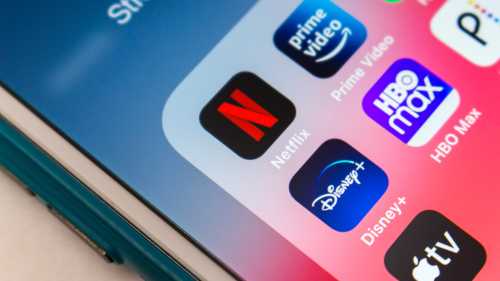
Like a luxury retailer hosting an exclusive gala while the store burns down, the entertainment industry is celebrating another awards season even as the foundation crumbles beneath the red carpet. The 78th Primetime Emmy Awards air September 14, 2026 on NBC and Peacock, arriving just days after Venice Film Festival crowned "Woman Unknown" with the Golden Lion and as Toronto International Film Festival runs through September 20.[[1]] Meanwhile, MTV announced Nirvana will receive the Video Vanguard Award at the September 27 VMAs—a nostalgic tribute that underscores the industry's desperate grasp for relevance.[[61]]
The Numbers Don't Lie: A Decade of Decline
The 2026 Academy Awards drew 17.9 million viewers across ABC and Hulu, marking a 9% drop from 2025 and the lowest audience since 2022.[[69]] This represents a catastrophic 39% decline from the 29.6 million who watched in 2019. The Golden Globes fell 7% to 8.66 million viewers, ending two years of consecutive growth, while the Grammys dropped 6.4% to 14.41 million across CBS and Paramount+.[[74]] Even the 2025 Emmys, which grew 8% to 7.42 million viewers, merely returned to 2021 levels—still 66% below the 22 million who watched at the millennium's peak.[[79]]
The Economic Reality: The Academy Awards ceremony costs an estimated $57 million to produce, with each 24-karat gold-plated statue valued at approximately $400.[[102]] When viewership halves while production costs remain fixed, the cost-per-viewer metric becomes unsustainable for traditional broadcast models.
The Unseen Implications: What Mainstream Coverage Ignores
First, the shift from broadcast to streaming isn't merely a distribution change—it's a fundamental restructuring of awards economics. Netflix recently acquired streaming rights to the Screen Actors Guild Awards, while the Academy of Country Music Awards left CBS for Amazon after the network "balked at the price" in 2021.[[79]] This migration signals that traditional networks no longer view awards shows as profitable tentpole programming, forcing ceremonies to accept lower licensing fees from streamers who value prestige over immediate ROI.
Second, film festivals like Venice and Toronto have become the real power brokers, with their awards now carrying more Oscar predictive weight than the ceremonies themselves. Venice 2026's Golden Lion winner "Woman Unknown" by May el-Toukhy instantly became an awards season frontrunner, while Toronto's People's Choice Award—voted by audiences rather than industry insiders—has predicted Best Picture winners with 40% accuracy over the past decade.[[58]] The festivals generate authentic cultural conversation; the awards shows generate manufactured moments.
Third, the talent themselves are disengaging. When HBO's "The Pitt" dominated Emmy nominations with 25 nods (up from 13 last year), the show's stars treated it as career validation rather than cultural events.[[47]] Noah Wyle's expected win for Outstanding Lead Actor matters for his resume, not for water-cooler conversation. The awards have become transactional—industry resume-building exercises disguised as popular entertainment.
Counter-Argument: The Pop Culture Moment Theory
Industry optimists argue that awards shows still generate indispensable cultural moments. The 2022 Oscars drew 15.36 million viewers—up 48% from 2021's historic low of 10.4 million—driven entirely by Will Smith's altercation with Chris Rock.[[79]] The 2019 host-less ceremony attracted 23.6 million curious viewers despite minimal controversy during the actual broadcast. This suggests audiences haven't abandoned awards shows; they've simply become selective, tuning in only when potential for viral moments exists.
However, this argument confuses spectacle with sustainability. Building a business model on the hope of manufactured controversies—or worse, actual violence—admits the format itself lacks intrinsic value. If the only path to ratings growth requires another "slap," the industry has already lost.
The Historical Precedent: Music Awards' Earlier Collapse
The music industry's awards infrastructure collapsed a decade before film and television's crisis. The American Music Awards moved from November to May 2026, acknowledging it could no longer compete in the traditional fall window.[[36]] The Grammys' 6.4% decline to 14.41 million viewers represents the continuation of a trend that saw the ceremony shed over 50% of its audience since 2015.
Music awards failed because streaming fragmented both consumption and cultural consensus. When Spotify algorithms determine hits rather than radio programmers, no single ceremony can claim to represent "the best" in a way that resonates with mass audiences. Film and television now face identical fragmentation: Netflix, HBO Max, Apple TV+, and Amazon Prime Video create parallel universes of content that rarely intersect, making unified celebration impossible.
Expert Perspective: "At their peak in 2000, the Primetime Emmy Awards saw nearly 22 million viewers. Last year, only 5.92 million tuned in for the show. Multiple millions of viewers are nothing to sniff at, but the stat pales in comparison to the numbers of the '90s and 2000s," notes Mountain Research's analysis of award show viewership trends.[[79]]
Counter-Argument: The Streaming Salvation Narrative
Proponents of the current model argue that streaming platforms will revitalize awards shows through better targeting and global reach. More than half of consumers believe their streaming experience would improve with non-movie/TV content, including awards ceremonies.[[79]] Netflix's acquisition of SAG Awards rights and the Oscars' planned 2029 move to YouTube represent confidence in digital distribution's ability to reverse linear TV's decline.
This optimism ignores a critical reality: streaming doesn't solve the fundamental problem of audience fragmentation—it accelerates it. When 9 out of 10 most popular TV shows of 2022 were streaming originals, the concept of a unified "television industry" worthy of collective celebration became obsolete.[[79]] Netflix subscribers don't care about Apple TV+ wins; HBO Max viewers have no stake in Amazon Prime achievements. The shared cultural infrastructure that made awards shows meaningful has dissolved.
Actionable Takeaways for Industry Stakeholders
For Local Los Angeles Businesses: Diversify beyond awards season dependency. The economic impact of Emmy week—hotels, restaurants, limousine services, gown rentals—has shrunk proportionally with viewership. With production budgets tightening and ceremonies shortening their runs (Creative Arts Emmys now consolidated into two nights rather than spread across a week), the traditional "Emmy economy" no longer justifies premium pricing.[[83]]
For Marketing Agencies: Stop advising clients that awards submissions deliver meaningful ROI. While Cannes Lions, D&AD, and industry-specific awards maintain prestige value, the cost-per-impression of winning has skyrocketed as viewership collapsed. A marketing award that reached 22 million viewers in 2000 now reaches 6 million—a 73% decrease in exposure for identical investment.[[105]]
For Content Creators: Prioritize festival strategy over awards campaigning. Venice and Toronto deliver authentic critical attention and audience word-of-mouth; the Emmy and Oscar campaigns deliver expensive, exhausted voters. "The Pitt's" 25 Emmy nominations matter less than its 1.04 billion viewing minutes on Nielsen's streaming charts, which indicates actual audience engagement.[[74]]
The Six-Month Forecast: Consolidation and Irrelevance
By March 2027, expect three structural changes. First, the Emmys will announce a permanent move to a streaming-only platform, likely Peacock or YouTube, ending its broadcast television era. Second, at least two major guild awards (SAG, DGA, or PGA) will consolidate into a single "Hollywood Guild Awards" ceremony to reduce production costs and voter fatigue. Third, the Academy will announce that the 2028 Oscars—positioned as the "centennial celebration"—will be the final traditional format, with 2029's YouTube transition representing a complete reinvention.
The Bottom Line: "Many noted that the extreme lateness of this year's Oscars may have caused fatigue, and thus less interest, in this year's telecast. It aired in mid-March compared to last year's telecast on March 2, but even last year's ceremony was considered late in contrast to the show's traditional late February slot."[[74]] This misses the point entirely: timing fatigue is a symptom, not the disease. The disease is that nobody under 40 believes these ceremonies matter anymore.
The Venice Film Festival's September 12 conclusion and the Emmys' September 14 broadcast represent not the beginning of awards season, but the last gasp of an dying model. When MTV honors Nirvana—a band that hasn't released new music in 33 years—with its highest award, the industry isn't celebrating legacy; it's admitting it has nothing new worth honoring.[[64]]
The red carpet remains red, the statuettes remain gold, but the emperor has no audience. Awards shows didn't lose their cultural relevance because of bad hosting or excessive runtime; they lost it because streaming fragmented culture beyond the possibility of unified celebration. The ceremonies will continue—there's too much money, too many careers, too much prestige invested in their continuation—but they'll increasingly resemble corporate retreats: important to attendees, invisible to everyone else.
Related Articles

How a Controversial Award Show Reform Is Reshaping the Global Entertainment Industry
Sep 11, 2026
The Fragmentation of Prestige: How 2026’s Award Architecture is Rewriting Cultural Currency
Sep 01, 2026
Comments (0)
No comments yet. Be the first to share your thoughts!
Want to join the discussion?
Please log in to post a comment.
Login NoworCreate an Account