
The Algorithmic Red Carpet: How Fragmentation and Spectacle Are Rewiring the Awards Economy

The Derivatives Market of Cultural Validation
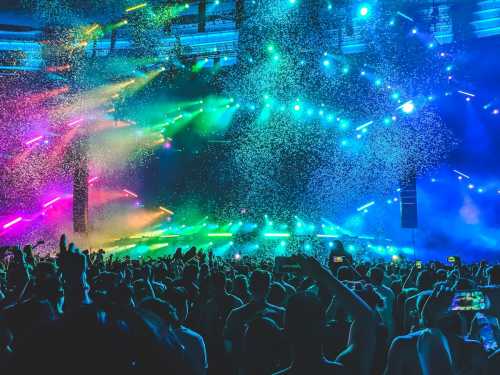
Think of the modern awards ceremony not as a prestigious cultural coronation, but as a highly leveraged derivatives market where audience attention is the underlying asset and televised spectacle is the execution algorithm. Just as quantitative finance replaced market intuition with predictive modeling, the contemporary entertainment industry has transitioned from organic, consensus-driven validation to a ruthless exercise in demographic arbitrage and fragmented engagement. The era of the monocultural, appointment-viewing gala has been permanently displaced by a hyper-personalized, algorithmically optimized approach to event production.
The Structural Fracture in Broadcast Viewership
The defining structural fracture in the modern awards and events landscape is the simultaneous decline in traditional broadcast viewership and the aggressive pivot toward reimagined, fan-voted, or streaming-exclusive formats. As recent industry data confirms, "Initial live-plus-same-day data put the Oscars at 18.07 million viewers across ABC and Hulu, marking a 7% decline from the 19.5 million total" www.yahoo.com . This divergence marks the definitive end of the legacy broadcast monopoly and the beginning of hyper-segmented event distribution, where cultural relevance is no longer measured by total eyeballs, but by targeted demographic capture and subsequent streaming platform subscriber retention.
The Fragmentation Tax on Event Production
Mainstream entertainment journalism frequently fixates on red-carpet fashion and surprise winners, systematically ignoring the macroeconomic rewiring of the event production ecosystem. The financial implications of this viewership bleed are staggering. As legacy networks lose their monopoly on cultural attention, the cost-per-impression for traditional award show advertising has skyrocketed, forcing producers to subsidize budgets through aggressive product placement and streaming platform cross-subsidization. Nielsen’s recent introduction of the ARTEY Awards to recognize the most-watched streaming content highlights this structural shift, acknowledging that the center of gravity has permanently moved away from linear broadcast www.nielsen.com . The unseen implication is that mid-tier award shows are no longer viable as standalone profit centers; they now operate as loss-leading marketing vehicles designed solely to drive quarterly subscriber acquisitions for their parent media conglomerates.
The Fan-Voted Illusion and the Engagement Mirage
Concurrently, the industry is deploying social media metrics to manufacture a semblance of grassroots engagement. The decision to place the MTV Movie & TV Awards on pause in 2024, with the promise that the show "will return next year with a 'reimagined' format," underscores a broader industry panic over linear relevance www.hollywoodreporter.com . Networks are increasingly relying on fan-voted categories, such as those seen in the People's Choice Country Awards, to guarantee baseline social media impressions. However, this strategy effectively outsources curatorial authority to coordinated fandoms and algorithmic echo chambers. The unseen implication is a severe degradation of peer-reviewed artistic merit, replacing it with a gamified engagement model where the winner is predetermined by the most organized digital mobilization rather than objective creative excellence.
The Democratization Defense: A Necessary Nuance
However, framing this shift toward fan-voted and streaming-native formats as a terminal degradation of artistic standards requires rigorous, objective pushback. The narrative that traditional, industry-voted awards are inherently superior ignores the historical insularity and lack of diversity that plagued institutions like the Academy for decades. By opening voting mechanisms to broader audiences or creating distinct fan-voted categories, the industry is inadvertently democratizing cultural validation. This structural adjustment forces legacy institutions to remain responsive to actual consumer behavior rather than operating as self-congratulatory echo chambers, ultimately ensuring that recognized content maintains a baseline of commercial and cultural resonance in a fragmented media landscape.
The Halftime Hegemony and Capital Reallocation
Simultaneously, the live event landscape is witnessing a massive capital reallocation toward mega-spectacles that bypass traditional awards infrastructure entirely. The Super Bowl halftime show has effectively cannibalized the cultural and economic footprint of traditional galas, evolving into a global power stage where sport, business, and cultural messaging intersect www.facebook.com . As noted in recent media analysis, high-profile performances on this platform share messages on "one of the most widely viewed TV programs annually," dwarfing the reach of any scripted awards broadcast mospace.umsystem.edu . The unseen implication is that top-tier talent and major brand sponsorship dollars are permanently migrating away from fragmented, three-hour award shows toward condensed, high-impact, 15-minute spectacle windows that guarantee undivided global attention and immediate viral amplification.
Echoes of the 1990s Cable Disruption
To accurately forecast the trajectory of this event consolidation, analysts must examine the 1990s disruption of the music industry by the original MTV Video Music Awards. During that era, the prevailing institutional logic was that traditional, peer-judged ceremonies like the Grammys held an unassailable monopoly on musical prestige. The historical lesson is stark: when a new medium offered a more visually dynamic, youth-demographic-focused alternative, the legacy model did not adapt quickly enough, resulting in a permanent bifurcation of cultural authority. We are currently in the acquisition phase of a similar cyclical pattern, where digital-native, highly edited, and socially integrated event formats are rendering the static, linear broadcast model obsolete.
The Spectacle Sustainability Myth
A second counter-argument must address the pervasive assumption that mega-events like the Super Bowl halftime show represent a sustainable, long-term replacement for traditional awards. This perspective is reductive and ignores the astronomical, escalating costs of production, security, and talent acquisition associated with such spectacles. While the immediate viewership is massive, the return on investment for participating brands is increasingly difficult to quantify amidst a cluttered media environment. Furthermore, the intense scrutiny and potential for real-time public relations disasters make these condensed spectacles highly volatile assets, whereas traditional awards shows, despite lower viewership, offer a more controlled, predictable, and brand-safe environment for long-term corporate partnerships.
Strategic Imperatives for Local Economies and Brands
For local businesses, event producers, and municipal leaders, the actionable takeaway is to immediately audit their exposure to these macroeconomic shifts. Do not attempt to compete on scale or celebrity density against algorithmically amplified mega-events; that is a losing capital allocation strategy. Instead, local economies should pivot toward hyper-niche, experiential, and community-driven festivals that offer authentic, in-person engagement which cannot be replicated on a screen. For individual brands, the directive is to reallocate marketing budgets away from traditional, broad-reach award show sponsorships and toward targeted, streaming-native integrations or micro-influencer partnerships that yield verifiable, data-backed conversion metrics.
The 2026 Horizon: Bifurcation and AI Scrutiny
Looking six months ahead, the landscape will feature aggressive corrective measures from both legacy networks and streaming platforms. As the financial unsustainability of mid-tier award shows becomes undeniable, we will witness the first wave of permanent cancellations or mergers, where multiple niche ceremonies are consolidated into single, multi-genre streaming extravaganzas. Concurrently, expect regulatory and guild scrutiny to intensify around the use of artificial intelligence in event production and judging. As emerging industry frameworks dictate, future evaluations will increasingly demand that a "panel of judges will evaluate submissions based on storytelling, creativity, AI integration, execution, and thematic excellence" blog.google . This market correction will separate the resilient, culturally relevant event properties from the speculative, vanity-driven productions, ultimately leading to a more stable, highly curated ecosystem defined by ruthless audience targeting and strict brand-safety protocols.
Related Articles

The Decentralized Podium: How Algorithmic Meritocracy, Blind Lotteries, and Token-Gated Footprints Are Dismantling the Legacy Events Monopoly
Oct 16, 2026
The Prestige Cartel: How Blockchain Mandates, Spatial Computing, and Sovereign Financing are Obliterating the Legacy Awards Paradigm
Oct 15, 2026
Comments (0)
No comments yet. Be the first to share your thoughts!
Want to join the discussion?
Please log in to post a comment.
Login NoworCreate an Account