
[Entertainment Industry at Crossroads: Swift's Dominance Masks Deeper Structural Crisis]

Like a Broadway marquee displaying a sold-out show while the theater's foundation crumbles, Taylor Swift's unprecedented MTV VMA honors this week conceal a darker reality: Hollywood is experiencing its most severe production collapse in modern history, even as legacy media giants engineer a controversial $110 billion consolidation.
The Dual Reality of September 2026
Taylor Swift will become the most awarded artist in MTV VMA history when she receives the inaugural Artist Director Honors on September 27, just days after releasing her new single "Patient Zero" on September 25 [[36]]. Yet this individual triumph unfolds against a backdrop of systemic decay that threatens the entertainment ecosystem itself.
Production measured in Los Angeles shoot days has plunged from 36,792 in 2022 to just 19,694 in 2025, according to FilmLA research [[53]]. The second quarter of 2026 saw production fall another 13%, with job seekers witnessing an 8.7% decline in on-location filming [[51]]. This isn't a cyclical downturn—it's a structural exodus.
The Consolidation Gambit: Savior or Death Spiral?
Paramount Skydance's settlement with twelve state attorneys general on September 21 clears the path for its merger with Warner Bros. Discovery, though the deal won't close until June 2027 [[55]]. Within months of closing its Skydance merger, Paramount cut approximately 2,000 jobs—roughly 10% of its workforce [[77]].
The proponents argue this consolidation strengthens Hollywood against streaming dominance and generates efficiencies. However, media industry scholars warn that reducing the number of diversified, large-scale competitors across film production and content licensing could fundamentally alter market dynamics [[81]].
Expert Perspective: "The proposed $111 billion deal could significantly alter the media landscape, but it still faces substantial hurdles before closing," according to Virginia Tech media merger analysts [[79]]. The Harvard Law School antitrust review notes that California-led states argue the merger "would violate antitrust law and ultimately harm movie theaters" [[80]].
The Counter-Argument: Market Correction, Not Catastrophe
Industry optimists point to data showing U.S. production spending held relatively even year-over-year at $3.8 billion in Q1 2026 [[69]]. The feature film category actually finished Q1 with 687 shoot days, representing a 45.2 percent increase over the prior period [[70]]. This suggests a recalibration rather than collapse—a shift toward quality over quantity as the industry adapts to streaming economics and global competition.
The film and video market size was valued at $383.58 billion in 2026, with projections reaching $489.55 billion by 2030 at a 6.3% CAGR [[68]]. These figures contradict the narrative of terminal decline, instead indicating a mature industry undergoing necessary transformation.
Legacy Protection in the Parton Era
The entertainment industry's vulnerability extends beyond economics to legacy preservation. Dolly Parton's estate obtained a temporary restraining order against her nephew Bryan Seaver on September 24, just weeks after the icon's August 25 passing [[45]]. The lawsuit, filed September 22 by She's Alive, LLC, alleges Seaver threatened to "destroy the entire brand" and told an entertainment attorney: "I'm not an entertainment person. I'm a killer" [[44]].
Seaver received termination notice on September 16 after over 20 years as his aunt's head of security [[44]]. The case illustrates the complex challenges of protecting intellectual property empires when family dynamics intersect with commercial interests—a scenario that will likely repeat as more entertainment legends pass without direct heirs.
Legal Expert Insight: "Dolly Parton's estate plan highlights critical questions about who inherits assets when there are no children or direct descendants," notes estate planning attorney analysis [[98]]. Parton herself advocated for comprehensive estate planning, stating publicly: "Since I had no kids, I hired an estate attorney on purpose so my death wouldn't leave my family a public mess to fight over" [[100]].
The Sovereignty Imperative: Another Perspective
Critics of media consolidation argue that independent production and decentralized financing represent the future, not the past [[74]]. The 2026 film industry outlook emphasizes a shift toward global, independent filmmaking that bypasses traditional studio structures entirely. From this viewpoint, the Paramount-Warner merger represents a last gasp of an obsolete model rather than a strategic adaptation.
Taylor Swift's success exemplifies this alternative path. Her economic impact from the Eras Tour exceeded $5 billion, demonstrating that artist-controlled ventures can outperform traditional studio productions [[86]]. Music industry experts note that "Taylor's business skills are prodigious," particularly her ability to navigate the industry while maintaining creative control [[85]].
Strategic Implications for Industry Stakeholders
For production workers and small businesses dependent on Hollywood activity, the data demands immediate diversification. The 13% Q2 decline suggests this isn't temporary—professionals should develop skills transferable to emerging production hubs in Georgia, New Mexico, or international markets offering tax incentives.
Investors should recognize that the film and video production market, valued at $316.3 billion in 2026, is forecast to reach $443.6 billion by 2035 with a 3.21% CAGR [[72]]. This modest growth rate indicates a mature, consolidating sector where scale advantages favor mega-entities like the combined Paramount-Warner, while independent producers must niche aggressively.
The Six-Month Horizon: What to Expect
By March 2027, expect the Paramount-Warner merger to close, triggering another wave of redundancies as overlapping divisions consolidate. The combined entity will likely announce 3,000-5,000 additional job cuts as it seeks the promised $21 billion in annual synergies [[56]].
Hollywood production will stabilize at approximately 20,000 shoot days annually—roughly 45% below 2022 peaks—but this new normal will mask geographic redistribution. California will lose market share to international productions, while Taylor Swift-type artist-entrepreneurs will increasingly bypass traditional entertainment infrastructure entirely, creating parallel ecosystems that render the studio system optional rather than essential.
The Dolly Parton estate battle will set precedents for legacy management, prompting other entertainment estates to establish more robust governance structures before crises emerge. Expect a surge in estate planning consultations among entertainment industry veterans who recognize that intellectual property protection requires proactive legal architecture, not reactive litigation.
The entertainment industry isn't dying—it's metamorphosing. Those who recognize this distinction will thrive; those who don't will become cautionary footnotes in the next chapter of media history.
Related Articles

Hollywood Reckoning: Weinstein Sentence, Panettiere Death Expose Entertainment Industry's Dual Crisis
Sep 23, 2026
The Algorithmic Gilded Age: How Celebrity Capital and Streaming Fragmentation Are Rewriting Sports Valuations
Sep 23, 2026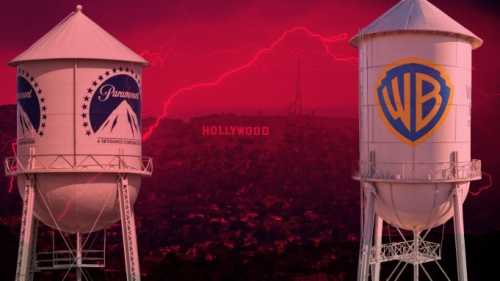
Comments (0)
No comments yet. Be the first to share your thoughts!
Want to join the discussion?
Please log in to post a comment.
Login NoworCreate an Account