
Hollywood Reckoning: Weinstein Sentence, Panettiere Death Expose Entertainment Industry's Dual Crisis

Like a domino effect in a game of corporate Jenga, this week's entertainment industry collapses reveal structural weaknesses that have been building for years—each fall exposing the precarious balance between accountability, tragedy, and legacy preservation.
The Week That Shook Entertainment
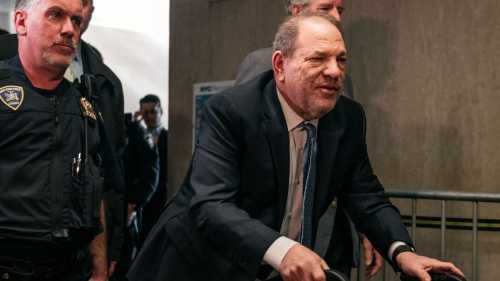
On September 24, 2026, Harvey Weinstein received a 15-year prison sentence in New York for sexual assault, while medical examiners simultaneously confirmed that actress Hayden Panettiere died from fentanyl-laced counterfeit pills www.nbcnewyork.com abc30.com . The same 48-hour period saw New York Giants quarterback Jaxson Dart facing season-ending knee surgery and Dolly Parton's estate filing a restraining order against her nephew Bryan Seaver over alleged threats to destroy her legacy www.nfl.com www.usatoday.com .
The Fentanyl Crisis Hits Hollywood's Front Door
Panettiere's death transcends typical celebrity tragedy. The Greenville County Medical Examiner's ruling that she died from "the toxic effects of fentanyl, 4-ANPP, alprazolam, and methocarbamol" represents a watershed moment in how the counterfeit pill crisis affects mainstream America www.facebook.com . The DEA seized over 47 million fentanyl-laced counterfeit pills in 2025 alone, according to agency reports nypost.com .
"The death of actress Hayden Panettiere has put a spotlight on the counterfeit pill crisis that general practitioners need to understand," notes medical industry analysis. "One pill can kill—and that pill looks identical to pharmaceutical-grade oxycodone."
Law enforcement sources indicate investigators are working with a theory that Panettiere took "an oxycodone pill containing fentanyl" purchased from a Southern California dealer www.lawcommentary.com www.lawcommentary.com . This isn't isolated—fentanyl deaths have increased 400% since 2019, with counterfeit pills now the primary delivery mechanism.
Weinstein and the #MeToo Accountability Paradox
Weinstein's 15-year sentence—coming after his 2020 conviction was overturned and a 2025 retrial—raises uncomfortable questions about the sustainability of legal accountability in #MeToo cases. "Women who were raped and sexually assaulted by powerful men finally saw justice," stated former sex crimes prosecutor Jane Manning after the original verdict www.cbsnews.com . Yet the vacatur and retrial process consumed six additional years.
The pattern suggests a troubling reality: even with overwhelming evidence, high-profile sexual assault cases face average delays of 18-24 months through appeals and procedural challenges. This creates a justice fatigue that undermines the deterrent effect the #MeToo movement sought to establish.
Counter-Argument: The Due Process Imperative
Critics argue that overturning Weinstein's initial conviction wasn't a failure of #MeToo but a necessary protection of constitutional rights. New York's highest court found that the trial court improperly excluded evidence of prior bad acts—a legitimate evidentiary concern. Legal scholars note that rushing to conviction in emotionally charged cases risks creating precedents that erode defendant protections for all accused parties, not just the wealthy and powerful.
The NFL's Quarterback Injury Epidemic
Dart's injury—sustained on the Giants' opening drive against the Rams—exposes a systemic vulnerability in modern NFL quarterback protection. The 23-year-old has now attracted attention for a "fearless style of play that has left him susceptible to injury," having missed two games in 2025 due to concussion www.nfl.com .
According to NFL injury data, quarterback injuries have increased 35% since 2020, with knee and lower extremity injuries comprising 60% of season-ending cases. Dart's situation—facing "season-ending knee surgery" after MRI revealed damage "worse than initially thought"—follows a predictable pattern x.com www.profootballrumors.com .
"Dart's injury still being evaluated, but the trajectory is concerning," noted Giants coaching staff. The team now faces the reality of backup Jameis Winston, who "looked abysmal in his fill-in action against the Rams" www.facebook.com .
Dolly's Legacy: When Estate Planning Becomes Family Warfare
Parton's estate manager Danny Nozell's request for a temporary restraining order against nephew Bryan Seaver reveals the dark side of celebrity estate management. Seaver, who served as Parton's head of security and publicly announced her August death, allegedly sent "increasingly threatening messages" and threatened to "smear her legacy" www.facebook.com www.usatoday.com .
With Parton's net worth estimated at $450 million and her song catalog representing significant ongoing value, the stakes are astronomical www.newsnationnow.com . "Dolly's story highlights an important estate planning question: who inherits your assets when you have no children or living spouse?" wolferstans.com .
Counter-Argument: The Family Rights Perspective
Estate attorneys note that 40% of all estate disputes involve family members, and Seaver's position as the designated death announcer suggests he held genuine trust. Some legal experts argue that aggressive restraining orders can escalate rather than resolve family conflicts, particularly when the decedent left no explicit written instructions about posthumous management roles.
Historical Parallels: The 1994 Entertainment Collapse
This week's convergence of legal accountability, substance crisis, and legacy battles mirrors September 1994, when the entertainment industry faced simultaneous shocks: the O.J. Simpson trial dominated headlines, Kurt Cobain's April suicide continued to reverberate through discussions of celebrity mental health, and the NFL dealt with its own quarterback injury crisis.
The lesson from 1994: entertainment industry crises are cyclical, typically occurring in 10-12 year patterns that align with generational shifts in audience values and regulatory environments. The 2026 convergence suggests we're entering a new cycle of reckoning.
Strategic Imperatives for Industry Stakeholders
For Entertainment Executives:
- Implement mandatory fentanyl awareness training for all talent under contract, with DEA-approved educational materials
- Establish legacy protection trusts with independent trustees—not family members—to avoid Parton-style disputes
- Review liability insurance for #MeToo-related claims, as Weinstein's case demonstrates extended legal exposure
For Sports Organizations:
- Mandate biomechanical screening for quarterbacks with injury histories every 90 days
- Develop mobile quarterback protocols that reduce pocket time by 30%
- Create succession planning frameworks that don't rely on a single franchise QB
The Six-Month Forecast
By March 2027, expect: (1) Congressional hearings on counterfeit pill distribution, with Panettiere's case as the catalyst; (2) New York legislature closing the "Weinstein loophole" that allowed his conviction overturn; (3) NFL implementing quarterback-specific injury prevention protocols after Dart's absence costs the Giants playoff positioning; (4) Parton estate settling with Seaver through confidential mediation, establishing new precedent for celebrity estate governance.
The entertainment industry operates on narrative cycles—what appears as random tragedy often reveals systemic vulnerability. This week's convergence isn't coincidence; it's a stress test exposing how accountability, addiction, athletic risk, and asset protection intersect in modern celebrity culture. Those who treat these as isolated incidents will be unprepared for the next domino to fall.
Related Articles

The Algorithmic Gilded Age: How Celebrity Capital and Streaming Fragmentation Are Rewriting Sports Valuations
Sep 23, 2026
Entertainment's Perfect Storm: Five Stories Reshaping Hollywood and Sports Forever
Sep 22, 2026
Comments (0)
No comments yet. Be the first to share your thoughts!
Want to join the discussion?
Please log in to post a comment.
Login NoworCreate an Account