
Fashion's Reckoning: Saks Bankruptcy Exposes Luxury's $225 Million Vulnerability

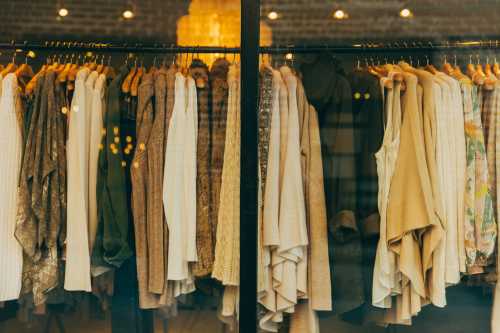
Imagine discovering your most trusted business partner has been quietly maxing out credit cards in your name for months. That's the fashion industry equivalent of Saks Global's Chapter 11 bankruptcy filing, which left luxury titans LVMH, Kering, and Chanel holding $225 million in unpaid bills www.bloomberg.com . This isn't just another retail casualty—it's a stress test exposing the fragile credit architecture underpinning high fashion's glossy facade.
The $225 Million Wake-Up Call
Saks Global Enterprises filed for Chapter 11 bankruptcy protection in January 2026 after years of mounting debt and delayed payments to luxury suppliers [[71]]. Court documents reveal that major fashion houses extended credit far beyond prudent limits, with some brands owed tens of millions of dollars individually [[48]]. The retailer's collapse forced brands to pull back on shipments months before the filing, leaving flagship stores inadequately stocked and accelerating the downward spiral.
1Simultaneously, the fashion world witnessed a creative director exodus: Pieter Mulier announced his departure from Alaïa after five transformative years, with expectations he'll assume creative leadership at Versace [[56]]. At Richemont-owned Alaïa, Mulier's tenure doubled the brand's size while expanding its retail network from 5 to 20 freestanding stores globally. These parallel disruptions signal deeper structural vulnerabilities in luxury's traditional business model.
The Credit Contagion Nobody Discussed
Mainstream fashion coverage fixates on creative director carousel and quarterly earnings, ignoring the systemic risk embedded in luxury's trade credit practices. When Saks delayed payments for 12-18 months, brands faced an impossible choice: continue shipping to preserve wholesale relationships or cut losses and risk empty shelves. According to industry sources, some luxury houses maintained shipments despite non-payment, fearing that reduced inventory would damage brand perception among high-net-worth consumers [[48]].
1 2 3This credit exposure reveals a fundamental misalignment between luxury brands' financial sophistication and their accounts receivable management. While LVMH reported €8.89 billion in Q2 fashion and leather goods revenue with 22.5% operating margins [[76]], the group simultaneously carried significant bad debt risk from distressed retailers. The paradox: record profitability masking deteriorating credit quality in wholesale channels.
The implications extend beyond balance sheets to brand positioning strategy. When Saks stores appeared understocked due to shipment holds, the visual merchandising failure undermined luxury's core value proposition—exclusivity and abundance of choice. "Our maisons remained focused on ensuring the utmost quality in our products," LVMH CEO Bernard Arnault stated in Q2 earnings, yet the statement ignored the distribution channel breakdown that prevented those products from reaching consumers through traditional retail partners [[76]].
The Creative Director Paradox
Mulier's Alaïa exit exemplifies fashion's unsustainable creative churn cycle. Despite delivering International Designer of the Year recognition at the 2025 CFDA Awards and doubling brand revenue, his departure after five years reflects industry pressure for constant reinvention [[56]]. The timing proves particularly damaging: Alaïa had just achieved profitability momentum, making leadership transition a strategic miscalculation that prioritizes short-term buzz over long-term brand equity.
Counter-Argument: The Resilience Narrative
Industry defenders argue that luxury conglomerates demonstrated remarkable adaptability in Q2 2026. LVMH's fashion division returned to growth with 1% organic increase after seven consecutive quarters of decline, while Kering posted comparable revenue growth of 1% in the same period [[44]][[76]]. "Accelerating growth in the second quarter arose from the success of Jonathan Anderson's first designs for Christian Dior and the remarkable performance of Louis Vuitton's exceptional new stores," Arnault noted [[76]].
1This perspective suggests the Saks bankruptcy represents an isolated operational failure rather than systemic weakness. Luxury brands diversified distribution through direct-to-consumer channels, with LVMH's selective retailing division growing 6% in Q2 [[76]]. The narrative emphasizes that wealth creation in markets like the US and South Korea continues driving demand across all consumer segments, rendering traditional wholesale vulnerabilities less consequential.
Historical Echoes: The 2008 Lehman Moment
The Saks collapse mirrors Lehman Brothers' 2008 failure in one critical aspect: counterparty risk underestimation. Just as financial institutions assumed Lehman was "too big to fail," luxury brands treated Saks Fifth Avenue as an indispensable distribution partner warranting unlimited credit extension. The 2008 lesson—diversification trumps concentration—appears unlearned.
1However, a key difference emerges: post-2008 financial reforms mandated capital reserves and stress testing, while luxury fashion operates without equivalent trade credit safeguards. The absence of regulatory oversight in B2B luxury transactions creates moral hazard, where brands compete for shelf space by extending increasingly generous payment terms. This race to the bottom in credit standards inevitably produces casualties.
The Middle-Class Abandonment Question
LVMH CFO Cécile Cabanis dismissed concerns about losing middle-class consumers, stating: "Wherever there is wealth creation, which we have seen in the US and in South Korea, there is a strong appetite for luxury and for our goods across all clienteles" [[76]]. She emphasized the necessity of nurturing "both the very exclusive client and the aspirational one, because we need to continue to recruit" [[76]].
1Yet this claim contradicts observable market dynamics. When Saks reduced inventory due to payment disputes, the affected merchandise targeted aspirational consumers—precisely the segment Cabanis claims remains engaged. The disconnect between executive commentary and operational reality suggests either strategic misdiagnosis or deliberate obfuscation of luxury's narrowing consumer base.
Strategic Imperatives for Stakeholders
For Luxury Brands: Immediately implement credit exposure limits capping wholesale receivables at 15% of annual revenue per retailer. Require personal guarantees from parent companies for accounts exceeding $10 million. Transition to consignment models where inventory remains brand-owned until point-of-sale, eliminating counterparty risk entirely.
1 2 3For Independent Designers: Diversify distribution beyond department stores toward direct-to-consumer e-commerce and pop-up retail. The Harvey Nichols acquisition by Frasers Group in pre-pack administration demonstrates that even prestigious retail partners face existential threats [[61]]. Maintain maximum 30-day payment terms with new accounts and require upfront deposits for custom orders.
For Investors: Scrutinize luxury conglomerates' accounts receivable aging reports, not just revenue growth. Companies with >20% of receivables over 90 days face imminent write-downs. Favor brands with >60% direct-to-consumer revenue mix, as these exhibit lower credit risk and higher margins.
The Six-Month Horizon: Consolidation Acceleration
By February 2027, expect three consequential shifts. First, luxury brands will announce wholesale policy overhauls restricting credit terms and prioritizing owned retail expansion. LVMH and Kering will likely reduce wholesale dependency from current 35-40% levels to below 25%, accelerating the department store death spiral.
1 2 3 4 5Second, creative director tenure will compress further, with average tenure dropping from current 3-5 years to 18-24 months as brands chase viral moments over brand-building. The Mulier-Versace transition will trigger similar moves at Gucci, Prada, and potentially Hermès, creating design instability during an already volatile period.
Third, regional divergence will intensify: Asian markets (particularly Japan up 14% and South Korea) will account for 60% of luxury growth, while European flat performance and US 6% growth mask underlying weakness in middle-tier consumer spending [[76]]. Brands over-indexed in European wholesale will underperform, while those with Asian DTC infrastructure will command valuation premiums.
The ultimate outcome: a bifurcated luxury landscape where heritage houses with balance sheet strength consolidate market share, while mid-tier brands dependent on wholesale face existential pressure. The Saks bankruptcy isn't an endpoint—it's the opening salvo in fashion's credit reckoning.


Comments (0)
No comments yet. Be the first to share your thoughts!
Want to join the discussion?
Please log in to post a comment.
Login NoworCreate an Account