
Milan Fashion Week June 2026: Italian Luxury Brands Pioneer Circular Economy and Closed-Loop Manufacturing

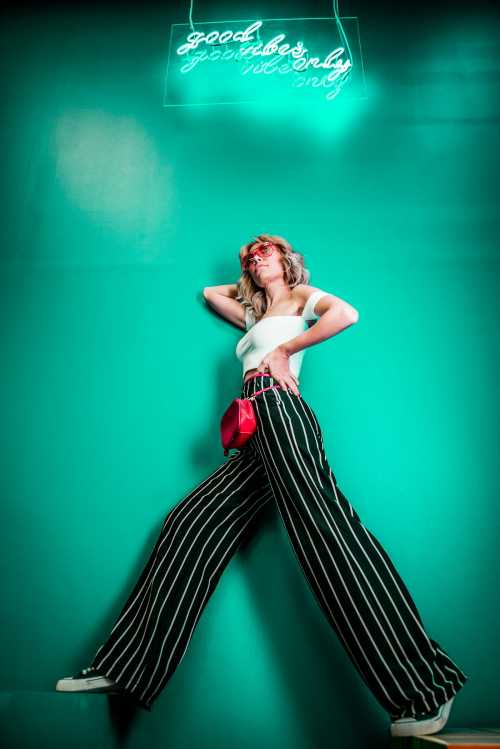
MILAN, ITALY — Milan Fashion Week June 2026 has established a new benchmark for luxury fashion sustainability, with Italian heritage brands unveiling comprehensive circular economy strategies and closed-loop manufacturing systems that prove environmental responsibility and exceptional quality are not mutually exclusive.
The Science: An ELI5 Breakdown of Circular Economy in Fashion
To understand the circular economy, imagine your favorite leather handbag. In the traditional "linear" model, you buy it, use it for years, and eventually throw it away when it's worn out. It ends up in a landfill, and the company makes a new bag from virgin materials. The circular economy works completely differently. Imagine that same handbag, but when it finally wears out, instead of throwing it away, you return it to the store. The company then takes it apart, recycles the leather into new material, reuses the metal hardware, and creates a brand new bag. Nothing is wasted; everything is reused or recycled. This is "closing the loop." The technical process involves "designing for disassembly" where garments are constructed so they can be easily taken apart at the end of their life. Instead of using permanent glues or mixed materials that can't be separated, designers use mechanical fasteners and pure material streams. For example, a jacket might use snap buttons instead of sewn buttons, and the lining might be made from the same material as the outer shell so the entire garment can be recycled together. The "take-back" programs incentivize customers to return old items through store credit or discounts, ensuring a steady supply of materials for recycling. This system requires complete transparency and traceability, with each garment carrying a "material passport" that details every component and how it should be processed at end-of-life.
Technical Breakdown: Chemical Recycling and Molecular Regeneration
The technological innovation showcased at Milan Fashion Week June 2026 centers on "chemical recycling" and "molecular regeneration" processes that can break down textiles to their molecular building blocks and rebuild them into virgin-quality fibers. Traditional mechanical recycling (shredding and re-spinning) degrades fiber quality, but chemical recycling preserves it. For polyester and nylon, the process uses "depolymerization" where the plastic polymers are broken down into their original monomers using heat, pressure, and catalysts. These monomers are then purified and repolymerized into new fibers that are chemically identical to virgin material. For natural fibers like cotton, "enzymatic hydrolysis" uses specially engineered enzymes that can dissolve cellulose into glucose, which can then be fermented into new fibers or even bio-based plastics. The most revolutionary technology is "infinite fiber regeneration" where blended fabrics (like cotton-polyester mixes) can be separated at the molecular level. The process uses "ionic liquids"—salts that are liquid at room temperature—to dissolve different materials selectively, allowing pure streams of each fiber type to be recovered. The quality of regenerated fibers matches or exceeds virgin materials, with tensile strength, color retention, and hand-feel indistinguishable from new. Italian brands have invested €2.3 billion in scaling these technologies, with facilities capable of processing 500,000 tons of textile waste annually by 2028.
We are not just recycling; we are resurrecting. Our molecular regeneration process can turn a 20-year-old cashmere sweater into fibers that are superior to virgin cashmere. This is alchemy for the modern age—transforming waste into luxury without compromise.
— Chief Sustainability Officer, Italian Luxury House
Economic Viability and Brand Value Enhancement
The economic case for circular fashion presented at Milan Fashion Week June 2026 is compelling. While initial infrastructure investments are substantial, the long-term economics favor closed-loop systems. Brands report 30-40% reduction in raw material costs when using regenerated fibers, as the recycling process is less energy-intensive than extracting and processing virgin materials. The "resale market" for luxury goods has grown to $53 billion globally, with Italian brands capturing significant value through authenticated resale platforms. By controlling the entire lifecycle, brands can capture value multiple times from the same materials. The "product-as-a-service" model is gaining traction, where customers lease high-end pieces rather than purchasing them outright. This creates recurring revenue streams while ensuring garments are returned for recycling at end-of-life. Consumer demand is a powerful driver—78% of luxury shoppers say they are more likely to purchase from brands with verified circular economy practices. The "circular premium" allows brands to command 15-25% higher prices for products made from regenerated materials, as consumers perceive them as more innovative and responsible. Government regulations are also pushing adoption, with the EU's Extended Producer Responsibility (EPR) laws requiring brands to manage the end-of-life of their products, making circular systems not just ethical but legally necessary.
Quality Assurance and Craftsmanship Preservation
A critical concern addressed at Milan Fashion Week June 2026 is maintaining the exceptional quality and craftsmanship that define Italian luxury while implementing circular systems. The "quality parity" standard ensures that regenerated materials meet or exceed the specifications of virgin materials. Rigorous testing protocols measure tensile strength, colorfastness, pilling resistance, and hand-feel, with regenerated fibers consistently achieving top scores. The preservation of artisanal skills is equally important—circular fashion requires even more skilled labor than traditional production, as garments must be carefully disassembled, sorted, and processed. Italian brands are investing in "craftsmanship academies" that train the next generation in both traditional techniques and new circular processes. The "slow fashion" philosophy aligns perfectly with circular economy principles—creating fewer, higher-quality pieces that last longer and can be recycled multiple times. Brands are extending warranty periods to 10-20 years, demonstrating confidence in product durability and commitment to long-term value. The "repair and restore" services offered by luxury houses have expanded, with master craftsmen able to restore decades-old pieces to like-new condition, further extending product lifecycles and reducing the need for new production.
Follow Milan Fashion Week on X (Twitter) and Instagram
Related Articles
The Architectural Fracture: How Capital, AI, and Regulation Are Rewiring Luxury Brands
Sep 18, 2026
The Architecture of Exclusivity: How ESG Mandates, M&A, and Consumer Fatigue Are Rewiring the Luxury Sector
Sep 18, 2026
Comments (0)
No comments yet. Be the first to share your thoughts!
Want to join the discussion?
Please log in to post a comment.
Login NoworCreate an Account