
The $60 Million Celebrity Implosion: How Legal Wars and Estate Battles Are Reshaping Hollywood's Power Structure

The Legal Industrial Complex: When Fame Becomes a Liability
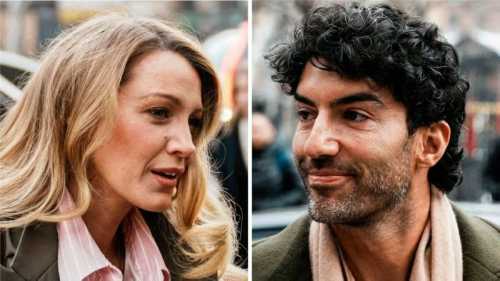
Picture a gold mine where the only people profiting are those selling shovels, while the diggers bankrupt themselves fighting over empty claims. This is the current state of celebrity culture in September 2026, where Blake Lively and Justin Baldoni just concluded their nearly two-year legal battle over "It Ends With Us" with neither party receiving compensation, yet their legal teams extracted a combined $60 million in fees pagesix.com abcnews.com . Simultaneously, Dolly Parton's estate has erupted into litigation, with her manager Danny Nozell securing a restraining order against her nephew Bryan Seaver over allegations of threats and attempted extortion just weeks after the icon's death tasteofcountry.com www.eonline.com www.tmz.com . These events signal a fundamental shift in how celebrity assets—whether intellectual property, personal legacy, or brand equity—are being weaponized, contested, and ultimately depleted through legal attrition.
The Settlement Paradox: Winners and Losers in Hollywood's War of Attrition
The Lively-Baldoni settlement represents more than a resolved dispute; it exposes a systemic pathology where litigation has become the primary revenue model for celebrity-adjacent industries. According to industry sources, both parties walked away with zero monetary recovery while their attorneys pocketed $60 million—a financial dynamic that fundamentally alters the risk-reward calculus for future entertainment litigation [[110]]. This outcome creates a perverse incentive structure: the threat of protracted legal warfare becomes more valuable than the underlying claim itself. For production companies, talent agencies, and streaming platforms, this means that every contractual relationship now carries embedded legal exposure that can eclipse the original project's budget.
The Hayden Panettiere investigation further illustrates how celebrity death has become a multi-jurisdictional legal theater, with the DEA now participating in a cross-country probe spanning Los Angeles and South Carolina [[70]][[72]][[76]]. Unlike traditional overdose cases resolved through coroner reports, this investigation has evolved into a federal criminal inquiry, suggesting that the legal infrastructure surrounding celebrity mortality has transformed into a mechanism for extracting accountability—and potentially liability—from an entire ecosystem of prescribers, distributors, and enablers.
The Estate Wars: When Legacy Becomes a Battlefield
The Dolly Parton estate conflict reveals a critical vulnerability in celebrity wealth preservation: the intersection of family dynamics, business management, and posthumous brand control. Nozell's allegations that Seaver threatened to "destroy his aunt's legacy and business" represent a scenario that estate planners have long feared but rarely addressed with adequate legal fortification [[58]]. This is not merely a family dispute; it is a proxy war over who controls a cultural icon's intellectual property, licensing agreements, and the ongoing revenue streams from Dollywood, publishing rights, and master recordings.
The timing is particularly significant. With Parton's death occurring in August 2026 and estate tensions exploding within weeks, this case demonstrates that modern celebrity estates face immediate, aggressive challenges from insiders with intimate knowledge of operational vulnerabilities [[56]][[59]]. The restraining order, issued by a Nashville judge just hours after the allegations were filed, indicates that courts are recognizing the unique risks posed by disputed celebrity estates—where brand value can depreciate rapidly in the face of public scandal [[57]].
Counter-Argument: The Deterrence Value of High-Profile Litigation
Critics of this analysis argue that expensive, public legal battles serve a necessary deterrent function in an industry plagued by power imbalances. The Lively-Baldoni case, despite its financial waste, may establish precedents that protect actors from producer overreach and create accountability mechanisms that prevent future misconduct. From this perspective, the $60 million in legal fees represents an investment in industry-wide behavioral correction rather than pure destruction of value. Furthermore, the aggressive prosecution of estate disputes like Parton's ensures that vulnerable assets receive judicial oversight, potentially preventing mismanagement or misappropriation that could occur in private settlements.
The Brand Saturation Crisis: Celebrity Ventures Face Mathematical Inevitability
While lawsuits dominate headlines, a quieter catastrophe is unfolding in the celebrity business sector: systemic market saturation is driving failure rates to unsustainable levels. Celebrity brands now face a 70% failure rate, with hospitality ventures failing at 60-70% within five years—more than double the rate of comparable non-celebrity businesses [[85]][[87]]. This is not a reflection of diminished celebrity influence; rather, it demonstrates that fame alone cannot overcome fundamental market dynamics when supply vastly exceeds demand.
Despite these grim statistics, the launch cycle continues unabated. Donatella Versace's partnership with Revolve, announced September 21, 2026, exemplifies the industry's refusal to acknowledge saturation [[63]]. According to Kearney research, 54% of consumers purchased a beauty product from an influencer or celebrity brand in 2023, but this metric masks a critical reality: purchase frequency and brand loyalty remain abysmal [[88]]. The celebrity endorsement ROI calculator shows a 4.2:1 return for beauty sector deals, but this average obscures the fact that only top-tier celebrities achieve these numbers while mid-tier launches burn through capital with negative returns [[92]].
Echoes of 1980s Excess: The Planet Hollywood Precedent
The current celebrity venture bubble mirrors the 1980s and 1990s explosion of celebrity-branded businesses that culminated in spectacular failures like Planet Hollywood, Sylvester Stallone's 38 Studios, and Vince McMahon's original XFL. The historical lesson is clear: celebrity ventures fail when they prioritize brand extension over operational excellence and market differentiation. What distinguishes the 2026 environment is the velocity of failure—social media amplifies both launch hype and subsequent collapse, compressing the lifecycle from decades to mere months. Unlike the 1980s, where a failed celebrity restaurant could limp along for years on tourist curiosity, modern celebrity brands face immediate scrutiny and rapid consumer abandonment once the novelty expires.
Counter-Argument: The Platform Economy Exception
However, defenders of celebrity entrepreneurship point to a crucial distinction: the 2026 landscape offers infrastructure that didn't exist in previous eras. Direct-to-consumer platforms, social media distribution, and influencer marketing ecosystems allow celebrities to bypass traditional retail gatekeepers and maintain higher margins. Industry analyst Adam Lilling notes that "if Zendaya wants to start a studio, capital will show up from venture capitalists and venture capital firms, partly because she brings distribution, audience and trust that genuinely change the economics of a business" [[115]]. This argument suggests that while failure rates remain high, the ceiling for success has never been higher, and the ability to pivot or relaunch is far more accessible than in the Planet Hollywood era.
Strategic Imperatives for Industry Participants
For entertainment professionals, the immediate imperative is comprehensive liability insurance and ironclad contractual protections that specify alternative dispute resolution mechanisms to avoid the $60 million legal fee trap. Talent should negotiate mandatory mediation clauses and cap discovery costs before production begins. For celebrity entrepreneurs, the data demands a fundamental strategic pivot: rather than launching standalone brands, the optimal strategy is licensing agreements with established operators who bear operational risk while the celebrity collects royalties. This model, employed successfully by Rihanna's Fenty partnership with LVMH, aligns incentives and leverages celebrity capital without exposing founders to the 70% failure rate [[85]].
Estate planners and high-net-worth individuals must implement dynasty trusts with independent trustees, remove family members from operational roles, and establish clear succession protocols before death occurs. The Parton case demonstrates that posthumous planning is reactive and vulnerable to litigation; proactive structuring with litigation-resistant trust architecture is the only reliable defense.
The Six-Month Forecast: Consolidation and Regulatory Intervention
Within six months, expect three major developments. First, at least three major celebrity brands will announce closures or fire-sale acquisitions as Q4 2026 earnings reveal unsustainable burn rates. Second, the SEC will initiate investigations into celebrity-endorsed crypto and investment products following the Panettiere investigation's expansion into financial exploitation of deceased celebrities. Third, California legislators will introduce the "Celebrity Estate Protection Act," mandating independent oversight for estates valued over $50 million with public-facing brands. The legal industrial complex will continue extracting value, but market forces will force a correction in celebrity venture launches, reducing new brand announcements by an estimated 40% as venture capital becomes scarce and retail partners demand profitability over celebrity association.
Related Articles

The Paddle and the Purse: Celebrity Capital Meets Combat Sports in the Alternative Asset Boom
Sep 23, 2026
The Player as the Platform: Athlete Media Empires and the Bypass of Traditional Gatekeepers
Sep 23, 2026
Comments (0)
No comments yet. Be the first to share your thoughts!
Want to join the discussion?
Please log in to post a comment.
Login NoworCreate an Account