
The Algorithmic Enclosure: How Bundling, Sports Rights, and FAST Proliferation Are Rewiring the Streaming Economy

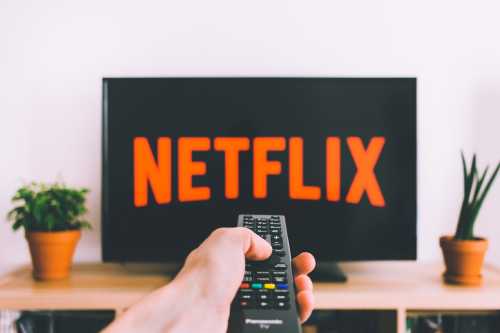
Like a municipal utility that quietly replaces robust public infrastructure with metered, tiered access points, the global streaming industry has transitioned from an era of subsidized abundance to a ruthlessly optimized extraction model. For a decade, platforms burned venture capital to acquire subscribers, treating premium content as a loss leader to capture market share. That implicit social contract has now expired, replaced by aggressive monetization and structural consolidation.
The streaming ecosystem is currently undergoing a structural recalibration, defined by aggressive ad-tier monetization, the consolidation of live sports rights, and the rapid proliferation of Free Ad-supported Streaming TV (FAST) channels. Concurrently, major media conglomerates are deploying bundled service offerings and AI-driven recommendation engines to maximize user retention amid plateauing global subscriber growth.
The Liquidity Crisis of Attention and the FAST Illusion
Mainstream financial coverage frequently celebrates the 76% increase in active FAST channels globally since 2023 as a democratization of media distribution [[26]]. However, this narrative ignores the severe depreciation of advertising yield this proliferation causes. As the market fragments into thousands of niche, algorithmically programmed channels, with programming volume increasing by 11% in a single year, the cost per mille (CPM) for advertisers inevitably compresses [[22]]. Platforms are essentially cannibalizing their own premium subscription video on demand (SVOD) inventory to feed a low-margin, high-volume ad machine. This dynamic forces legacy studios into a race to the bottom, where content acquisition budgets are slashed to maintain profitability in an environment where viewer attention is infinitely splintered and difficult to monetize at scale.
Algorithmic Homogenization and the Echo Chamber Effect
Beneath the surface of personalized "For You" feeds lies a systemic narrowing of cultural consumption. AI recommendation engines, designed primarily to maximize session duration, increasingly prioritize engagement metrics over content diversity. Primary research indicates that "algorithmic homogenization distorts user preference signals," effectively trapping audiences in self-reinforcing content loops [[38]]. When platforms optimize purely for retention, they systematically deprioritize challenging, mid-budget, or culturally specific programming in favor of algorithmically safe, high-velocity content. This creates a feedback loop where the data used to greenlight future projects is fundamentally skewed by the platform's own restrictive discovery architecture, leading to a homogenized content slate.
The Monetization of Communal Culture
The migration of live sports to exclusive streaming platforms represents the final phase of content enclosure. Live sports remain the last bastion of appointment viewing, and platforms are leveraging this scarcity to justify premium pricing and ad-tier expansion. Industry projections indicate that "by 2030, the value of global sports rights will reach $78 billion, up 20% from 2025" [[13]]. Mainstream analysis frames this as a victory for consumer choice, yet it ignores the socioeconomic stratification it introduces. By fracturing broadcasting rights across multiple proprietary streaming apps, conglomerates are effectively erecting paywalls around communal cultural moments, transforming a shared public experience into a fragmented, pay-to-play luxury.
The Efficiency Defense of Market Aggregation: While critics frequently decry streaming bundles as anti-competitive monopolization, industry defenders present a compelling counter-narrative. Executives argue that aggregation is a necessary market correction to the "subscription fatigue" of the early 2020s. By bundling services like Disney+, Hulu, and Max, or exploring Paramount and Warner Bros. Discovery integrations, companies reduce consumer friction and churn [[30]]. Proponents note that this consolidation ultimately lowers the effective cost per service for households while providing studios with the predictable, aggregated revenue streams required to fund high-budget, risk-intensive original programming in an otherwise volatile market.
Echoes of the 1996 Telecommunications Act
This current wave of streaming consolidation and bundling directly mirrors the media landscape following the Telecommunications Act of 1996. Just as that legislation unleashed a wave of cable television mergers that bundled niche channels into opaque, expensive tiers, today's streaming bundles are recreating the very "cable-like" experience they originally promised to disrupt. The historical precedent is unequivocal: decentralized distribution inevitably re-centralizes when content acquisition and marketing costs outpace standalone subscription viability. The industry is not innovating; it is merely digitizing the legacy cable bundle, complete with its inherent inefficiencies and consumer frustrations.
The Scalability Imperative of AI Curation: Conversely, data scientists and platform architects contend that the critique of algorithmic homogenization fundamentally misunderstands the scale of modern digital libraries. They argue that AI-driven personalization is the only mathematically viable method to manage catalogs containing tens of thousands of titles. Without sophisticated recommendation engines, user discovery would collapse under the weight of choice paralysis. From this perspective, algorithmic curation does not suppress niche content; rather, it is the only mechanism capable of surfacing hyper-specific programming to the microscopic global audiences that would organically seek it out, thereby maximizing the long-tail value of legacy content libraries.
Strategic Imperatives for Market Participants
To navigate this inflection point, consumers must aggressively audit their digital subscriptions quarterly, leveraging consolidated bundled offerings to eliminate redundant platform fees. Local and regional businesses should immediately pivot a portion of their digital marketing budgets toward FAST channels. These platforms offer significantly lower barriers to entry and hyper-local targeting capabilities compared to the prohibitive minimum spends required by premium SVOD placements. Furthermore, civic advocates must lobby for algorithmic transparency mandates, requiring platforms to disclose the primary engagement metrics driving their recommendation engines to prevent manipulative design patterns.
The Six-Month Horizon
Within the next six months, the streaming landscape will experience acute regulatory and market friction. Expect federal trade commissions to initiate preliminary inquiries into the anti-competitive nature of exclusive live sports streaming packages, citing consumer harm and market foreclosure. Simultaneously, at least one major media conglomerate will announce a "skinny bundle" focused exclusively on live sports and news, designed to counter the consumer backlash against $100+ premium entertainment bundles. The platforms that fail to balance algorithmic discovery with genuine content diversity will face accelerating churn rates as sophisticated consumers migrate to more transparent, value-driven aggregation models.
Related Articles
The Algorithmic Tollbooth: How Consolidation and Fragmentation Are Rewiring Streaming Economics
Aug 19, 2026
The Streaming Paradox: Consolidation, Churn, and the Rebirth of Cable 2.0
Aug 18, 2026
Comments (0)
No comments yet. Be the first to share your thoughts!
Want to join the discussion?
Please log in to post a comment.
Login NoworCreate an Account