
The Great Rezoning: How Sovereign Capital and Infrastructure Liabilities are Rewiring the Global Sports Syndicate


The Load-Bearing Calculus of Commercial Athletics
In commercial real estate, when a developer realizes the underlying zoning laws of a district have fundamentally changed, they do not renovate the old storefronts; they bulldoze the block and rezone the soil for high-density capital. The global sports syndicate is currently executing a violent rezoning of its physical and intellectual property assets. Over the past quarter, five distinct market signals have confirmed this structural shift: WNBA franchise valuations surged 59% to an average of $427 million justwomenssports.com , MLB officially scrapped its 2026 London Series due to infrastructure incompatibilities www.sportcal.com , the expanded College Football Playoff averaged 16.3 million viewers across its 11-game inventory espnpressroom.com , 11 NFL stadiums were forced to rip up artificial turf for natural grass to accommodate the FIFA World Cup www.espn.com , and TKO Group Holdings launched the sovereign-backed Zuffa Boxing cartel en.wikipedia.org . These are not isolated scheduling adjustments; they represent a total repricing of sports inventory, labor liabilities, and broadcast distribution.
The Financialization of Demographic Inventory
Mainstream sports media frames the WNBA's valuation boom and the CFP's expansion as separate triumphs of grassroots growth and playoff drama. The unseen reality is the aggressive financialization of untapped demographic inventory. By expanding the CFP to 12 teams, the sport did not merely add games; it engineered a scarcity-to-ubiquity pipeline that kept regional fan bases financially engaged through December, resulting in a 4 percent year-over-year aggregate viewership bump espnpressroom.com . Simultaneously, the WNBA's Golden State Valkyries commanding an $850 million valuation proves that female athletic IP is the last remaining arbitrage opportunity in a saturated sports market www.sportico.com . Venture capital and legacy ownership groups are no longer buying basketball teams; they are acquiring undervalued media distribution nodes, treating the WNBA as a high-yield bond in a low-yield macroeconomic environment.
Counter-Argument: The Valuation Bubble and Subsidy Dependence
It is analytically convenient to view this explosive growth in women's sports and expanded collegiate playoffs as a permanent recalibration of the sports media economy. However, this perspective ignores the heavy reliance on venture-capital subsidies and the distinct risk of a localized valuation bubble. Much of the WNBA's current revenue growth is underwritten by corporate social responsibility budgets and speculative expansion fees rather than sustainable, long-term regional television contracts. When the macroeconomic cycle turns and corporate marketing budgets contract, franchises valued at nearly half a billion dollars based on speculative media rights will face severe liquidity crunches, exposing the fragility of an asset class priced for perfection rather than operational cash flow.
Infrastructure Liabilities and the European Retreat
This capital reallocation is simultaneously exposing the massive deferred maintenance liabilities hidden within American sports infrastructure. MLB's decision to cancel the 2026 London Series featuring the Yankees and Blue Jays highlights the hard limits of exporting American pastimes into European, soccer-specific architectural footprints www.espn.com . The staging and broadcast complications at West Ham's London Stadium prove that baseball's spatial requirements are fundamentally incompatible with the global football paradigm. Furthermore, the NFL's forced capitulation to FIFA—ripping out artificial turf and laying natural grass across 11 host stadiums—has ignited a massive labor dispute regarding player safety www.facebook.com . The agronomic nightmare of laying hybrid Bermuda grass over concrete subfloors in multi-purpose stadiums has exposed the structural inadequacy of modern American venues. As San Francisco 49ers tight end George Kittle noted regarding the temporary grass installations, "Clearly, we know it's possible" to maintain elite surfaces, effectively stripping team owners of their primary excuse for retaining injury-prone synthetic fields sports.yahoo.com . The unseen impact is a looming wave of union-mandated infrastructure overhauls that will cost franchise owners hundreds of millions in un-budgeted capital expenditures.
Sovereign Cartelization of the Prize-Fight Economy
The most aggressive rezoning is occurring in the unregulated wild west of combat sports, where sovereign wealth is actively cartelizing the prize-fight economy. TKO Group's partnership with Saudi Arabia's Sela to launch Zuffa Boxing is not merely a new promotional entity; it is a hostile takeover of a fragmented, corrupt industry www.sportcal.com . By leveraging the UFC's centralized matchmaking apparatus and WWE's broadcast distribution, Zuffa Boxing effectively bypasses the traditional alphabet sanctioning bodies. This impacts the broader sports landscape by establishing a monopolistic pricing floor for combat athletes, forcing independent promoters to either sell their rosters to the Saudi-backed conglomerate or face insurmountable capital deficits. The athletic commission model is being replaced by the sovereign-wealth holding company.
Counter-Argument: The Institutionalization of Combat Sports
Conversely, framing the Saudi-TKO boxing venture purely as a monopolistic land grab designed to suffocate independent promoters ignores the systemic corruption that has historically plagued the sport. Boxing has long suffered from fragmented sanctioning bodies, conflicting judging criteria, and a lack of standardized medical protocols. A centralized, well-capitalized cartel backed by sovereign wealth and public-market scrutiny might actually enforce the unified weight-class integrity and rigorous neurological testing that the sport desperately requires. In this light, the monopolization of boxing is not the death of competitive fairness, but the necessary institutionalization of a sport that was previously governed by shadow promoters and localized fiefdoms.
Echoes of 1992: The Sky TV Breakaway
To understand the terminal trajectory of this inventory repricing, one must examine the formation of the English Premier League in 1992. When the top-flight football clubs broke away from the Football League to sign an exclusive broadcasting deal with Sky TV, they did not just change the television schedule; they fundamentally altered the physical and financial architecture of the global sport. The Rupert Murdoch-backed deal injected £304 million into the top flight, instantly turning local clubs into global media conglomerates and pricing out the traditional working-class fan base. The lesson from 1992 is that he who controls the centralized broadcast distribution dictates the physical rules of the game and the valuation of the real estate. Today's sports conglomerates are executing the exact same maneuver, utilizing expanded playoff formats and sovereign-backed combat leagues to centralize media rights, effectively locking out regional syndicates and independent promoters from the upper echelons of the sports economy.
Tactical Maneuvers for the Municipal Operator
For municipal stadium authorities, regional sports networks, and local sports promoters, the immediate directive is to audit physical infrastructure and pivot to hyper-local demographic arbitrage. Stadium operators must immediately model the capital expenditure required to transition from synthetic turf to natural grass, as the NFL Players Association will inevitably weaponize the World Cup's temporary conversions to mandate permanent surface overhauls in future collective bargaining agreements. Furthermore, regional broadcasters and local businesses should aggressively acquire the localized, secondary media rights to WNBA and NWSL franchises before the major streaming platforms lock down the national syndication packages. The arbitrage window for female sports IP is closing rapidly, and local entities must secure their community moats before the sovereign wealth funds and tech conglomerates price them out of the market.
The Q1 2027 Repricing of Labor and Land
In six months, as the global sports calendar transitions into the first quarter of 2027, the landscape will face a severe correction in international expansion and a violent repricing of labor liabilities. We will witness the total abandonment of MLB's European regular-season ambitions, as the league quietly pivots its international capital toward Latin American markets where the architectural and cultural infrastructure aligns with baseball's spatial requirements. Simultaneously, the NFL will face a massive, coordinated grievance from the Players Association demanding the permanent removal of artificial turf from all 32 stadiums, utilizing the FIFA World Cup's natural grass precedent as undeniable proof of concept. Finally, Zuffa Boxing will execute its first major acquisition of a legacy promotional firm, effectively completing the cartelization of the sport and forcing the remaining independent boxing promoters into bankruptcy or forced buyouts. The entities that fail to recognize that the zoning laws of sports have permanently changed will find themselves holding depreciating synthetic assets in a natural-grass economy.
Related Articles

The Public Health Leveraged Buyout: How HHS is Liquidating Infectious Readiness to Fund the Chronic Disease Pivot
Aug 14, 2026
The Leverage Buyout of American Pastimes: How Private Equity and the $76B Media Reset are Financializing Sports
Aug 13, 2026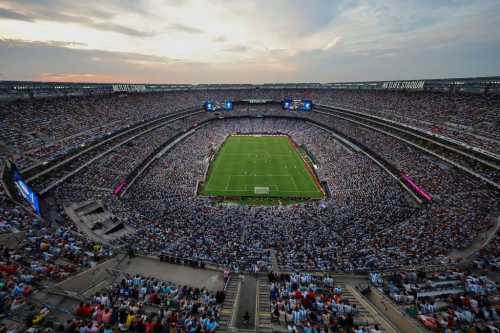
Comments (0)
No comments yet. Be the first to share your thoughts!
Want to join the discussion?
Please log in to post a comment.
Login NoworCreate an Account