
The Rouge and the Glory: Canadian Football League Kicks Off a Massive Rivalry Game Under the Northern Lights

The Giant Green Carpet of the True North
Imagine you are standing on a giant, beautiful carpet made of bright green grass. The carpet is very, very long, and it has white lines painted on it to show you where to go. At the very end of the carpet, there are four tall yellow poles that look like a giant tuning fork. The goal of the game is to take a pointy, brown, leather egg and carry it across the white line at the end of the carpet, or kick it through the yellow tuning fork. This is the game of football, but not the kind you might see in the United States. This is Canadian football, played in the magnificent Canadian Football League, or the CFL. The field is wider, the rules are a little bit different, and the weather can be very, very cold. On a crisp, starry Saturday night in late June 2026, the two oldest, most fierce rivals in the country, the Toronto Argonauts and the Hamilton Tiger-Cats, met on the giant green carpet in Toronto for a game that would be remembered forever. Let us explore this wonderful, tough, and incredibly unique sport, explaining the special rules, the history of the trophy, and the beautiful tailgate parties in a way that is as easy to understand as a playground game, but told with the deep, respectful voice of a master sports journalist.
To understand why Canadian football is so special, you first need to know how it is different from the American version. The most obvious difference is the size of the field. The Canadian field is eleven0 yards long, which is ten yards longer than the American field, and it is much, much wider. It is so wide that the players look like tiny ants when they line up at the start of the play. Because the field is so big, the game is much faster and much more focused on running and catching the ball in the open space. It is like playing tag in a giant park instead of a small backyard. There is more room to run, more room to dodge, and more room for magic to happen.
The second big difference is the number of 'downs.' In football, the team with the ball has a certain number of tries, called downs, to move the ball ten yards forward. In the American game, they get four tries. But in Canada, they only get three tries! This makes the game incredibly exciting and very stressful for the coaches. Because they only have three tries, they have to be very brave. They cannot just run the ball slowly into a pile of big, strong men. They have to throw the ball through the air, taking big risks to get the yards they need. It forces the teams to be aggressive, to be creative, and to keep the fans on the edge of their seats every single second. If they fail to get ten yards in three tries, they have to kick the ball away to the other team.
But the most unique, most wonderful rule in Canadian football is something called the 'rouge.' In American football, you only get points if you score a touchdown, which is worth six points, or if you kick the ball through the yellow poles, which is worth three points. But in Canada, if a team kicks the ball into the end zone, and the other team cannot catch it, or if they catch it but cannot run it out of the end zone, the kicking team gets one single point. This one point is called the 'rouge,' which is a fancy French word for 'red.' It is like a participation trophy, but it actually counts on the scoreboard! It makes every single kick incredibly important. Even if a team is losing by a lot, they can still score a single point just by kicking the ball as far as they can. It adds a layer of strategy and drama that you cannot find anywhere else in the sports world.
The trophy they play for at the end of the year is called the Grey Cup. It is a beautiful, heavy, silver bowl that looks like a giant soup tureen. It was first given away in 1909 by a man named Earl Grey, who was the Governor General of Canada. It is the oldest trophy in North American sports, even older than the Super Bowl trophy. Winning the Grey Cup is the ultimate dream for every Canadian football player. The game is played in a different city every year, and it is not just a game; it is a massive, week-long festival. The whole city shuts down, there are concerts, parades, and parties, and the entire country stops to watch the game on television. It is the biggest single-day sporting event in Canada, a true national holiday of sports and celebration.
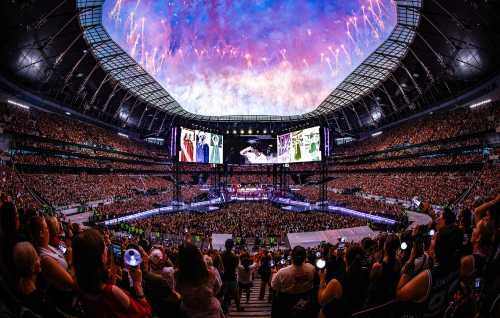
On this beautiful Saturday night in Toronto, the atmosphere was electric. The stadium, a giant, circular bowl with a roof that can open and close, was packed to the brim with fifty thousand screaming fans. The fans of the Argonauts were wearing navy blue, and the fans of the Tiger-Cats were wearing orange and black. The noise was deafening. Before the game even started, the fans had been partying in the parking lots for hours. This is called 'tailgating.' People bring their cars, open the back trunks, and set up grills to cook delicious food. In Canada, the tailgate food is incredibly special. They eat poutine, which is a magical dish of french fries covered in squeaky cheese curds and hot, savory gravy. They eat butter tarts, which are tiny, sweet, gooey pastries that melt in your mouth. They drink cold cider and hot coffee, sharing stories and laughing together. The tailgate is where the real community is built, where strangers become friends over a shared love of the pointy brown ball.
When the game finally started, the sky had turned dark, and the stars were shining brightly above the open roof. The air was cool, and you could see the players' breath puffing out like little white clouds when they ran. The Tiger-Cats had a massive, incredibly fast quarterback named Marcus. Marcus had an arm like a cannon. He could throw the pointy brown ball so hard and so far that it looked like a missile flying through the night sky. On the very first play of the game, Marcus dropped back, dodged a giant, two-hundred-and-fifty-pound defender who was trying to tackle him, and threw a beautiful, spiraling pass down the middle of the wide, wide field. His receiver, a young man who ran faster than a galloping horse, caught the ball perfectly in stride and ran all the way into the end zone for a touchdown. The orange and black side of the stadium exploded with joy. The noise was so loud that it shook the cameras on the sidelines.
But the Argonauts were not going to give up easily. They were the oldest franchise in the league, a team with a rich, deep history of champions. They had a defensive line that was built like a brick wall. Every time the Tiger-Cats tried to run the ball, they would crash into the Argonauts' defensive linemen with a loud, sickening 'smack' of plastic pads hitting each other. The defenders were huge, strong, and incredibly fast. They tackled the runners, wrapped their arms around their legs, and pulled them to the giant green carpet. The game was a beautiful, violent, strategic chess match played at a hundred miles per hour. The coaches on the sidelines were wearing headsets, talking into microphones, calling the plays, and trying to outsmart each other. It was a battle of wits and muscle, a true test of who wanted it more.
In the fourth quarter, the game was tied, and the tension was so thick you could cut it with a knife. The Tiger-Cats had the ball, but they were stuck on their own side of the field. It was third down, which meant this was their very last try to get ten yards. If they failed, they would have to kick the ball away. The quarterback took the snap, but the Argonauts' defenders broke through the wall. They chased the quarterback all the way back, all the way into his own end zone. In a panic, the quarterback threw the ball out of the back of the end zone, out of bounds, just to avoid being tackled and losing even more ground. The referee blew his whistle and threw a yellow flag. But then, he made a signal that the crowd did not expect. He held up one finger. He had awarded the Argonauts a single point! It was a rouge! Because the ball was kicked out of the end zone by the offense, the defense got one point. It was a tiny, tiny point, but it broke the tie. The Argonauts were now winning by one single, magical point.
The final minute of the game was pure chaos. The Tiger-Cats had to get the ball all the way down the long, long field to score a touchdown and win. They threw passes, they ran the ball, they fought for every single inch of the giant green carpet. But the Argonauts' defense was too strong, too fast, and too determined. On the very last play, the Tiger-Cats' quarterback threw a desperate, high ball into the end zone. The Argonauts' defender jumped up into the starry night sky, caught the ball, and fell to the ground as the clock hit zero. The game was over. The Argonauts had won, thanks in part to the most unique rule in all of sports: the rouge.
The fans rushed onto the field, hugging each other, waving their flags, and singing the team's fight song. The players on the field were exhausted, their uniforms covered in grass stains and dirt, but they were smiling. They had played a beautiful, tough, uniquely Canadian game. The Canadian Football League broadcast showed the replays of the amazing catches, the huge hits, and the controversial rouge call over and over again. It was a perfect advertisement for why this sport is so beloved in the Great White North. It is faster, it is wider, and it has a rule that keeps you guessing until the very last second.
As the fans walked out of the stadium and into the cool Canadian night, they stopped at the food trucks to get one last plate of hot poutine to warm them up. They talked about the massive throws, the brick-wall defense, and the single point that made all the difference. They were proud of their team, proud of their city, and proud of their unique, wonderful game. Canadian football is not just a sport; it is a reflection of the country itself. It is tough, it is polite, it is vast and wide, and it always, always has a little bit of unexpected magic hidden in its rules.
WHAT A FINISH! ???????????? A controversial rouge, a massive defensive stand, and a sold-out crowd in Toronto! The Argonauts win a classic against the Tiger-Cats under the northern lights! #CFL#Argos
— CFL (@CFL) June 29, 2026
So, the next time you see a pointy brown ball flying through the air, remember the giant, wide green carpet of the Canadian Football League. Remember the three downs, the massive hits, the delicious tailgate poutine, and the magical, mysterious single point called the rouge. Remember the starry night in Toronto, and the beautiful, tough, uniquely Canadian game that brings the whole country together, one yard at a time.
Related Articles
Record Towers, Idle Cranes: Inside the Music Industry's Barbell Economy
Aug 12, 2026
The Actuarial Playing Field: How Biological Caps, Prediction Markets, and Venue Yield Management are Rewiring Sports Economics
Aug 11, 2026
Comments (0)
No comments yet. Be the first to share your thoughts!
Want to join the discussion?
Please log in to post a comment.
Login NoworCreate an Account