
The Runway Reckoning: How September 2026 Exposed the Structural Fault Lines of Fashion Week

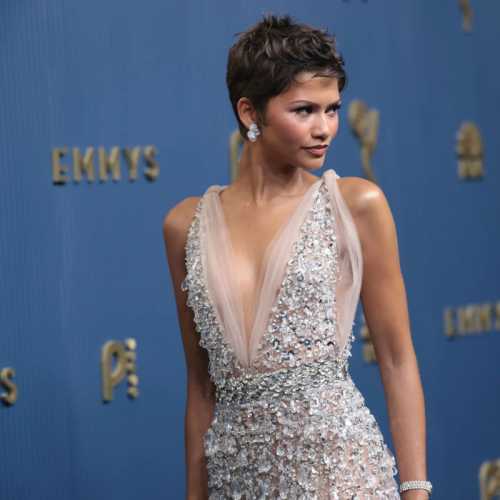
Managing a modern Fashion Week schedule is akin to operating a legacy municipal power grid during a sudden, mandated transition to decentralized renewable energy: the old infrastructure still hums, but the underlying economic and regulatory landscape has fundamentally shifted, rendering previous operational models obsolete. In September 2026, the global fashion circuit confronted a synchronized structural recalibration. Milan formally discouraged runway fur, the British Fashion Council prepared for a major leadership transition, and aggressive commercial partnerships, such as Luckin Coffee’s integration into New York Fashion Week, redefined event accessibility. These converging developments signal the end of the unregulated, purely aesthetic era of Fashion Month, forcing a pivot toward verifiable sustainability, institutional transition, and hyper-commercialized accessibility.
The Financialization of the Front Row
Mainstream media frequently frames the integration of mass-market brands like Luckin Coffee into New York Fashion Week as a democratizing force, bringing runway shows to a broader public [[9]]. However, the unseen implication is the profound financialization and subsequent dilution of brand equity. Luxury and contemporary houses are increasingly subsidizing their exorbitant production costs by selling adjacency to non-endemic, high-volume entities. This dynamic effectively transforms the exclusive front row from a curated assembly of editors and high-net-worth clients into programmatic advertising inventory. The cultural hierarchy of fashion is being rewritten, where proximity to power is no longer determined by editorial influence, but by corporate sponsorship tiers, fundamentally altering the perceived prestige of the garments being presented.
The Institutional Vacuum in London’s Creative Incubator
The impending departure of David Pemsel as British Fashion Council Chair on September 30, 2026, leaves a critical leadership void just as the organization attempts to balance commercial viability with creative incubation [[45]]. While the September edition of London Fashion Week is heavily promoting its support for emerging talent, showcasing 53 evening events highlighting BFC NEWGEN designers [[39]], the unseen implication is that this emerging talent is being utilized as a loss-leader. These independent designers are deployed to maintain London’s cultural cachet and media relevance, yet the underlying financial infrastructure required to scale their businesses remains perilously underfunded. Without Pemsel’s corporate lobbying expertise, the BFC risks losing its ability to secure the government and corporate grants necessary to prevent a mass exodus of British talent to better-subsidized markets in Paris or Milan.
The Sustainability Compliance Trap
Milan’s decision to actively discourage fur on runways starting in September 2026 is widely celebrated as a victory for animal welfare, aligning with global shifts toward sustainability [[23]]. Yet, the unseen implication is the creation of a sophisticated "compliance theater." As brands rapidly pivot to synthetic, petroleum-based alternatives to avoid reputational damage, they are swapping one environmental liability for another. The lifecycle assessment of faux fur often reveals a massive, unacknowledged carbon footprint and microplastic shedding. This regulatory nudge allows houses to claim ethical victories in their press releases without addressing the core, systemic issue of textile overproduction and the lack of circular end-of-life solutions for these new synthetic materials.
Counter-Argument: The Economic Necessity of Non-Endemic Sponsorship
Critics who argue that mass-market partnerships inherently degrade Fashion Week’s prestige overlook the stark financial realities of modern event production. With the cost of staging a physical runway show in New York or Milan escalating exponentially due to inflation and heightened security demands, securing deep-pocketed, non-endemic sponsors is no longer a compromise of artistic integrity, but a mathematical necessity for survival. Without these commercial injections, many mid-tier and emerging designers would be entirely priced out of the official calendar, making such partnerships a vital lifeline rather than a mere corporate sellout.
Counter-Argument: The Catalytic Power of Institutional Mandates
Conversely, framing the shift away from fur as mere "compliance theater" ignores the tangible, incremental progress of supply chain transparency. While synthetic alternatives present their own environmental challenges, the formal discouragement of fur by an institution as influential as Camera Nazionale della Moda Italiana establishes a critical regulatory baseline. This top-down mandate forces material innovation and accelerates venture capital investment into next-generation bio-fabrics, proving that institutional policy, even if imperfect, is a necessary catalyst for industry-wide ecological reform.
Echoes of the 2011 "See Now, Buy Now" Fracture
This current tension mirrors the structural market shifts of the 2011–2012 "see now, buy now" movement, when heritage brands attempted to collapse the traditional six-month gap between runway presentation and retail availability. Just as that initiative ultimately fractured the wholesale calendar and marginalized independent designers who could not afford the accelerated, speculative production cycle, today’s push for hyper-commercialized, instantly accessible Fashion Weeks risks cannibalizing the very exclusivity that gives these events their economic value. The historical lesson is unequivocal: accelerating the fashion calendar or diluting its prestige for short-term commercial gain inevitably leads to long-term brand devaluation, retailer fatigue, and systemic market correction.
Strategic Imperatives for Market Participants
For Local Businesses: Capitalize on the peripheral "street style" and spillover economy. As official shows become more corporate and restricted, independent cafes, boutiques, and pop-up venues near official hubs (such as those hosting Milan’s 160+ official events [[22]]) should curate exclusive, ticketed viewing experiences or designer meet-and-greets to capture high-margin foot traffic.
For Emerging Designers: Bypass the traditional, cost-prohibitive physical runway model. Leverage frameworks like the BFC NEWGEN program [[39]], but focus resources on high-fidelity digital presentations and direct-to-consumer community building, rather than burning capital on a single, ephemeral physical show with diminishing editorial return.
For Citizens and Consumers: Audit the sustainability claims of brands showcasing at these events. Look for third-party material certifications (such as GOTS or Cradle to Cradle) rather than relying on the "halo effect" of a runway presentation, as the rapid shift to synthetic alternatives often masks deeper supply chain opacity.
For Investors: Avoid overexposure to legacy fashion houses that rely heavily on traditional, high-cost runway spectacles to drive brand heat. Allocate capital toward the "picks and shovels" of the fashion ecosystem: sustainable textile innovators, digital fashion infrastructure, and experiential retail platforms.
The Six-Month Horizon: Structural Compression
By March 2027, the Fashion Week landscape will reflect these September tremors through severe structural compression. Expect at least two major heritage brands to permanently abandon the traditional biannual physical runway in favor of continuous, localized "drop" models, citing the untenable return on investment of centralized fashion months. Concurrently, the British Fashion Council will likely announce a radical restructuring of its NEWGEN program, tying financial grants directly to verifiable sustainability metrics and commercial sell-through rates, effectively ending the era of funding purely conceptual art. Finally, regulatory bodies in the European Union will introduce mandatory "carbon labeling" requirements for all garments showcased during official fashion weeks, permanently altering the aesthetic and material choices of designers and cementing the end of the unregulated runway era.
Related Articles

The Derivatives of Glamour: How Archival Styling and Synthetic Endorsements Are Rewiring Celebrity Fashion
Sep 17, 2026
The Runway Reckoning: How Fashion Week's Economic Engine Is Stalling Amid Protests and AI Disruption
Sep 17, 2026
Comments (0)
No comments yet. Be the first to share your thoughts!
Want to join the discussion?
Please log in to post a comment.
Login NoworCreate an Account