
The Synthetic Pivot: How AI Avatars and Algorithmic Volatility Are Rewiring the Creator Economy

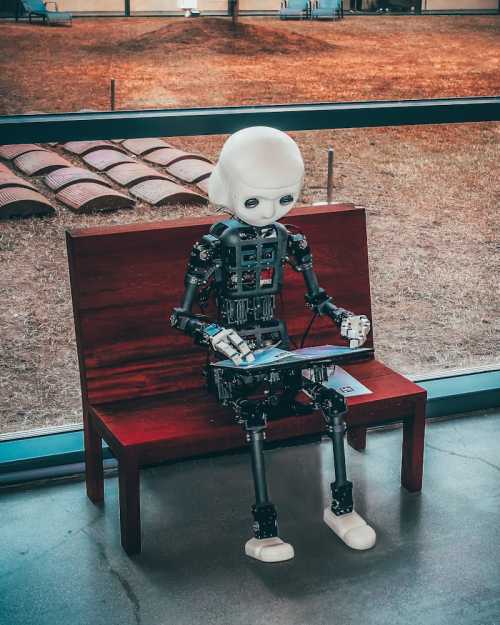
The Architecture of Synthetic Influence Treating the modern creator economy like a 19th-century gold rush town is an apt analytical framework: the only entities guaranteeing wealth are those selling the shovels, and now, those shovels are building themselves. The core event driving this systemic reset is the simultaneous surge in synthetic media adoption, with the global virtual-influencer market forecast to reach roughly $45.9 billion by 2030, and the catastrophic rise in human creator fatigue www.digitalapplied.com . Concurrently, industry data reveals that creator burnout rates have escalated to between 52% and 78%, signaling a structural collapse in the human labor model that previously sustained digital marketing www.gigapay.com . This convergence marks a definitive pivot where algorithmic personas are no longer a novelty, but a scalable, corporate-controlled replacement for human talent.
The Algorithmic Wealth Concentration
Mainstream discourse frequently frames social media platform updates as neutral technical adjustments designed to improve user experience. In reality, these changes are engineering a severe concentration of digital wealth and attention. According to SocialPilot's April 2026 social media algorithm analysis, almost every major platform now deploys machine learning models that prioritize synthetic, high-retention content over organic human creation [[38]]. This creates a self-reinforcing feedback loop where human creators are forced to mimic the hyper-optimized pacing and aesthetic uniformity of AI-generated media merely to maintain baseline visibility. The unseen implication is the rapid homogenization of cultural output, as the algorithmic reward structure actively penalizes the idiosyncratic, unpolished authenticity that originally defined the creator economy. Furthermore, as platform fragmentation increases, this algorithmic bias transforms discoverability from a creative challenge into a prohibitive operating cost for independent producers [[17]].
The Illusion of Frictionless Marketing
Brands are aggressively deploying digital humans under the assumption that synthetic influencers offer a flawless, risk-free marketing channel. Recent findings indicate that the global brand adoption rate of virtual personas climbed rapidly to 73% in 2026 [[5]]. However, this strategy ignores the fundamental mechanics of consumer psychology. As industry analysts note, "AI influencer investment is early-stage. Overall sentiment is cautious, not hype-driven. Trust is the scaling bottleneck" [[4]]. When corporations replace human talent with customizable avatars, they sacrifice the authentic parasocial relationships that drive long-term brand loyalty. They are trading durable consumer trust for short-term operational efficiency, creating a fragile marketing ecosystem that is highly susceptible to sudden shifts in public sentiment regarding artificial intelligence and data privacy.
The Democratization Defense of Digital Avatars
Critics frequently argue that the rise of AI influencers is purely an exploitative corporate tactic that will inevitably collapse under consumer backlash. However, this perspective is overly deterministic and ignores the democratizing potential of synthetic media for small enterprises. A local business that cannot afford a $10,000-per-month human influencer can now license a customizable digital avatar for a fraction of the cost [[6]]. This technological leveling provides hyper-local marketing capabilities that were previously inaccessible, allowing small entities to compete in digital spaces without relying on the volatile, high-fee structures of traditional talent agencies. For these businesses, synthetic media is not a replacement for human connection, but a viable bridge to digital visibility.
The Legal Vacuum of Synthetic Endorsement
The third unseen implication is the rapid proliferation of deepfake celebrity endorsements, which has created a regulatory Wild West. While platforms like YouTube have deleted thousands of scam videos, the underlying right-of-publicity frameworks remain heavily fragmented across state and national jurisdictions [[32]]. Human creators are increasingly vulnerable to unauthorized digital cloning, with their likenesses scraped and deployed to promote fraudulent supplements or financial schemes. Regulatory bodies have already issued warnings regarding AI deepfakes of public figures targeting vulnerable demographics, yet the legal recourse for non-celebrity creators remains virtually nonexistent [[31]]. This legal ambiguity effectively transforms a creator's biometric identity into an unregulated public commodity, stripping them of the right to control their own digital shadow.
The Agency of Adaptive Creation
Conversely, the prevailing narrative that algorithmic changes are solely designed to crush human labor is demonstrably one-sided. Platform shifts toward high-retention content are fundamentally driven by aggregate user demand for seamless, frictionless entertainment, not a malicious conspiracy against independent creators. Furthermore, human creators who actively adapt by leveraging these same AI tools for workflow automation—such as automated video editing, transcription, or data-driven topic selection—frequently report increased creative freedom and reduced occupational fatigue. This proves that the technology itself is a neutral instrument; its impact is dictated entirely by whether the creator wields it as a subordinate tool to amplify their voice, or submits to it as a total replacement.
Echoes of the Studio System Monopoly
To understand the trajectory of this market correction, one must examine the historical precedent of the 1920s transition from live theater to "talkies" in the entertainment industry. Initially, sound technology was viewed as a gimmick, but it rapidly enabled the Hollywood studio system to standardize production and, crucially, own the final product outright, reducing actors to contracted, replaceable assets. Today’s synthetic creator economy mirrors this exact dynamic. Corporations are no longer merely distributing human talent; they are engineering wholly owned digital intellectual property. The lesson from the studio era is clear: when the means of production are entirely centralized, the talent bears all the reputational risk while the corporation captures the perpetual upside, inevitably leading to aggressive, union-driven regulatory pushback.
Strategic Imperatives for Market Participants
To navigate this inflection point, local businesses must immediately audit their marketing expenditures, redirecting capital from broad-reach, high-cost human influencers toward verifiable micro-influencer networks or owned synthetic assets with transparent disclosure protocols. Independent human creators must treat their persona as formal intellectual property, legally registering their digital likeness and voice biometrics to establish a defensible perimeter against unauthorized cloning. For citizens and consumers, the imperative is to actively support and demand legislative mandates for conspicuous, unavoidable "synthetic media" watermarks on all AI-generated endorsements, refusing to engage with opaque digital marketing.
The 2027 Cryptographic Inflection Point
Looking six months ahead, the digital influence landscape will undergo a definitive legal and structural correction. Expect the filing of the first major class-action lawsuit establishing a federal "right to digital likeness" precedent, which will force major platforms to implement mandatory, cryptographic watermarking for all AI-generated influencer content. Consequently, the creator economy will formally bifurcate into a "premium human" tier, commanding high trust premiums for verified authenticity, and a "commodity synthetic" tier, permanently altering the valuation and operational mechanics of digital marketing.
Related Articles

The Algorithmic Inflection Point: How Synthetic Media and Regulatory Friction Are Rewiring the Creator Economy
Sep 14, 2026
The Algorithmic Extraction of Cultural Capital: A Structural Realignment of the Trending Economy
Sep 13, 2026
Comments (0)
No comments yet. Be the first to share your thoughts!
Want to join the discussion?
Please log in to post a comment.
Login NoworCreate an Account