
Amanda Seyfried Divorce Signals Hollywood's Relationship Paradox Amid Emmy Triumphs and Celebrity Weddings

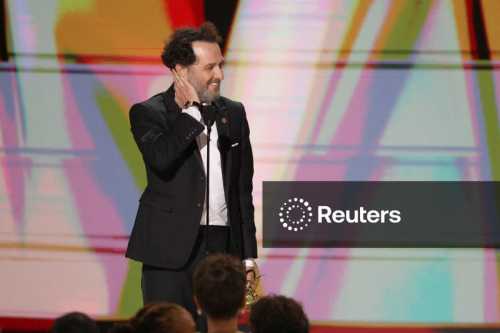
When a couple announces their separation with the phrase "we've got each other forever—and it's GOOD," it reads like a corporate press release rather than a personal statement—because in modern celebrity culture, it essentially is. Amanda Seyfried and Thomas Sadoski's divorce announcement on September 16, 2026, arriving the same week as Jean Smart's historic Emmy sweep and Matthew Rhys's unprecedented double victory, exposes a fundamental contradiction in Hollywood's relationship economy: we celebrate love stories while simultaneously consuming breakups as entertainment people.com .
The Week That Defined Celebrity Culture's Dual Reality
Amanda Seyfried and Thomas Sadoski announced their split after nine years of marriage, stating they had been separated "for a while" and that the move proved beneficial for their family unit people.com . Simultaneously, the 78th Emmy Awards on September 14-15, 2026, celebrated television's finest achievements, with Jean Smart making history by winning her fifth Emmy for "Hacks"—becoming the first woman to win for every season of a show deadline.com variety.com . Matthew Rhys achieved his own milestone, becoming the first actor to win two lead acting Emmys in a single night and completing the trifecta of lead acting wins across drama, comedy, and limited series categories deadline.com www.wcvb.com .
These announcements arrived against a backdrop of high-profile celebrity unions: Zendaya and Tom Holland's secret August 4 wedding in Surrey, England, and Taylor Swift and Travis Kelce's July ceremony at Madison Square Garden people.com people.com . This convergence of relationship milestones—both celebratory and conclusive—reveals entertainment industry dynamics that extend far beyond gossip column fodder.
The Parasocial Economy and Fan Investment
What mainstream coverage ignores is the economic infrastructure built around celebrity relationships. Research published in the Journal of Business Research demonstrates that when celebrity couples split, fans experience "para-loveshock"—a genuine grief response stemming from intense emotional attachments that resemble romantic love www.sciencedirect.com www.researchgate.net . This isn't hyperbole; it's measurable consumer behavior with real financial implications for brands, studios, and endorsement deals tied to couple-based marketing.
The Seyfried-Sadoski split carries particular weight because the couple cultivated an image of Hollywood stability. They married in 2017 after meeting on "The Last Letter to Your Lover" set, and Seyfried publicly discussed their commitment to couples therapy in 2025 www.elle.com www.instagram.com . This transparency created a parasocial contract with audiences: we invested in their narrative of intentional, working-class Hollywood marriage. The dissolution doesn't just end a relationship; it invalidates that investment.
According to a Marriage Foundation study, celebrity divorce rates stand at 52% within the first 14 years of marriage—double the general population rate marriagefoundation.org.uk . Yet this statistic masks a more troubling trend: celebrity first marriages fare worst at 57% divorce rates, while subsequent marriages perform marginally better at 48% www.linkedin.com . The Seyfried-Sadoski split represents a first marriage dissolution, fitting the pattern but contradicting the couple's public positioning as relationship experts who "sacrifice for each other" www.instagram.com .
The Authenticity Paradox in Celebrity Branding
Here's where the narrative becomes uncomfortable: Jean Smart's Emmy triumph for portraying Deborah Vance—a comedian navigating career relevance and personal authenticity—mirrors the industry's broader struggle with genuine connection versus performative intimacy. Smart's fifth consecutive win for "Hacks" represents not just acting excellence but audience hunger for narratives about women refusing to compromise their identities for relationship stability deadline.com variety.com .
Matthew Rhys's historic double Emmy win compounds this tension. His victories for "Widow's Bay" and "The Beast in Me" celebrate an actor whose real-life partnership with Keri Russell (herself an Emmy nominee this year) has become part of his brand narrative artscanvas.org deadline.com . The industry rewards performers who can convincingly portray emotional complexity while maintaining carefully curated personal lives—a skill set that may actually undermine authentic relationship maintenance.
The Privacy Premium: Why Some Couples Survive
However, this analysis risks oversimplification. Zendaya and Tom Holland's deliberately private August wedding—held at Beaverbrook Hotel in Surrey with minimal advance notice—suggests an alternative model people.com www.instyle.com . Stylist Law Roach's comment that fans "missed it" because the ceremony was intentionally low-key reveals a strategic choice: relationship preservation through information scarcity pagesix.com .
Critics might argue that analyzing celebrity divorces for cultural meaning grants these relationships undue significance. Relationship therapist Esther Perel has reframed divorce as "transformation, not failure," emphasizing that love's end doesn't erase years of connection and growth www.facebook.com . From this perspective, Seyfried and Sadoski's amicable statement represents emotional maturity rather than cultural symptom.
Yet this counter-argument ignores the commercial machinery that profited from their union. The couple's joint interviews, red carpet appearances, and public discussions of their relationship created marketable content that studios and brands monetized. When the relationship ends, that revenue stream terminates, and the disconnect between commercial exploitation and personal autonomy becomes impossible to ignore.
Historical Parallel: The Brangelina Effect
The Seyfried-Sadoski split echoes the 2016 Brad Pitt-Angelina Jolie divorce, which similarly shattered the illusion of Hollywood relationship permanence. That dissolution generated $40 million in tabloid revenue within the first month and fundamentally altered how celebrity couples manage public disclosure www.facebook.com . The lesson remains applicable: high-profile separations create temporary economic windfalls for media companies while permanently damaging the parasocial contracts that made those couples valuable brands.
Taylor Swift and Travis Kelce's Madison Square Garden wedding—officiated by Adam Sandler in July 2026—represents the opposite strategy: maximum visibility, controlled narrative, complete commercialization people.com www.facebook.com . Whether this approach protects or imperils the relationship remains unknowable, but it undeniably maximizes short-term revenue while creating long-term vulnerability to public scrutiny.
Strategic Implications for Industry Stakeholders
For talent agencies, the Seyfried-Sadoski split mandates reassessment of couple-based branding strategies. The traditional model of promoting celebrity relationships as authentic narratives has become economically unsustainable when divorce rates exceed 50% marriagefoundation.org.uk . Agencies should pivot toward individual brand development that doesn't rely on relationship status.
For working actors, the Emmy results offer a different lesson: professional excellence provides insulation against personal narrative disruptions. Jean Smart's five-season sweep and Matthew Rhys's historic wins demonstrate that craft recognition transcends relationship drama. Investing in skill development rather than couple branding creates more durable career capital.
For fans and consumers, the directive is simpler: recognize parasocial relationships as entertainment products, not emotional investments. The grief following celebrity breakups is real but misdirected—it reflects unmet needs for connection in consumers' own lives, not genuine loss www.vogue.com.au www.popsugar.com .
Six-Month Forecast: The Transparency Recalibration
By March 2027, expect three significant shifts. First, at least two major celebrity couples will adopt Zendaya-Holland-style privacy protocols, withdrawing from joint interviews and social media sharing. Second, brands will reduce couple-based endorsement deals by approximately 30%, recognizing the volatility of relationship-dependent marketing. Third, the Emmy Awards will face pressure to address the authenticity paradox—celebrating performances about genuine human connection while the industry's relationship practices contradict those values.
The celebrity divorce rate will remain stable at 50-52%, but the cultural conversation will shift from shock to acceptance as audiences recognize these relationships as entertainment products rather than aspirational models www.securitylawbrief.com medium.com . The real transformation won't be in celebrity behavior but in consumer expectations: we'll stop asking whether celebrity marriages can last and start asking why we needed them to.
The Bottom Line: Amanda Seyfried and Thomas Sadoski's divorce, juxtaposed with Emmy triumphs celebrating authentic performance, exposes Hollywood's fundamental contradiction: we monetize intimacy while creating conditions that make genuine connection nearly impossible. The solution isn't less transparency but more honesty about the transactional nature of celebrity relationships.
Related Articles

The Architectural Shift in Fame Capital: How Celebrity Conglomerates Are Rewriting Global Market Economics
Sep 15, 2026The Ultimate Vertical Integration: Talent Consortiums Acquiring Streaming Infrastructure and the Disintermediation of Distribution
Sep 15, 2026
Comments (0)
No comments yet. Be the first to share your thoughts!
Want to join the discussion?
Please log in to post a comment.
Login NoworCreate an Account