
Cultural Crossroads: How September's Trending Stories Signal Power Shifts in Politics, Entertainment, and Technology

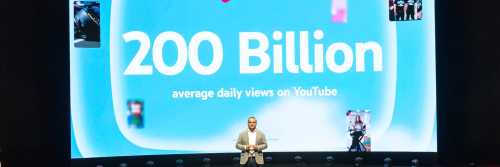
Like a smartphone notification stack overwhelming your lock screen, this week's trending stories compete for attention while collectively revealing deeper patterns about power, representation, and technological disruption. From Manila's impeachment courtroom to Los Angeles's newest cultural institution, from television's highest honors to the NFL's gridiron battles, and beneath it all, the inexorable march of artificial intelligence—these aren't isolated incidents but interconnected signals of systemic transformation.
The Billion-Dollar Storytelling Gambit
George Lucas isn't merely opening a museum on September 22, 2026—he's attempting to rewrite the cultural hierarchy itself. The Lucas Museum of Narrative Art, a 300,000-square-foot, nearly $1 billion institution in Los Angeles's Exposition Park, represents an audacious thesis: that comics, cinema, and illustration deserve equal standing with Renaissance paintings and classical sculpture [[73]].
"The artists in this collection didn't just create images, they connected our modern imaginations with our ancient emotions," Lucas stated in the museum's opening announcement [[73]]. Co-founder Mellody Hobson emphasized the democratic imperative: "We wanted a museum unlike any other—one that brings people from every walk of life through the same doors" [[73]].
The institution houses over 1,300 works across 30-plus galleries, spanning from prehistoric cave paintings to the complete Lucas Archives (1971–2012), with reproductions created through partnerships with the Vatican Museums, the Louvre, and Mexico's Instituto Nacional de Antropología e Historia [[73]]. This isn't nostalgia—it's institutional legitimation of popular culture as high art.
Counter-Argument: The Elitism Paradox
Yet critics might argue this represents cultural gentrification rather than democratization. By elevating comic books and blockbuster films into marble halls, Lucas risks stripping them of their subversive, accessible origins. The museum's free Research Library and public green spaces notwithstanding, the very act of institutionalization creates barriers—geographic (it's in Los Angeles, not Chicago or other cities that lobbied for it), cultural (what narratives get excluded?), and economic (a billion-dollar building inevitably serves donors and elites first). The question isn't whether visual storytelling deserves recognition, but whether museum walls enhance or constrain its democratic potential.
Streaming's Emmy Upset and the Horror-Comedy Gold Rush
Apple TV+'s "Widow's Bay" didn't just win at the 78th Primetime Emmy Awards on September 14, 2026—it announced a paradigm shift. The horror-comedy hybrid's 14 total wins, including comedy series and acting trophies for Matthew Rhys, Kate O'Flynn, and Stephen Root, signals that genre boundaries have collapsed as a commercial liability [[83]].
Rhys made history as the first actor to win two lead-acting Emmys in a single season—one for "Widow's Bay" and another for Netflix's "The Beast in Me" [[83]]. Jean Smart extended her own streak with a fifth consecutive lead-actress comedy Emmy for "Hacks," while HBO Max's "The Pitt" repeated as drama series winner [[83]].
These results reflect a streaming ecosystem where differentiation requires hybridity. Horror-comedy, once niche, now dominates because it mirrors audience consumption patterns: genre-fluid, platform-agnostic, and emotionally complex.
Manila's Accountability Theater
Day 27 of Vice President Sara Duterte's impeachment trial on September 21, 2026, marks a critical juncture in Philippine governance. House prosecutors are presenting witnesses from the Civil Service Commission, Securities and Exchange Commission, and the Philippine Government Electronic Procurement System to examine Duterte's declared business interests and alleged transactions involving companies linked to her [[68]].
This isn't merely political theater—it's a stress test for institutional accountability in Southeast Asia's most volatile democracy. The trial, which began July 6, 2026, has already consumed months of legislative time and public attention [[71]].
Counter-Argument: Selective Justice
However, impeachment proceedings in the Philippines carry the whiff of political weaponization. Critics would note that Duterte's trial occurs within a broader pattern of elite accountability that rarely touches military powerbrokers or oligarchic families. The focus on procurement records and corporate interests, while legally significant, may obscure larger questions about systemic corruption that transcend any single official. Without addressing the structural conditions enabling confidential fund abuses across multiple administrations, this trial risks becoming a cautionary tale about selective enforcement rather than a model of democratic accountability.
The AI Infrastructure Imperative
While entertainment and politics dominate headlines, artificial intelligence trends in September 2026 reveal a quieter but more consequential transformation. Agentic AI—autonomous systems capable of multi-step decision-making—has moved from research labs to enterprise deployment [[101]]. Gartner's 2026 technology trends report identifies AI-Native Development Platforms and AI Supercomputing Platforms as defining the next five years [[96]].
"In 2026, people will come to TikTok for unfiltered stories and BTS moments, with most resonant brands showing real process and people over curated perfection," notes TikTok's own trend forecasting [[29]]. This authenticity imperative extends beyond social media: AI governance and regulation have become board-level concerns as companies navigate the tension between innovation and compliance [[61]].
The economic stakes are staggering. According to Capgemini's Top Tech Trends 2026, "AI will become the backbone of enterprise architecture, reshape software lifecycle development, and redefine cloud consumption" [[102]]. This isn't incremental improvement—it's infrastructural overhaul.
"AI can no longer be stopped. Agents will take the lead. Autonomous mobility will reshape cities," observes ESADE Business School's technology trends analysis, capturing the inevitability framing dominant in corporate strategy [[101]].
Monday Night Football and the Attention Economy
The NFL's Week 2 schedule on September 21, 2026, featuring Giants at Rams on Monday Night Football (8:15 PM ET on ESPN), represents more than athletic competition—it's a battle for cognitive real estate in an oversaturated media environment [[86]].
The 2026 season, the league's 107th, began September 9 with reigning Super Bowl champions facing heightened scrutiny in a fragmented viewing landscape [[94]]. Monday Night Football remains television's most reliable ratings engine, but faces unprecedented competition from streaming originals, esports, and AI-curated content feeds.
Strategic Implications for Stakeholders
For cultural institutions: The Lucas Museum's opening forces a reckoning. Traditional museums must either double down on exclusivity or embrace the narrative art model—there's no middle ground.
For content creators: The Emmy results validate genre hybridity. Horror-comedy, sci-fi-romance, documentary-fiction blends—these aren't experiments anymore, they're the commercial center.
For Southeast Asian investors: The Duterte trial's outcome will signal whether Philippine institutions can enforce accountability without destabilizing governance—a key risk factor for regional capital allocation.
For enterprise technology leaders: Agentic AI deployment isn't optional. The question is whether to build in-house capabilities or partner with AI-native platforms.
The Six-Month Horizon
By March 2027, expect these trajectories to crystallize:
- Museum attendance data will reveal whether the Lucas model attracts traditional art audiences or creates a new demographic. Early visitor patterns will determine whether similar institutions emerge globally.
- Streaming platform orders will skew heavily toward genre hybrids following "Widow's Bay's" Emmy dominance. Expect 2027 development slates to abandon pure-genre programming.
- Philippine political realignment will accelerate regardless of the impeachment verdict. The trial's conclusion—whether conviction or acquittal—triggers succession dynamics affecting 2028 electoral calculations.
- AI governance frameworks will harden into regulatory requirements. The EU's AI Act enforcement and U.S. executive orders will force enterprise compliance decisions by Q2 2027.
- NFL streaming rights will face renegotiation pressure as Monday Night Football viewership data reveals generational shifts in live sports consumption.
These five stories—impeachment proceedings, museum openings, award shows, football games, and AI infrastructure—aren't competing for attention. They're collectively mapping the fault lines where culture, power, and technology intersect. The institutions, individuals, and corporations that recognize these patterns as interconnected rather than isolated will navigate the coming disruptions with strategic advantage. The rest will find themselves reacting to changes they failed to anticipate.
Sources: Lucas Museum of Narrative Art Press Release [[73]], Inquirer.net Impeachment Trial Coverage [[68]], Los Angeles Times Emmy Awards Results [[83]], Gartner Technology Trends 2026 [[96]], NFL 2026 Season Schedule [[94]], TikTok Trend Reports [[29]], Capgemini Tech Trends Analysis [[102]]
Related Articles

The Synthetic Mirage: How Algorithmic Virality and Deepfakes Are Rewiring Digital Culture
Sep 18, 2026
The Attention Recession: How September 2026's Cultural Shifts Rewrote the Digital Economy Playbook
Sep 18, 2026
Comments (0)
No comments yet. Be the first to share your thoughts!
Want to join the discussion?
Please log in to post a comment.
Login NoworCreate an Account