
August 2026 Entertainment Earthquake: NBA's $97M Gamble, Streaming's Price Reckoning, and Hollywood's Silent Surrender

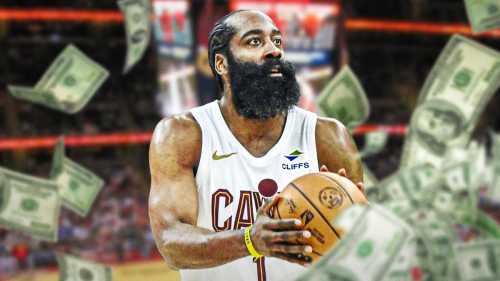
Like a casino high-roller doubling down after a string of losses, the entertainment and sports industries are making desperate bets that could either pay off spectacularly or accelerate their decline. The past week has exposed a fundamental truth: every major player—from NBA front offices to streaming executives to Hollywood union leaders—is operating from a position of weakness while pretending strength.
The Week That Redefined Risk
James Harden signed a three-year, $97 million contract to return to the Cleveland Cavaliers, while Klay Thompson accepted a buyout from Dallas to join Miami on a modest two-year, $13 million deal. [[43]] Streaming services implemented their second price increase of 2026, with Netflix's premium tier now commanding $26.99 monthly. [[58]] Hollywood's unions, still scarred from the brutal 2023 strikes, accepted four-year contracts with minimal public resistance. [[62]] The Premier League kicked off its 2026-27 season amid this backdrop of financial recalibration. [[68]]
The Cavaliers' Expensive Nostalgia Trip
Cleveland's decision to invest $97 million in a 37-year-old point guard reveals more about desperation than strategy. Harden's 23.6 points and 8.0 assists per game last season masked a troubling reality: his defensive liabilities and turnover propensity remain unchanged. [[43]] The Cavaliers, utilizing Bird rights to retain him, committed to approximately 19% annual raises—a structure that will haunt their salary cap flexibility through 2029. [[45]]
This transaction exemplifies the NBA's geriatric shift. Teams are prioritizing proven veterans over development, a strategy that worked for the 2023-24 Denver Nuggets but ignores the physiological reality that most players decline precipitously after age 35. The Harden deal isn't just an overpay; it's a philosophical surrender to short-term thinking.
The Counter-Argument: Security Over Spectacle
However, Cleveland's calculus makes sense when viewed through the lens of roster stability. The Cavaliers watched Peyton Watson depart in a five-team trade, creating a playmaking vacuum that Harden fills immediately. [[26]] In a conference where Boston and Milwaukee remain formidable, the luxury of a known commodity like Harden—who averaged 20.5 points and 7.7 assists last season—provides insurance against the uncertainty of developing younger options. [[46]] Sometimes the expensive choice is the rational one.
Streaming's Pricing Pyramid Scheme
The streaming industry has entered what analysts now term the "$20 threshold crisis." When Paramount raised its ad-supported tier to $8 and Netflix pushed its premium offering to $26.99, they crossed a psychological barrier that fundamentally alters consumer behavior. [[54]] Streaming costs soared 19.5% in 2025, far outpacing the 2.7% inflation rate—a divergence that cannot sustain. [[56]]
The Alix Partners 2026 Media Entertainment Industry Predictions Report forecasts increased cooperation between streamers and broadcasters, predicting "dozens will announce new deals as they team up, exchange content." [[35]] This isn't innovation; it's capitulation. The streaming wars have produced not winners, but exhausted combatants bleeding subscribers to churn.
Industry data reveals the severity: The video streaming market, projected to reach USD 188.86 billion in 2026, faces a paradox where growth metrics mask underlying subscriber dissatisfaction. [[13]] With the market expected to hit USD 833.97 billion by 2034 at a 20.4% CAGR, companies are pricing for future valuation rather than present value delivery. [[13]]
Echoes of 2008: When Desperation Masquerades as Strategy
The current entertainment landscape mirrors the 2008 financial crisis in one critical aspect: leverage without liquidity. Just as banks held toxic assets believing markets would recover, studios and streamers have accumulated content libraries and player contracts assuming perpetual subscriber growth and revenue expansion.
The lesson from 2008 proves instructive: when everyone raises prices simultaneously to cover losses, demand destruction follows. The streaming industry's collective price increases—Netflix, Disney+, HBO Max, Paramount+ all hiking rates within months—represents a coordinated failure to differentiate value propositions. [[59]] History suggests this triggers accelerated churn, not revenue optimization.
Hollywood's Quiet Capitulation
Perhaps the most telling development is Hollywood's labor peace. After the historic 2023 strikes—where WGA members formed human letters visible from news helicopters and SAG-AFTRA picketed for 118 days—the 2026 negotiations concluded with barely a whisper. [[62]] The Directors Guild of America became the last union to seal deals, accepting four-year terms rather than the typical three. [[62]]
This tranquility stems not from satisfaction but from existential fear. An Otis College of Art and Design report found entertainment jobs in Los Angeles fell 25% between 2022 and 2025, while The Wall Street Journal reported a 30% employment drop since late 2022. [[62]] The WGA health plan lost $122 million in fiscal years 2023-2024; the DGA lost $43 million. [[62]] When unions receive a $321 million health plan infusion in exchange for negotiation restraint, they're not winning—they're surviving. [[62]]
The Counter-Argument: Strategic Patience Yields Results
SAG-AFTRA president Sean Astin noted that AMPTP president Greg Hessinger "helped reset the relationship between our organizations," suggesting the collaborative approach produced tangible benefits. [[62]] Danielle Sanchez-Witzel, who co-chaired the 2026 negotiating committee, observed "the big difference in 2026 is that they came ready to talk about really what we needed." [[62]] In an industry where work has slowed dramatically, securing healthcare funding and four-year stability may represent pragmatic victory rather than defeat.
What Stakeholders Must Do Now
For NBA franchises: Resist the veteran premium trap. The Klay Thompson model—accepting $13 million over two years rather than demanding $17.5 million for one season—demonstrates market correction. [[49]] Teams should prioritize players willing to bet on themselves through shorter deals with opt-outs.
For streaming subscribers: Implement aggressive churn rotation. With services raising prices 19.5% annually, maintaining three or more subscriptions represents financial malpractice. [[56]] Rotate between platforms quarterly, exploiting promotional pricing and avoiding the loyalty penalty.
For entertainment workers: Diversify income streams immediately. The 25% job loss in Los Angeles entertainment proves geographic and sector concentration creates vulnerability. [[62]] Develop skills transferable to adjacent industries—gaming, corporate media, education technology.
The Six-Month Forecast
By February 2027, expect the following landscape:
- NBA: The Cavaliers will trade Harden before the deadline if their record dips below .500, eating $15-20 million in dead money. The Thompson-Heat experiment will exceed expectations, validating the buyout market as the new free agency.
- Streaming: At least two mid-tier services will announce mergers or content-sharing agreements. Netflix will introduce a fourth, ultra-premium tier at $35-40 monthly, further segmenting the market.
- Hollywood: Production volumes will decline another 10-15% as studios adjust to the "new normal" of smaller slates. The four-year labor contracts will hold, but grassroots dissatisfaction will build toward 2030 negotiations.
Expert perspective: "Streaming was supposed to save us money," but the reality has inverted that promise entirely. [[60]] The industry has replicated cable's bundling mistakes while eliminating cable's infrastructure value.
The entertainment sector stands at an inflection point where short-term revenue extraction conflicts with long-term ecosystem health. Those who recognize this tension—and adjust accordingly—will survive the coming consolidation. Those who don't will become case studies in business schools, cautionary tales of industries that priced themselves into irrelevance.
Sources: NBA official reports, Hollywood Reporter labor analysis, Alix Partners Media Entertainment Industry Predictions 2026, Otis College of Art and Design employment study, Wall Street Journal entertainment sector analysis, streaming service pricing announcements.


Comments (0)
No comments yet. Be the first to share your thoughts!
Want to join the discussion?
Please log in to post a comment.
Login NoworCreate an Account