
Beauty's Leadership Exodus: What Chanel and Dermalogica Shakeups Signal for the Industry

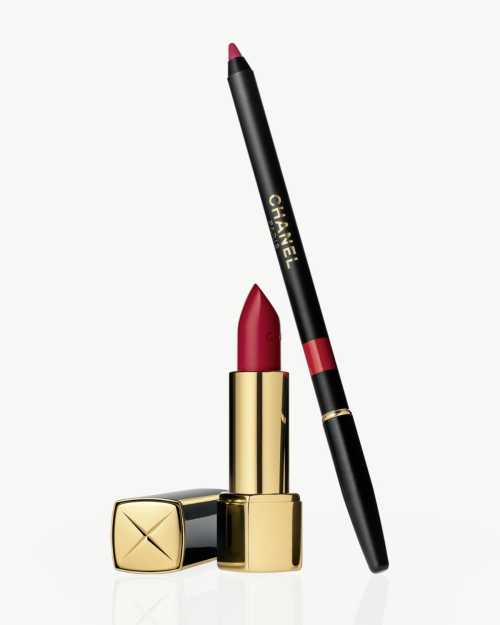
Like a row of dominoes in a luxury boutique, executive departures are cascading through beauty's most hallowed institutions. When Bruno Pavlovsky stepped down from Chanel's board after 36 years and Aurelian Lis announced his exit from Dermalogica following a decade at the helm, industry observers dismissed it as routine corporate churn. That assessment misses the tectonic shift beneath our feet.
The Leadership Vacuum Nobody's Discussing
Bruno Pavlovsky's resignation from the Chanel Limited board on October 15, 2026, while maintaining his operational presidency, represents more than governance restructuring—it signals a fundamental recalibration of how luxury beauty houses navigate succession planning in an era of unprecedented market volatility [[45]]. Simultaneously, Dermalogica's Aurelian Lis departs in December 2026 after guiding the Unilever-owned professional skincare brand through international expansion that reportedly grew revenues from $240 million to nearly $1 billion [[54]][[63]].
These aren't isolated incidents. The beauty industry is experiencing a leadership exodus that threatens institutional knowledge at precisely the moment when regulatory complexity and market fragmentation demand experienced stewardship.
Regulatory Compliance: The Hidden Cost of Transition
The timing couldn't be more precarious. The FDA's Modernization of Cosmetics Regulation Act (MoCRA) implementation has created a compliance labyrinth that demands sophisticated navigation. As of January 2026, the FDA's system reflects 14,299 unique facility registrations and 992,907 product listings—numbers that continue climbing as the December 2026 deadlines approach [[93]].
When seasoned executives depart during this critical juncture, companies face a dangerous knowledge gap. MoCRA represents the most significant expansion of FDA cosmetics authority since 1938, introducing mandatory recall powers, adverse event reporting requirements, and safety substantiation mandates that would challenge even veteran regulatory teams [[74]]. New leadership inherits not just brand portfolios but potential liability exposure that could derail product launches and trigger enforcement actions.
Industry Data Point: "On average, people use 6 to 12 cosmetics products daily," making regulatory oversight a public health imperative rather than bureaucratic box-checking [[95]].
The Professional Skincare Paradox
Dermalogica's leadership transition exposes a deeper structural vulnerability in professional skincare. The brand commands nearly 12% market share with products distributed across more than 100,000 professional treatment centers globally [[113]]. Yet the professional skincare market itself faces existential pressure—from medical aesthetics encroachment to direct-to-consumer dermatology platforms that bypass traditional spa channels entirely.
The professional skincare sector, valued at USD 48.47 billion in 2026 and projected to reach USD 60.41 billion by 2030, requires leaders who understand both clinical credibility and retail velocity [[110]]. Lis's departure forces Unilever to confront whether traditional professional distribution models can survive the TikTok-driven discovery economy where 86% of beauty professionals acknowledge ongoing education as critical to survival [[85]].
Luxury's Valuation Reckoning
Chanel's board restructuring occurs against a backdrop of sector-wide value erosion. Brand Finance's Cosmetics 50 2026 ranking revealed an industry-wide slowdown, with collective brand value declining 6% and Chanel itself experiencing an 11% drop to $24.4 billion despite maintaining its top position [[107]].
This isn't merely cyclical weakness—it reflects structural challenges in luxury beauty's value proposition. When heritage brands built on exclusivity confront democratized access through e-commerce and social media, the governance mechanisms that preserved brand equity for decades require reinvention. Pavlovsky's operational retention suggests Chanel recognizes the danger of divorcing strategic oversight from tactical execution, but the question remains whether board-level changes can arrest value depreciation in a market where "premium" has become meaningless through overuse.
The Compliance Theater Trap
Counter-Argument: Some industry consultants argue that MoCRA compliance represents performative bureaucracy—a "theater of safety" that burdens small manufacturers while doing little to protect consumers. They point to data showing that 20-30% of regulatory submissions fail due to documentation inconsistencies rather than actual safety concerns [[97]].
This perspective dangerously underestimates the regulatory environment's evolution. The FDA's new mandatory recall authority and records access provisions mean non-compliance carries existential risk. Companies treating MoCRA as checkbox compliance rather than operational transformation will face enforcement actions that make the 2026 leadership transitions look like minor organizational hiccups.
The Sovereignty Imperative
Counter-Argument: Critics of centralized regulatory frameworks argue that MoCRA's one-size-fits-all approach stifles innovation, forcing indie brands to divert capital from R&D to compliance infrastructure. They advocate for tiered requirements based on company size and product risk profiles.
While innovation concerns merit consideration, the alternative—fragmented state-level regulations creating a patchwork of conflicting requirements—would prove far more burdensome. The 14,299 facilities now registered with FDA demonstrate that compliance, while challenging, remains achievable. The real innovation imperative lies in developing regulatory technology solutions that automate compliance workflows rather than lobbying for diluted standards.
Lessons from the Great Beauty Consolidation
History offers instructive precedent. The 2008-2012 beauty industry consolidation wave, when economic pressure forced independent brands into corporate portfolios, produced similar leadership churn. Brands that survived maintained operational continuity by retaining founder expertise through transition periods—exactly the model Chanel employs with Pavlovsky's dual role.
The brands that failed treated leadership transitions as clean breaks, severing institutional memory and strategic vision. Dermalogica's successor search must prioritize candidates who understand that professional skincare's future requires bridging clinical authority with consumer accessibility—a balance Lis cultivated over ten years.
Strategic Imperatives for Market Participants
For Brand Executives: Audit your regulatory readiness immediately. Don't wait for successor appointments to address MoCRA compliance gaps. The FDA's enforcement timeline won't accommodate leadership transitions.
For Independent Brands: View regulatory compliance as competitive moat, not cost center. Brands that master documentation and safety substantiation now will gain shelf space as retailers demand proof of compliance.
For Investors: Scrutinize succession plans in beauty portfolio companies. Leadership transitions during regulatory upheaval represent material risk factors that warrant discounted valuations until continuity plans prove executable.
The Six-Month Horizon
By April 2027, expect three distinct market segments to emerge. First, compliance leaders—brands that treated MoCRA as strategic opportunity—will command premium retail positioning and investor confidence. Second, transition casualties—companies where leadership departures created operational paralysis—will become acquisition targets at distressed valuations. Third, regulatory arbitrageurs—brands exploiting jurisdictional differences between US, EU, and Asian markets—will face increasing scrutiny as harmonization pressures mount.
The beauty industry's leadership exodus isn't a crisis to weather but a filter determining which brands possess the operational sophistication to thrive in beauty's new regulatory reality. Those treating executive transitions as routine HR matters rather than strategic inflection points will discover that regulatory enforcement doesn't respect brand heritage.
Sources: Global Cosmetics News, FDA.gov, Brand Finance, WWD, The Industry Beauty
Related Articles
The Algorithmic Epidermis: How Biometric Panopticons and Neuro-Topical Patents Are Fracturing the Beauty Economy
Oct 19, 2026
The Clinical Pivot: How Biotech Acquisitions and Regulatory Friction Are Rewriting Beauty's Margin Architecture
Oct 18, 2026
Comments (0)
No comments yet. Be the first to share your thoughts!
Want to join the discussion?
Please log in to post a comment.
Login NoworCreate an Account