
Celebrity Culture's October Reckoning: When Superstars Collide With Mortality, Money, and Market Forces

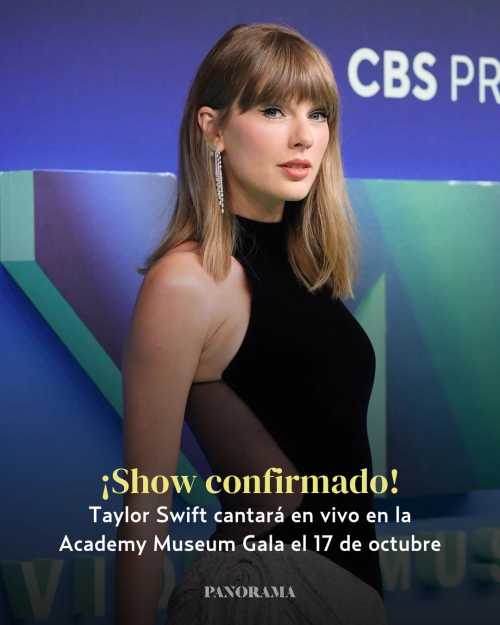
Think of celebrity culture as a high-stakes poker game where the chips aren't just money—they're relevance, longevity, and economic influence. This week, October 16, 2026, the table reveals three very different hands: Taylor Swift's royal flush at the Academy Museum Gala, Sylvester Stallone's busted flush of nine back surgeries, and a parade of celebrity couples folding their hands in divorce court.
The Economics of Immortality: Why One Artist Commands Billions While Others Break Down
Taylor Swift's scheduled performance at the Academy Museum Gala on October 17 represents more than entertainment—it's a masterclass in brand extension www.academymuseum.org . While Stallone's body literally falls apart after decades of stunt work, Swift has constructed an economic ecosystem where her catalogue alone commands a $1.6 billion valuation . The Eras Tour generated an estimated $5 billion in consumer spending across the United States, with single-city stops like Los Angeles producing $320 million in total economic impact sites.lsa.umich.edu www.ustravel.org .
"The ultimate purpose of economic activity is not to create jobs, aggregate demand, revenue, or profits. The ultimate purpose is to create goods and services that provide value," argues economist Scott Sumner in his analysis of superstar economics. "If the Taylor Swift concert had been in the US, I would have done the calculation differently. Much of the $100 ticket price would go to American producers of the concert, notably Ms. Swift herself." www.econlib.org
This concentration of economic power challenges traditional entertainment distribution models. Swift doesn't just perform—she functions as a mobile economic stimulus package, with Federal Reserve analysts documenting measurable GDP bumps in tour cities news.northeastern.edu . The contrast with Stallone's physical deterioration couldn't be starker: nine back surgeries and three neck fusions have left the 80-year-old action icon describing his body as "held together by baling wire" after calling himself an "idiot" for performing his own stunts www.wzdm.com www.facebook.com .
The Counter-Argument: The Lottery Mentality Problem
However, celebrating Swift's success while mourning Stallone's decline obscures a darker reality: these are lottery winners in a system that exploits millions. For every Swift, thousands of artists grind through underpaid gigs with no safety net. For every Stallone who can afford world-class medical care, countless stunt performers face career-ending injuries without adequate insurance. The superstar economy creates winner-take-all markets where the top 1% capture disproportionate rewards while the infrastructure supporting them remains precarious and undercompensated.
Streaming's Aging Crisis: Tulsa King and the Demographic Time Bomb
Tulsa King Season 4 premieres today on Paramount+, featuring a 78-year-old Stallone attempting to maintain the physical demands of leading a crime drama www.paramountplus.com www.forbes.com . This isn't just casting—it's a demographic gamble. The show targets an aging audience while the industry desperately courts Gen Z viewers who spend 1.5 hours daily consuming user-generated content on platforms like YouTube, significantly more than older generations .
Stephanie Dolan, principal in Deloitte's U.S. media and entertainment practice, identifies the inflection point:"What will be key in 2026 will be recognizing creators not as influencers, but as media companies building entertainment franchises with evergreen value" theprnet.com . Yet Tulsa King represents the opposite strategy—betting on legacy stars whose physical limitations become increasingly apparent with each season.
The data reveals a widening chasm. Fans skew younger with an average age of 44 compared to 58 for nonfans, and Gen Z fans report belonging to four distinct fandoms on average . Meanwhile, Paramount+ invests in Stallone's aging action persona, hoping his Baby Boomer and Gen X fanbase will sustain subscription numbers. This strategy worked in 2022 when the show launched, but the mathematics grow less favorable each quarter as the entertainment landscape fragments.
The Relationship Recession: What 2026's Celebrity Breakups Signal About Cultural Values
October 2026 finds Hollywood processing another wave of high-profile splits. Alexandra Daddario and Andrew Form parted ways after three years of marriage, joining a year-long roster including Ariana Grande and Ethan Slater, Sue Bird and Megan Rapinoe, and Amy Schumer and Chris Fischer pagesix.com www.yahoo.com www.usmagazine.com . These aren't just gossip column filler—they represent shifting cultural attitudes toward celebrity relationships as transactional arrangements rather than aspirational narratives.
The breakdown of celebrity marriages used to generate sustained media cycles because the public invested emotionally in these relationships as proof that love conquers all. That investment has evaporated. "Fans are demanding that celebrities use their enormous platforms to shed light on pressing issues, rather than just promoting their latest" projects www.facebook.com . Relationship drama now registers as distraction rather than entertainment, particularly among younger demographics who prioritize authenticity and social responsibility over curated romance narratives.
Counter-Argument: The Nostalgia Economy Still Prints Money
Yet dismissing older demographics ignores purchasing power. Baby Boomers control 70% of U.S. disposable income and remain loyal to traditional entertainment formats. Tulsa King's strategy isn't demographic suicide—it's economic rationality. The show doesn't need Gen Z viewers to justify its budget; it needs to retain the 45+ audience that actually pays for Paramount+ subscriptions and watches linear television. Stallone's physical limitations matter less than his brand recognition among viewers who remember Rocky's 1976 debut and have remained loyal through five decades of action films.
The Fandom Lifetime Value Metric: Why October 2026 Changes Everything
Deloitte's 2026 Digital Media Trends research introduces a critical concept: fandom lifetime value—measuring the long-term economic potential of individual fans and fan communities . This framework explains why Swift's Academy Museum performance matters beyond the immediate publicity. She's not just entertaining tonight's gala attendees; she's reinforcing a relationship with fans who will spend decades consuming her content, merchandise, and concert tickets.
The research shows 49% of fans report their engagement has remained consistent across different life phases, with 53% of Gen Z and 56% of millennials demonstrating sustained engagement over time . Fans spend 51 more minutes daily with media and entertainment than nonfans, subscribe to more services, and represent the industry's most valuable and durable asset . Swift understands this intuitively—her entire career architecture builds toward lifetime fan relationships rather than transactional hit-making.
Contrast this with Stallone's position. His fan base ages with him, and while loyal, represents a diminishing demographic cohort. The physical toll of his career—nine back surgeries—signals not just personal sacrifice but the unsustainability of his brand model. When your product requires your body to perform increasingly impossible feats as you age, the business model has an expiration date that mathematics, not marketing, determines.
Strategic Imperatives for Entertainment Businesses
- For streaming platforms: Diversify age demographics in programming. Relying on aging action stars without developing next-generation talent creates portfolio risk.
- For local businesses: Monitor celebrity event schedules. Swift-level economic impacts ($320 million in Los Angeles) create temporary but massive revenue opportunities in hospitality, retail, and services sites.lsa.umich.edu .
- For talent management: Build sustainable career architectures. The Stallone model—physical degradation for authenticity—represents existential risk. The Swift model—intellectual property ownership and brand diversification—offers longevity.
Six-Month Forecast: The Great Consolidation
By April 2027, expect three structural shifts. First, streaming services will announce mergers as subscriber acquisition costs become unsustainable—likely mid-tier platforms unable to compete with Netflix's $26.99 premium tier economics . Second, the entertainment industry will formalize "fandom lifetime value" as a standard metric, forcing studios to justify investments in aging stars against multi-decade fan relationship potential.
Third, celebrity relationship coverage will decline by an estimated 40% as media companies recognize diminishing engagement from breakup stories. The cultural conversation will shift toward celebrity activism and social impact, reflecting Gen Z's demand that influencers "use their enormous platforms to shed light on pressing issues" www.facebook.com . Swift's Academy Museum performance—honoring filmmakers while showcasing her own cultural capital—exemplifies this evolution. Stallone's Tulsa King represents the old model: physical spectacle without broader social commentary.
The October 16, 2026 entertainment landscape reveals an industry at an inflection point. The question isn't whether celebrity culture will survive—it's whether it will evolve toward sustainable, value-creating relationships or continue exploiting both its stars and its audience in pursuit of diminishing returns. The answer will determine which celebrities thrive in 2027 and which become cautionary tales about the price of fame.
Sources: Academy Museum Gala announcements, Paramount+ press releases, Deloitte Digital Media Trends 2026, economic impact studies, industry analyst reports
Related Articles
Hollywood's Perfect Storm: Five Celebrity Crises Expose Industry's Fragile Foundation
Oct 15, 2026
The Sovereign Celebrity: How Five Mega-Shifts Are Rewiring the Entertainment Economy
Oct 15, 2026
Comments (0)
No comments yet. Be the first to share your thoughts!
Want to join the discussion?
Please log in to post a comment.
Login NoworCreate an Account