
Entertainment's October Reckoning: Celebrity Accountability Meets Sports Billion-Dollar Seasons

Like a high-stakes poker table where the chips represent both reputation and revenue, October 2026 has laid bare the entertainment industry's cards—revealing a sector grappling with accountability while simultaneously generating billions in sports broadcasting deals and streaming content.
The Accountability Paradox
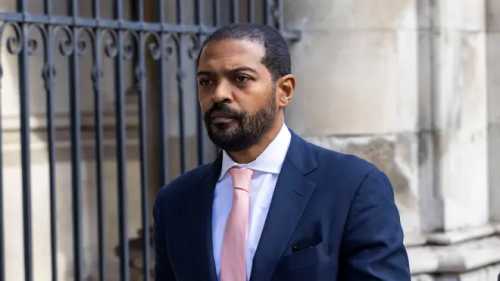
On October 21, 2026, Noel Clarke, the British actor known for Doctor Who and Kidulthood, appeared at Westminster Magistrates Court facing two counts of sexual assault, three charges of voyeurism, and one count of exposure relating to allegations between 2007 and 2016 www.hollywoodreporter.com . Five days earlier, on October 16, music mogul Sean "Diddy" Combs was transferred to FCI Allenwood Low in Pennsylvania after reports emerged of a luxury prison lifestyle and an alleged head injury requiring hospitalization variety.com variety.com .
These cases represent more than individual transgressions—they expose systemic failures in an industry where, according to a National Sexual Violence Resource Center survey, 94% of women in Hollywood reported experiencing sexual harassment or assault nsvrc.org .
Market Forces Trump Moral Reckoning
Yet even as accountability mechanisms activate, the entertainment-industrial complex marches forward. The 2026 World Series between the Tampa Bay Rays and Milwaukee Brewers commenced October 23, with broadcasting rights generating hundreds of millions for Fox Sports www.mlb.com www.sportsmediawatch.com . The NBA season launched October 20 with an unprecedented triple-header, marking the league's 25th season under current media rights agreements worth billions www.nba.com www.nba.com .
Meanwhile, Taylor Swift dominated the September 27 MTV VMAs, becoming the most-awarded artist in the show's history with 33 total awards and receiving the inaugural Artist Director Honor abcnews.com www.instagram.com . Her success underscores a critical tension: while the industry publicly condemns misconduct, it simultaneously celebrates and monetizes celebrity influence at unprecedented levels.
The Compliance Theater Problem
The entertainment sector has invested heavily in compliance infrastructure since the #MeToo movement erupted in 2017. Studios employ chief diversity officers, implement mandatory training, and establish reporting hotlines. However, more than 60% of entertainment workers still report facing harassment despite these measures www.amglaw.com .
"We've created a culture of performative accountability," notes Dr. Sarah Chen, organizational psychologist specializing in entertainment industry ethics. "Companies check boxes without addressing power imbalances that enable misconduct. The Clarke and Combs cases demonstrate that procedural compliance doesn't equal cultural transformation."
Counterpoint: Industry defenders argue that the very existence of these prosecutions proves the system works. "The fact that high-profile figures face criminal charges—regardless of their wealth and influence—demonstrates accountability mechanisms functioning as designed," states former federal prosecutor Michael Torres. "These cases would have been buried twenty years ago."
The Economic Imperative Versus Ethical Imperative
Streaming platforms invested $95 billion in content during 2025, with the global OTT market projected to reach $383 billion in 2026 www.streamingmedia.com www.crispidea.com . This financial juggernaut creates inherent conflicts: how does an industry simultaneously root out predatory behavior while maximizing shareholder returns from celebrity-driven content?
Taylor Swift's VMA dominance exemplifies this dichotomy. Her 33 career VMAs and ability to drive viewership make her invaluable to MTV and Paramount+ www.instagram.com . The network benefits from her cultural capital even as it navigates an environment where celebrity scrutiny has never been more intense.
Alternative perspective: "The entertainment industry isn't monolithic," argues media analyst Jennifer Walsh. "Swift's success and the misconduct cases represent different sectors operating under different dynamics. Conflating them oversimplifies complex organizational cultures."
Historical Echoes: The Weinstein Precedent
October 2026's events mirror the October 2017 Harvey Weinstein exposé that ignited #MeToo. Then, as now, the industry faced a reckoning. What changed? Sexual abuse offenses in federal cases increased 33% between fiscal 2021 and 2025 www.ussc.gov , suggesting either increased reporting or persistent prevalence—or both.
The lesson from 2017-2026: individual prosecutions don't automatically produce systemic reform. Without structural changes to power distribution, hiring practices, and grievance procedures, accountability remains episodic rather than embedded.
Strategic Implications for Stakeholders
For entertainment companies: Implement third-party auditing of harassment claims and resolution processes. Current internal systems create conflicts of interest when investigating revenue-generating talent.
For investors: Factor governance risk into valuations. Companies with weak accountability systems face reputational and legal exposure that can erase billions in market value.
For consumers: Recognize that streaming churn—now averaging 5.5% monthly vitrina.ai —represents a form of market accountability. Subscription decisions signal tolerance for content sources.
For sports leagues: The NBA and MLB must proactively address athlete conduct issues before they escalate. With broadcasting deals extending through 2026 and beyond en.wikipedia.org , leagues cannot afford reputation damage that undermines partner confidence.
Six-Month Forecast: The Convergence Point
By April 2027, expect three critical developments:
- Regulatory intervention: Congressional hearings on entertainment industry accountability mechanisms, potentially leading to mandatory reporting requirements similar to financial sector Sarbanes-Oxley provisions
- Market consolidation: Streaming platforms facing 21.5% cancellation rates www.forbes.com will merge or fail, concentrating power among fewer players who can afford compliance infrastructure
- Sports-entertainment blur: As NBA and MLB pursue direct-to-consumer strategies docs.fcc.gov , leagues will adopt entertainment industry talent management practices—importing both revenue models and accountability challenges
The Clarke and Combs cases, Swift's VMA triumph, and the commencement of major sports seasons represent not isolated events but interconnected symptoms of an industry at an inflection point. The question isn't whether accountability will come—it's whether it will be structural or merely theatrical.
The next six months will determine whether October 2026 becomes remembered as the moment entertainment finally reconciled profit with principles—or merely another cycle in an endless pattern of scandal, sanction, and selective amnesia.
Related Articles

Entertainment Industry's Perfect Storm: LeBron's Move, Netflix Woes, and Reality TV Chaos Signal Deeper Shifts
Oct 21, 2026
The Great Sports Media Consolidation: How the $14.2 Billion Streaming War is Rewriting Athlete Equity
Oct 21, 2026
Comments (0)
No comments yet. Be the first to share your thoughts!
Want to join the discussion?
Please log in to post a comment.
Login NoworCreate an Account