
Fashion Week's Reckoning: How Milan's Record-Breaking Schedule Signals Industry Transformation Amid Economic Headwinds

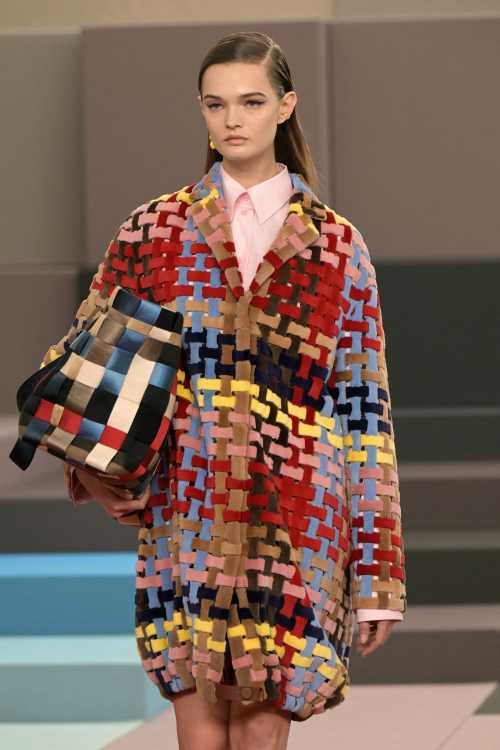
Like a chess grandmaster repositioning pieces before an endgame, the fashion industry's most powerful houses are making calculated moves that reveal far more than next season's silhouettes. As Milan Fashion Week commences today with unprecedented ambition, the runway has become a battlefield where creative vision collides with economic reality, and the outcomes will determine which brands survive the next decade.
The Strategic Overhaul of Fashion's Calendar
Milan Fashion Week launches today, September 22, 2026, with a record-breaking 218 scheduled appointments across physical and digital formats, expecting to draw 141,000 visitors to the city wwd.com . The event represents not merely a showcase of spring/summer 2027 collections, but a critical stress test for an industry facing mounting pressure from trade disputes, sustainability mandates, and shifting consumer behavior.
Prada's decision to open the week at 2 p.m. CET on September 22—abandoning its traditional Thursday slot—signals a seismic shift in how luxury houses approach market positioning wwd.com . This strategic repositioning places the brand at the epicenter of global media attention, capturing headlines before the fashion week fatigue sets in. The move mirrors broader industry recalibration where timing, narrative control, and first-mover advantage have become as critical as design innovation.
The Creative Director Carousel: Stability or Desperation?
The September 2026 season marks a critical juncture in fashion's leadership experiment. Demna presents his second collection for Gucci on September 25, following his February debut that promised to restore "energy, passion, and sensuality" to the house wwd.com . Meanwhile, Moschino unveils the first collection from Sunnei founders Loris Messina and Simone Rizzo on the same day, representing a bold bet on outsider talent wwd.com .
Expert Perspective: "The rapid turnover of creative directors has become fashion's open secret. Brands are treating artistic leadership like tech startups treat CEOs—expecting immediate transformation without allowing time for organic evolution. This approach risks commoditizing creativity itself."
The pattern raises uncomfortable questions about whether heritage houses are seeking genuine creative renewal or merely chasing the illusion of change. When Diane von Furstenberg returned to the official NYFW schedule after nine years with Henry Zankov's debut on September 10, the move was framed as revitalization www.instagram.com . Yet such high-profile debuts have become so frequent that they risk losing their impact, creating a paradox where constant reinvention produces stagnation.
The Sustainability Paradox: Spectacle Versus Substance
As the fashion industry gathers in Milan, it confronts an uncomfortable reality: the sector remains responsible for 10% of global CO2 emissions and stands as the second-largest consumer of water worldwide earth.org . The spectacle of 218 shows in seven days directly contradicts the sustainability commitments brands publicly champion, creating a cognitive dissonance that increasingly alienates conscious consumers.
Industry Data Point: According to McKinsey's State of Fashion 2026 report, 46% of fashion executives expect industry conditions to worsen this year, an increase of 8 percentage points over 2025, with sustainability regulations ranking among top concerns www.businessoffashion.com .
Counterpoint: Critics argue that fashion weeks serve essential functions beyond commerce—they provide concentrated platforms for brand storytelling, facilitate crucial B2B relationships, and generate media value that far exceeds production costs. Eliminating or radically downsizing these events could disadvantage emerging designers who rely on the concentrated attention fashion weeks provide.
The Economic Imperative: When Culture Becomes Currency
Milan's municipality projects that September alone will attract 496,000 visitors, generating substantial economic impact beyond the fashion ecosystem wwd.com . This calculus reveals fashion week's true function: it operates as economic infrastructure, supporting hospitality, retail, transportation, and service industries that depend on the biannual influx of high-spending visitors.
The concentration of luxury brands in Milan—from Max Mara and Marni on September 24 to Ferragamo and Bottega Veneta on Saturday—creates a gravitational pull that extends far beyond fashion wwd.com . This clustering effect demonstrates sophisticated understanding of agglomeration economics, where proximity amplifies value for all participants.
Historical Echoes: Lessons from Fashion's Previous Crises
The current moment parallels the post-2008 fashion landscape, when brands faced similar pressures to justify extravagance amid economic uncertainty. Houses that survived that era shared common traits: they maintained creative conviction while adapting business models, invested in digital infrastructure before it became mandatory, and cultivated direct consumer relationships that reduced wholesale dependency.
Today's challenge proves more complex. Beyond economic volatility, brands navigate ESG mandates, Gen Z's rejection of traditional luxury signifiers, and the disruptive potential of AI in design and production. The houses thriving in this environment treat fashion week not as an obligation but as a strategic touchpoint within omnichannel brand ecosystems.
The Paris Pivot: Democratization or Dilution?
L'Oréal Paris's Le Défilé on September 28, positioned at the foot of the Eiffel Tower at Place Joffre, represents fashion week's evolution toward public spectacle parisjetaime.com . The free, registration-required show celebrating "women's empowerment" signals how beauty brands are co-opting fashion week's cultural capital while claiming democratic values.
Research Finding: The US sustainable fashion market is projected to reach $2.5-3.2 billion in 2026, driven by consumer demand and regulatory pressure www.sourceready.com . Yet fashion week's environmental footprint remains largely unaddressed, creating tension between market expectations and industry practice.
Alternative View: Some industry observers contend that focusing on fashion week's excesses misses the larger picture. The real environmental damage occurs in production and distribution, not runway presentations. Blaming fashion weeks for sustainability failures allows brands to deflect from supply chain reforms that would genuinely reduce environmental impact.
Strategic Imperatives for Industry Stakeholders
For Brands: Prioritize quality of engagement over quantity of shows. The record 218 appointments in Milan suggest schedule inflation that dilutes individual brand impact. Selective participation with robust digital amplification strategies will yield superior ROI.
For Investors: Monitor which creative director appointments produce measurable commercial results within two seasons. The rapid leadership churn creates both risk and opportunity—houses that stabilize creative vision while modernizing operations will outperform.
For Retailers: Prepare for accelerated shift toward pre-collections and direct-to-consumer drops that reduce fashion week dependency. Traditional seasonal buying cycles are fragmenting, requiring more agile inventory management.
The Six-Month Forecast: Consolidation and Polarization
By March 2027, expect significant contraction in fashion week participation as mid-tier brands abandon costly runway spectacles in favor of targeted presentations and digital campaigns. The "big four" fashion weeks will polarize between mega-brands with resources to create immersive experiences and emerging designers subsidized by host cities seeking cultural capital.
Sustainability regulations will force transparency about fashion week's environmental impact, potentially triggering carbon offset requirements or attendance caps. Brands that proactively address these issues will gain competitive advantage; laggards will face reputational and regulatory penalties.
The creative director carousel will slow as boards recognize that constant leadership changes produce diminishing returns. Successful houses will be those that grant creative teams time to develop coherent visions while providing operational support to translate creativity into commercial success.
Milan Fashion Week's record-breaking schedule represents not triumph but desperation—an industry attempting to maintain relevance through volume rather than value. The brands that thrive will be those courageous enough to step off the treadmill, redefine success on their own terms, and build sustainable businesses that don't require constant spectacle to justify their existence.
Related Articles

The Runway Rewired: How Digital Passports and AI Are Restructuring the Global Fashion Calendar
Sep 21, 2026
The Digital Arbitrage of the Runway: How Financialized Spectacle is Rewiring Fashion Week
Sep 18, 2026
Comments (0)
No comments yet. Be the first to share your thoughts!
Want to join the discussion?
Please log in to post a comment.
Login NoworCreate an Account