
Heatwave Anxiety: The Mental Health Crisis Quietly Gripping Britain as the Mercury Soars

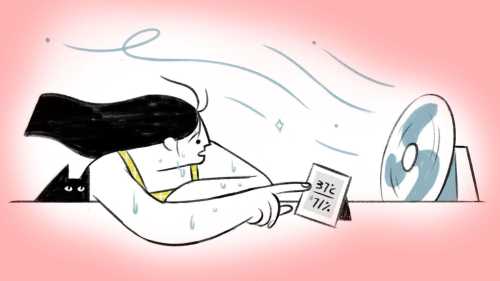
In the sweltering stillness of a record-breaking English summer, Tavia Watts slipped out of her children's bedtime routine to cry quietly in a hallway that offered no escape from the heat. The thermometer in her sons' bedroom had climbed past 30C, and with it her anxiety had burgeoned into something she could no longer quell. "During the heatwave, I've got a high level of anxiety all the time and I'm pretty much useless," the 36-year-old stay-at-home mother from Cheltenham told the BBC. Her candid Instagram reel — a confessional in which the heat "feels like the world is literally ending" — drew nearly 20,000 likes and a chorus of kindred voices from parents who, too, lie awake listening to their children breathe in rooms that will not cool.
"I'm terrified for my children's lives, and I want to scream at the people not taking this seriously. I'm simultaneously driven to act and feeling incredibly helpless — and I don't want that helplessness to win out," Watts wrote, in a sentiment that has become the catchphrase of a nervous season.
Watts is far from alone. Researchers at the University of Bath estimated as long ago as 2022 that roughly 4.6 per cent of Britons live with climate anxiety — a form of mental distress now formally recognised by professional bodies and the NHS — and a 2025 study identifies young people and women as the most susceptible groups. Psychologists have coined a term for the season's cruel signature: "anticipatory anxiety." Dr Caroline Hickman of the University of Bath, who offers therapy to sufferers, describes patients who, after one harrowing heatwave, spend the next waiting for the sky to fall again. During June's torrid spell — the warmest June on record in England — she recalls callers saying they contemplated suicide, terminating pregnancies, or selling their houses to flee somewhere cooler. "It triggers that sense that 'I can't be safe in the world, and the world can't be trusted'," she said.
The physiology, experts insist, is not chimerical. Professor Ciara McCabe, a neuroscientist and mental-health specialist at the University of Reading, explains that heat stress and anxiety share the same bodily alarm system — a racing heart, sweat, breathlessness — so the mercury itself becomes a trigger. For Lauren Murphy, 34, of Southampton, who lives with anxiety and agoraphobia, each heatwave is a recrudescence of panic that leaves her feeling isolated and unable to breathe. "It's like anxiety's the main character and you're the ensemble," she quipped, with the gallows humour of the chronically anxious.
Yet there is an antidote, and it is equal parts tender and practical. Dr Emma Lawrance of the University of Oxford urges sufferers first to talk, because a "perception gap" convinces them they are alone in their dread; second, to find community — she cites the Climate Psychology Alliance, the Resilience Project, the Climate Cares Centre and the Climate Majority Project — and convert fear into deed, whether planting a school garden or fitting solar panels; and third, to keep the body cool, since a cold flannel on the neck is, in its own modest way, a psychiatric intervention. "Having a cool shower, putting a cold washer on your neck, making sure you're hydrated — all of those things will help physiologically as well," Lawrance said. "There's a lot we can do — we're not powerless."
Heatwave anxiety can make you feel 'incredibly helpless' - here's how to manage it bbc.com/news/articles/cgk4xrznxn5o
— BBC News (UK) (@BBCNews) August 8, 2026
For Lizzie Ellen, 38, a new mother in west London, the calculus is unrelenting: she watches her weather app the way one watches a hospital monitor, imagining the June heat becoming her baby's daily reality "within a very short time." Others are already voting with their feet — ecologist Dr Francis Windram has uprooted his family from Ascot to cooler Lancaster, a quiet exodus that may presage the century's defining domestic decision. As England logs its driest July since records began in 1836 and a fourth heatwave shimmers on the horizon, the question is no longer whether the heat will return, but whether the national psyche can endure its recurrent siege. The answer, the psychologists suggest, lies not in denial but in solidarity — a cool shower, a kind word, a community garden, and the stubborn refusal to let helplessness have the final word.
Related Articles
The OSHA Moment for the Mind: How Biometric Telemetry and Algorithmic Liability Are Restructuring Mental Health Economics
Sep 23, 2026
The Psychological Ledger: How Mental Health Crises Are Rewiring Sports and Entertainment Economics
Sep 23, 2026
Comments (0)
No comments yet. Be the first to share your thoughts!
Want to join the discussion?
Please log in to post a comment.
Login NoworCreate an Account