
The $12.5 Billion Inflection Point: Entertainment Consolidation and the Financialization of Sports Franchises

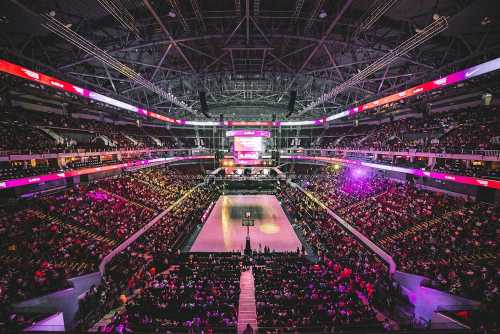
Imagine a legacy blue-chip corporation that suddenly terminates its longest-tenured distributors, rebrands its core product for a demographic it previously ignored, and mandates an expensive, unproven manufacturing process—all while publicly framing these moves as a victory for the consumer. This is the precise operational reality of the North American sports franchise ecosystem in 2026. The Los Angeles Lakers are being sold to venture capitalist Josh Kushner and former Disney CEO Bob Iger for $12.5 billion, a record-breaking price that fundamentally resets the valuation ceiling for all professional sports www.espn.com . This transaction is not merely a change in ownership; it represents a violent structural realignment where entertainment conglomerates and private equity aggressively consolidate athletic intellectual property.
The Entertainment-Sports Valuation Multiplier
Mainstream coverage frames this acquisition as a triumphant validation of the Lakers' enduring brand equity and on-court legacy. The unseen reality is the deliberate application of an entertainment-industry valuation multiplier to a sports asset. By installing a former media titan like Iger alongside institutional capital, the ownership group is signaling a pivot from traditional sports management to global content syndication. The competitors expect to form joint streaming services at a time when the value of sports media rights is spiking and viewers have moved away from watching on traditional cable www.facebook.com . This convergence means the franchise is no longer valued solely on ticket sales and local broadcasting, but on its ability to function as a proprietary, direct-to-consumer media node that can be cross-pollinated with broader entertainment portfolios, effectively treating the team as a content studio rather than a basketball club.
The Streaming Bundle Monopoly and Rights Inflation
Simultaneously, the broader media landscape is undergoing a parallel consolidation. Major networks like ESPN, Fox, and Warner Bros. Discovery are forming joint ventures to launch consolidated sports streaming platforms www.facebook.com . The unseen implication for franchise valuations is that this media consolidation creates a closed-loop ecosystem. When the same entities that own the content also control the distribution pipelines, independent franchise owners lose leverage in future rights negotiations. The $12.5 billion price tag is essentially a bet that these media conglomerates will continue to inflate rights fees to feed their streaming algorithms, effectively transferring the financial risk of viewer churn from the networks to the underlying franchise valuations. This monopsony-like environment forces franchises to accept bundled deals that may not reflect the true standalone value of their specific market.
The Gentrification of the Fan Base
This financial engineering exacts a severe, quantifiable toll on the traditional consumer. As franchise valuations skyrocket, the operational imperative shifts toward maximizing per-capita revenue extraction. This manifests in aggressive dynamic pricing models, the proliferation of premium "club" seating, and the systematic reduction of affordable inventory. The working-class fan base that historically generated the atmospheric intensity of live sports is being priced out, replaced by a transient, high-net-worth demographic. This enclosure strategy monetizes viewer friction, transforming the arena from a community institution into an exclusive, algorithmically managed hospitality venue where loyalty is secondary to yield management.
The Capital Injection Defense
Critics of the gentrification and monopoly narratives argue that this influx of institutional capital is a necessary catalyst for league-wide growth and player compensation. Proponents note that record-breaking franchise sales directly correlate with increased salary caps and enhanced revenue-sharing pools, which ultimately benefit the athletes. Furthermore, the involvement of sophisticated media executives brings operational efficiencies and global marketing reach that smaller, legacy ownership groups cannot replicate. While this framing highlights genuine macroeconomic benefits, it frequently obscures the microeconomic reality that the cultural soul of the sport is being commodified, and the barrier to entry for future, diverse ownership groups is becoming insurmountable.
Echoes of the 2014 Sterling Divestiture
This current inflection point directly mirrors the seismic market shock of the 2014 Los Angeles Clippers sale, where Donald Sterling was forced to divest his ownership stake for $2 billion. At that time, the transaction was viewed as an astronomical outlier that would temporarily distort the market. Instead, it established a new baseline for franchise valuation, triggering a decade-long arms race among private equity firms and sovereign wealth funds. The historical lesson is unequivocal: when a legacy asset is transferred to a buyer with deeper, non-sports capital reserves, it permanently recalibrates the market. The $12.5 billion Lakers sale will similarly serve as the anchor point for the next decade of sports M&A, forcing mid-market franchises to seek similar entertainment-industry buyouts to remain competitive.
The Market Efficiency Perspective
Conversely, defenders of these record-breaking valuations argue that they represent a rational market correction reflecting the true, globalized demand for premium sports content. They contend that the $12.5 billion price tag is not an artificial bubble, but an accurate reflection of the Lakers' status as a global brand with hundreds of millions of international followers. From this viewpoint, the market is simply pricing in the asset's scarcity and its unparalleled ability to generate attention in a fragmented media landscape. While this argument holds theoretical merit, it ignores the systemic risk of leveraging franchise valuations against volatile media rights revenues, which are increasingly susceptible to streaming subscriber fatigue and macroeconomic downturns.
Strategic Imperatives for Stakeholders
For local businesses and hospitality venues: The immediate imperative is to pivot away from relying on transient, game-day foot traffic. Instead, invest in year-round, premium sports tourism infrastructure and corporate hospitality services that cater to the high-net-worth demographics now dominating the arena ecosystem. For fans and consumer advocates: The strategy must shift toward collective bargaining support. Advocate for league policies that mandate a higher percentage of revenue sharing be directed toward ticket affordability and community outreach programs, rather than solely funding luxury suite expansions. For institutional investors: Capital should be reallocated toward the underlying infrastructure of sports streaming and data analytics. The entities that control the distribution pipes and audience measurement will capture the majority of the value in this increasingly consolidated landscape.
The Six-Month Horizon: Regulatory Friction and Market Bifurcation
Within six months, the sports franchise landscape will experience severe transitional friction. We predict the first major antitrust scrutiny from federal regulators regarding the collusive nature of the joint streaming ventures formed by major media networks, which could indirectly cap the future revenue growth of these newly inflated franchises. Simultaneously, we project a sharp acceleration in minority stake sales across the league, as legacy owners attempt to cash in on the Lakers' valuation multiplier before the market corrects. The era of the sports franchise as a locally rooted, community-focused entity is concluding. The next phase will be defined by forensic financial compliance, algorithmic media distribution, and a stark divide between entertainment-backed super-franchises and the surviving, independently operated clubs.
Related Articles

The Content Conglomerate: How Netflix's $45B UFC Acquisition is Eradicating the Regional Sports Network
Sep 25, 2026
The Sovereign Stranding: How the IOC's 2036 Revocation is Collapsing the Municipal Sports Bond Market
Sep 25, 2026
Comments (0)
No comments yet. Be the first to share your thoughts!
Want to join the discussion?
Please log in to post a comment.
Login NoworCreate an Account