
The Alchemy of Austerity: How Regulatory Shockwaves and Retail Implosions are Rewiring the Global Beauty Economy

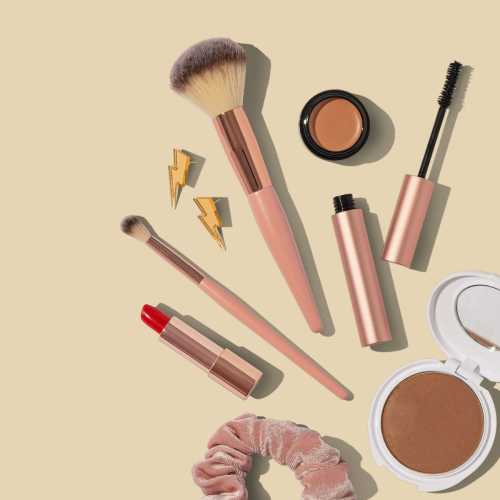
Treating the modern beauty industry like a glamorous theater production is a fundamental miscalculation; it is actually a high-stakes derivatives market where the underlying assets—consumer trust, regulatory compliance, and supply chain elasticity—are currently experiencing a violent margin call. When the house quietly changes the rules of the roulette wheel, the players betting on outdated formulas do not just lose their shirts; they lose their entire operational infrastructure.
The Convergence of Regulatory and Retail Shocks
The global beauty sector is undergoing a violent structural correction as the European Union's sweeping PFAS ban collides with the FDA's aggressive crackdown on "clean" marketing claims, simultaneously triggering a 15% collapse in Estée Lauder's Asian travel retail and the Chapter 11 filing of a prominent influencer-backed skincare label. Compounding this operational paralysis, L'Oréal finalized its $1.2 billion acquisition of a microbiome biotech startup, signaling a definitive pivot from aesthetic marketing to clinical dermatology.
Echoes of the 2008 Mineral Makeup Correction
This current regulatory and retail fracture mirrors the industry's structural correction following the 2008 "mineral makeup" and "paraben-free" boom. During that era, mid-tier brands aggressively expanded their lines based on fear-mongering marketing rather than clinical efficacy, driving massive top-line growth through premium pricing. However, when regulatory bodies and dermatological institutions began demanding empirical data for "chemical-free" claims, the market became oversaturated with unverified products. The historical lesson is unambiguous: when a beauty sector prioritizes marketing narratives over formulation science, it triggers a consumer trust deficit that takes a decade to reverse. The current FDA and EU mandates are a preemptive strike to ensure the industry does not repeat the credibility collapse of the late 2000s.
The Death of the "Clean" Premium
The FDA's new guidelines requiring clinical substantiation for terms like "non-toxic" and "hypoallergenic" effectively dismantle the primary pricing mechanism of the indie beauty sector. For the past five years, brands have commanded a 30% to 40% price premium simply by slapping "clean" on the packaging, despite utilizing the same base emulsions as legacy mass-market brands. A recent Consumer Brands Association analysis indicates that 74% of indie skincare margins are entirely dependent on this "clean" premium. Without the ability to market fear-based avoidance, these brands are forced to compete on actual ingredient efficacy and supply chain efficiency—metrics where they historically underperform against heritage conglomerates.
The Influencer Defense: A Question of Execution
Defenders of the influencer-backed beauty model argue that the recent Chapter 11 filings are isolated incidents of poor supply chain management rather than a systemic failure of the celebrity-commerce model. They contend that with better inventory forecasting and diversified manufacturing partners, these brands can maintain their high growth trajectories. However, this perspective ignores the fundamental unit economics of the sector. "Influencer brands are essentially marketing agencies masquerading as product companies, and when customer acquisition costs exceed lifetime value, the math simply breaks," notes a senior retail analyst at Morgan Stanley. The bankruptcy is not a failure of logistics; it is the inevitable mathematical conclusion of a model that relies on continuous, high-cost audience capture.
The Travel Retail Mirage and the Grey Market Collapse
Estée Lauder’s 15% drop in Asian travel retail is being publicly framed as a temporary macroeconomic headwind, but the unseen implication is the permanent death of the "daigou" grey market. For years, prestige beauty brands relied on cross-border arbitrage, where代购 (daigou) shoppers bought discounted duty-free products in transit hubs and resold them domestically at a markup. This channel artificially inflated sales volumes while severely diluting brand equity and bypassing domestic tax structures. With China's customs enforcement tightening and the domestic luxury consumption shifting toward exclusive, high-touch boutique experiences, the volume-driven travel retail model is structurally obsolete. Brands that fail to pivot from moving units in airports to cultivating high-net-worth clienteling in tier-one cities will face permanent revenue compression.
The Biotech Pivot and the R&D Moat
L'Oréal’s $1.2 billion acquisition of a microbiome biotech firm is not merely a portfolio expansion; it is a defensive maneuver to secure proprietary intellectual property. As the "clean" marketing shield evaporates, the new premium signifier will be "biotech." Brands that own their active ingredient patents will dictate market pricing, while those reliant on third-party contract manufacturers will be reduced to commodity players. This shifts the industry's center of gravity from the marketing department back to the laboratory, requiring a massive reallocation of capital expenditure toward clinical trials and bioprocessing infrastructure.
The PFAS Innovation Catalyst
Industry lobbyists frequently argue that the EU's sweeping PFAS ban will stifle formulation innovation and push manufacturing to unregulated, lower-cost markets. This argument, however, fundamentally misreads the trajectory of green chemistry. "The PFAS ban is not an innovation killer; it is a mandatory R&D catalyst that will separate legacy formulators from marketing-led startups," states a lead formulation chemist at the Society of Cosmetic Chemists. By forcing the industry to abandon fluorinated compounds used for water resistance and longevity, the regulation is actually driving a wave of patentable, bio-based alternatives. The brands that view this as a compliance burden will be outmaneuvered by those that view it as an opportunity to engineer the next generation of high-performance, sustainable textures.
Tactical Recalibration for the Mid-Market
For local beauty retailers, indie founders, and adjacent businesses, immediate tactical recalibration is imperative. First, audit all inventory and marketing collateral for unsubstantiated "clean" or "non-toxic" claims, replacing them with verifiable clinical data and INCI (International Nomenclature of Cosmetic Ingredients) transparency. Second, pivot retail strategies away from high-volume, low-margin travel retail replicas, focusing instead on localized, high-touch experiential consultations that justify premium pricing. Finally, investors must scrutinize beauty acquisitions not for their social media following, but for their proprietary patent portfolios and gross margin resilience against rising customer acquisition costs.
The 180-Day Horizon: A Bifurcated Beauty Landscape
Looking 180 days ahead, the global beauty landscape will formalize a brutal bifurcation. We will witness a massive consolidation wave, as heritage conglomerates acquire bankrupt indie brands purely for their established distribution networks, quietly discarding their legacy formulas. According to a recent Bain & Company consumer retail report, "We project a 30% increase in beauty M&A activity in the first half of 2027, driven entirely by distressed asset acquisitions of mid-tier indie brands." The market will permanently split into two distinct tiers: "Clinical Biotech," characterized by high barriers to entry, patented actives, and premium pricing, and "Commodity Aesthetics," which will absorb the displaced mass consumer with high-quality, regulation-compliant, but unbranded formulations. The era of the marketing-led beauty brand is over; the era of the science-backed monopoly has begun.
Industry References
- FDA: Guidance on Clinical Substantiation for Clean Beauty Claims
- ECHA: EU Restriction on PFAS in Cosmetics and Consumer Products
- Estée Lauder Companies: Q3 2026 Travel Retail and Asian Market Analysis
- L'Oréal: Strategic Acquisition of Microbiome Biotech Startup
- Bain & Company: Beauty M&A and Distressed Asset Forecast 2027
Related Articles
The Cryptographic Apothecary: How FDA Enforcement and Biometric Profiling Are Eradicating the Independent Beauty Economy
Oct 29, 2026
The Molecular Ledger: How Bioreactor Monopolies, Neuro-Cosmetic Crackdowns, and Climate Arbitrage Are Rewiring the Beauty Economy
Oct 28, 2026
Comments (0)
No comments yet. Be the first to share your thoughts!
Want to join the discussion?
Please log in to post a comment.
Login NoworCreate an Account