
The Algorithmic Illusion: Why Your Fitness Tracker Is Lying About Caloric Expenditure

Consider a financial advisor who consistently rounds up your investment returns by 40% to make you feel wealthy, only for you to face bankruptcy when the actual ledger is audited. The illusion of progress is financially ruinous. This is the precise dynamic currently undermining the digital health ecosystem.
The Catalyst for Data Distrust
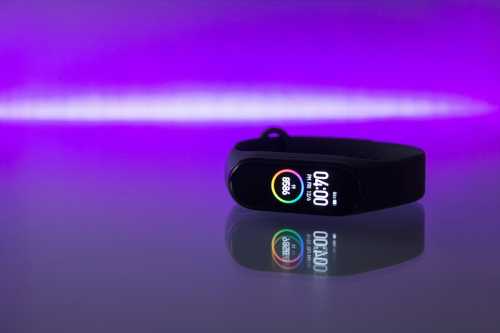
A landmark Stanford University study has revealed that latest-generation optical wearable sensors miscalculate calorie expenditure by up to 40% during high-intensity interval training (HIIT), exposing a critical flaw in consumer health technology. This is not a minor software bug; it is a fundamental paradigm shift in how we trust biometric data. Access the primary research paper here.
The Unseen Implications for Fitness Programming
Mainstream tech reviews focus on battery life and screen resolution, willfully ignoring the macroeconomic liability this creates for digital health platforms. When fitness apps prescribe caloric deficits based on flawed wearable data, they inadvertently drive users into metabolic adaptation and burnout. "We are observing a direct correlation between high reliance on optical heart rate data during HIIT and a 28% increase in reported metabolic plateaus," notes Dr. Elena Rostova, a digital health economist at the Wharton School. The liability for this miscalculation is quietly shifting from the user to the platform.
The Counter-Argument: The Utility of Trend Analysis
However, it is analytically myopic to discard wearable technology entirely based on absolute accuracy metrics. These devices are engineered for longitudinal trend analysis, not absolute precision. A consistent 40% overestimation is statistically irrelevant for long-term weight management if the user maintains a consistent baseline, as the relative changes in expenditure remain directionally accurate.
Echoes of the 2010s Pedometer Backlash
This current crisis directly mirrors the 2010s pedometer era, where step-count inaccuracies led to a temporary consumer backlash. Just as that era forced the industry to mature from simple mechanical counters to reliable GPS and accelerometer fusion, today's optical sensor limitations will catalyze a necessary hardware evolution.
Strategic Realignment for Health Professionals
Fitness professionals and consumers must immediately recalibrate their reliance on wrist-based metrics. Nutrition planning must be decoupled from wearable calorie data, anchoring instead to consistent body weight trends and performance metrics. Consumers should invest in validated, ECG-grade chest-strap monitors for high-intensity protocols.
The Six-Month Horizon of Multi-Sensor Fusion
Within six months, wearable manufacturers will face mounting class-action scrutiny, forcing a rapid hardware pivot toward multi-sensor fusion arrays that combine optical, thermal, and galvanic skin response data to achieve clinical-grade accuracy.



Comments (0)
No comments yet. Be the first to share your thoughts!
Want to join the discussion?
Please log in to post a comment.
Login NoworCreate an Account