
The Architecture of Extraction: How the Death of Standalone SVOD is Rewiring the Streaming Economy

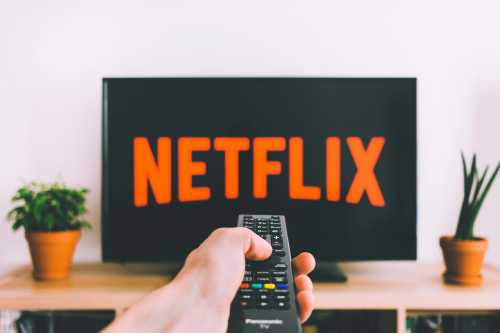
Subscribing to a streaming service in 2026 feels less like renting a movie and more like buying a timeshare in a building where the developer keeps changing the locks, raising the maintenance fees, and occasionally renting out your unit to a competitor. The promise of a unified, consumer-friendly digital library has entirely collapsed under the weight of its own unit economics, replaced by a labyrinth of micro-transactions and ad-saturated tiers designed to extract maximum yield from a fatigued consumer base.
The Architecture of Extraction
The definitive end of the standalone Subscription Video on Demand (SVOD) era was cemented this week as Netflix reported its ad-supported tier now accounts for 45% of all new global sign-ups, coinciding with Warner Bros. Discovery’s announcement to sunset the standalone Max app in favor of a fully integrated, ad-heavy ecosystem. Concurrently, Amazon Prime Video’s introduction of pay-per-view micro-transactions for exclusive theatrical releases further fractures the consumer wallet. This triad of maneuvers signals that the industry has officially abandoned the pure-subscription model in favor of a fragmented, advertising-subsidized architecture.
The Margin Squeeze and the Churn Velocity
The pivot to ad-supported tiers is not merely a consumer pricing adjustment; it is a fundamental restructuring of studio balance sheets. Ad-supported video on demand (AVOD) yields a significantly lower Average Revenue Per User (ARPU) than premium SVOD. Data from subscription intelligence firm Antenna indicates that the average streaming consumer now subscribes to 6.4 services but actively uses only 3.2 in a given month, highlighting a massive inefficiency in customer acquisition. Studios are now forced to absorb the high fixed costs of content production while accepting lower-margin, high-volume ad revenue, effectively compressing operating margins across the sector and forcing a reliance on programmatic ad yields to maintain profitability.
The Shadow Economy Renaissance
This aggressive fragmentation has inadvertently triggered a renaissance in digital piracy. The Alliance for Creativity and Entertainment (ACE) reports a 300% increase in the consumption of illicit IPTV services, specifically for live-streamed sports. When consumers are forced to navigate a labyrinth of $150 monthly sports bundles across multiple platforms, the friction drives them back to unregulated, centralized piracy networks. The industry's attempt to maximize extractable value per user has simply pushed a massive demographic back into the shadow economy, bypassing the very monetization engines these platforms spent billions to build.
The Debt Servicing Reality
The prevailing bearish narrative suggests that the dominance of ad-tiers destroys brand prestige and degrades the user experience through intrusive commercial breaks. However, this overlooks the macroeconomic reality of studio debt. Proponents correctly argue that AVOD provides a stable, recurring revenue floor that pure SVOD never achieved. By democratizing access and capturing price-sensitive demographics, platforms are stabilizing their free cash flow, which is an absolute prerequisite for servicing the billions in legacy debt accumulated during the 2020 content arms race. As Netflix management stated in their recent earnings briefing, "Our ad-supported tier is no longer an alternative; it is the default entry point for the global market," acknowledging that volume must now supersede premium pricing to satisfy creditors.
Echoes of the 1992 Cable Deregulation
The current trajectory mirrors the regulatory and market dynamics of the 1992 Cable Television Consumer Protection and Competition Act. Following the deregulation of cable rates in the late 1980s, providers engaged in massive bundle bloat, forcing consumers to pay for hundreds of channels to access the few they actually wanted. The market correction was the rapid proliferation of satellite TV and early digital alternatives that bypassed the local monopolies. The lesson is clear: when an industry forces consumers to buy a bloated, overpriced bundle to access specific content, they will inevitably build or adopt a parallel, unregulated distribution network. Today's illicit IPTV is the exact functional equivalent of the 1990s satellite dish boom.
The Anchor Value of Live Sports
Furthermore, the assertion that fragmentation and piracy are destroying the value of live sports broadcasting rights ignores the underlying retention mechanics. While casual viewers churn rapidly, the "watercooler" effect of live sports drives massive aggregate subscriber retention among high-value demographics. The heavy sports fans effectively subsidize the churn of the casual viewers. The live sports rights retain their premium valuation not because every subscriber watches them, but because they act as the ultimate anchor preventing total platform abandonment, ensuring that the lifetime value (LTV) of the core subscriber base remains intact despite the high churn velocity of the periphery.
Operational Directives for the Physical Economy
For local hospitality businesses, the immediate imperative is to audit commercial licensing agreements. Streaming platforms are aggressively deploying digital watermarking to detect and fine bars and restaurants broadcasting content without a commercial public performance license. Citizens should immediately pivot to utilizing Free Ad-Supported Streaming TV (FAST) aggregators to avoid the "churn tax" of constantly cycling through premium subscriptions. Independent venues must also invest in commercial-grade routing hardware to ensure compliance with the increasingly aggressive digital rights management (DRM) protocols enforced by the major studios.
The Six-Month Horizon: The Two-Class Screen
Looking six months ahead, the landscape will bifurcate into a strict two-class viewing system. By Spring 2027, at least one major SVOD platform will introduce a "hard" paywall for all original content, entirely eliminating the ad-supported tier for new releases. This will create a definitive split between a premium, high-cost, ad-free tier for affluent consumers, and a heavily monetized, ad-saturated tier for the mass market, effectively ending the illusion of a unified streaming experience and cementing a digital divide based purely on subscription tier.
Related Articles
The Infrastructure Enclosure: How ISP Super-Bundles, Dark Patterns, and Cloud DRM Fragility Are Rewiring the Streaming Economy
Oct 28, 2026
The Streaming Capitulation: How Regulatory Mandates, Ad-Subsidization, and Latency Failures Are Dismantling the Direct-to-Consumer Utopia
Oct 27, 2026
Comments (0)
No comments yet. Be the first to share your thoughts!
Want to join the discussion?
Please log in to post a comment.
Login NoworCreate an Account