
The Aspirational Exile: How Luxury's Price Hikes are Restructuring the Global Wealth Economy

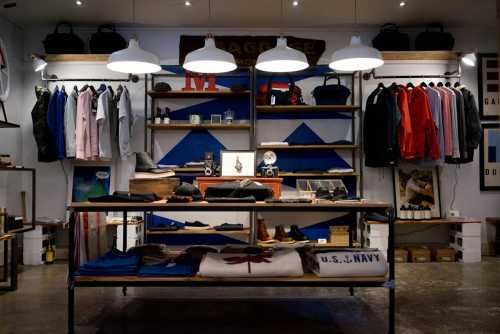
Operating a luxury maison in 2026 is akin to running a Michelin-starred restaurant that has quietly removed the front door, replacing it with a velvet rope that only admits guests who have previously spent more than the annual revenue of the kitchen. For decades, the luxury sector relied on a broad base of aspirational consumers to fund the overhead of catering to the ultra-wealthy. That subsidized model has now been formally abandoned.
The Aspirational Exile: A Structural Market Correction
LVMH, Kering, and Richemont have collectively executed a 15% average price increase across their core leather goods and hard luxury categories in Q3 2026, explicitly targeting a 20% reduction in entry-level consumer foot traffic to protect margins and elevate VIP client exclusivity. This aggressive repricing strategy, coupled with Kering’s ongoing restructuring of Gucci to eliminate discounting and Richemont’s pivot toward ultra-high-net-worth jewelry allocations, marks a definitive end to the democratization of luxury. According to Bain & Company's Q3 2026 Luxury Market Monitor, the top 5% of clients now account for 42% of total luxury spending, up from 31% in 2022, mathematically validating the industry's ruthless pivot away from the middle class.
Echoes of the 1990s Accessory Boom
This current retrenchment mirrors the industry's structural correction following the 1990s accessory boom. During that era, brands like Prada and Gucci aggressively expanded their entry-level leather goods and logo-centric apparel to capture the newly affluent middle class, driving massive top-line growth. However, by the late 1990s, the market became oversaturated, brand equity diluted, and the ultra-wealthy abandoned the labels for more exclusive, heritage-focused houses. The historical lesson is unambiguous: when a luxury brand prioritizes volume over exclusivity, it triggers a cultural depreciation that takes a decade to reverse. The current price hikes are a preemptive strike to ensure the sector does not repeat the over-distribution errors of the late 1990s.
The Shadow Economy: Secondary Market Cannibalization
Mainstream financial coverage focuses almost exclusively on primary retail sales, ignoring the massive value leakage into the secondary market. When heritage houses raise prices by 15%, the existing inventory on platforms like Vestiaire Collective and The RealReal instantly appreciates in value. However, the primary brands see zero of this windfall. A recent McKinsey consumer sentiment survey reveals that 68% of aspirational luxury buyers have permanently downgraded to premium high-street brands over the last 18 months, effectively exiting the primary luxury ecosystem. The unseen implication is that luxury brands are inadvertently training their former entry-level customers to become permanent participants in the circular economy, permanently capping their own future customer acquisition pipelines.
The Brand Equity Defense: A Necessary Purge?
Proponents of this aggressive pricing strategy argue that alienating the aspirational class is a necessary purge to protect long-term brand equity. As Luca Solca, Managing Director of Luxury Goods at Bernstein, recently noted, "We are no longer in the business of selling aspiration; we are in the business of monetizing established wealth." From this perspective, the loss of the middle-class consumer is a feature, not a bug. By making the products financially inaccessible to all but the top decile, the brand maintains its status as an unassailable Veblen good, ensuring that the ultra-wealthy continue to pay a premium for absolute social distinction.
The Artisan Bottleneck: When Heritage Becomes a Liability
While the financial models assume infinite demand from the ultra-wealthy, the physical reality of luxury manufacturing imposes a hard ceiling on growth. The pivot toward VICs has resulted in a surge of orders for high-margin, complex leather goods and haute couture. However, the training time for a master artisan at houses like Hermès or Chanel remains rigidly fixed at five years. This creates a severe production bottleneck. Brands are now facing waitlists of up to 24 months for core products, not as a manufactured scarcity tactic, but as a genuine failure of supply chain elasticity. The unseen risk is that when the ultra-wealthy cannot immediately acquire a product, they simply deploy their capital to a competitor with better inventory availability, resulting in lost market share at the very apex of the market.
Geographic Concentration and the Geopolitical Premium
The strategic pivot to VICs has also resulted in a dangerous geographic concentration of revenue. With the Chinese middle-class consumer effectively priced out or deterred by macroeconomic headwinds, luxury houses have become hyper-reliant on the US and Middle Eastern ultra-wealthy. This lack of geographic diversification exposes the sector to localized macroeconomic shocks. A sudden shift in US capital gains taxation, or a correction in Middle Eastern sovereign wealth liquidity, could trigger an immediate, catastrophic drop in primary retail sales. The industry has traded broad-based global resilience for high-yield, high-vulnerability geographic concentration.
The Scarcity Imperative: Defending the Price Elasticity
Industry executives frequently defend these price hikes by citing the rising costs of raw materials, retail real estate, and artisan labor. While input costs have indeed risen, this argument obscures the underlying financial reality. Operating margins across the top ten luxury conglomerates currently sit at historic highs, frequently exceeding 30%. The price increases are not a defensive mechanism to protect margins against inflation; they are an offensive strategy to extract maximum consumer surplus from a client base that is highly price-inelastic. Framing the price hikes as a cost-covering necessity is a strategic misdirection designed to placate retail analysts while the industry executes a massive wealth transfer from the consumer to the shareholder.
Tactical Repositioning for the Mid-Market Retailer
For local retailers, investors, and adjacent businesses, the immediate imperative is to capitalize on the vacuum left by the aspirational exodus. First, premium high-street and accessible luxury brands must aggressively market their quality and heritage to the 68% of consumers who have downgraded, positioning themselves as the new rational alternative to overpriced entry-level luxury. Second, local luxury consignment and authentication businesses should scale their operations immediately, as the secondary market is poised to capture an unprecedented share of the total luxury transaction volume. Finally, investors must scrutinize luxury stocks not for their top-line growth, but for their inventory turnover rates and VIC retention metrics, recognizing that volume growth in this sector is now a red flag for brand dilution.
The 180-Day Horizon: A Bifurcated Luxury Landscape
Looking 180 days ahead, the global luxury landscape will formalize its bifurcation. We will see the first major heritage brand report a quarter of flat or negative revenue growth, directly attributed to the physical constraints of the artisan bottleneck and the exhaustion of the VIC spending capacity. The market will permanently split into two distinct tiers: "Absolute Luxury," characterized by extreme scarcity, bespoke clienteling, and double-digit price hikes, and "Accessible Premium," which will absorb the displaced aspirational consumer with high-quality, logo-agnostic products. The era of the universal luxury brand is over; the era of the gated luxury economy has begun.
Related Articles

The Cryptographic Moat: How the Luxury Sector is Suffocating the Aspirational Middle Class to Protect its Ultra-Wealthy Base
Oct 29, 2026
The Aspirational Purge: How VIC Enclosure, Blockchain Provenance, and Onshoring Mandates Are Dismantling the Democratized Luxury Hegemony
Oct 28, 2026
Comments (0)
No comments yet. Be the first to share your thoughts!
Want to join the discussion?
Please log in to post a comment.
Login NoworCreate an Account