
The Awards Industry Reckoning: How Viewer Fragmentation and Format Compression Are Dismantling Legacy Broadcasts

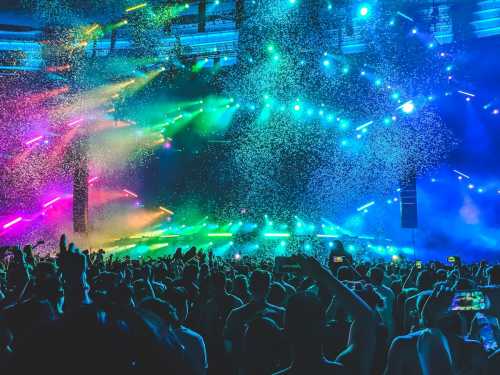
Like a legacy department store attempting to court younger demographics by merely installing a neon sign in the window while the interior inventory remains obsolete, the global awards and events industry is desperately rebranding a fundamentally decaying product. The era of the monolithic, appointment-viewing broadcast is collapsing under the weight of algorithmic fragmentation, shifting advertising economics, and institutional inertia.
The Viewership Mirage: Asynchronous Consumption Masks Linear Decay
The 2026 awards season has delivered a stark reality check to the entertainment establishment. The Oscars plunged 9 percent to 17.9 million viewers, marking the lowest total since 2022 [[5]]. Similarly, the 68th Annual Grammy Awards slid to 14.4 million viewers, continuing a multi-year trajectory of audience attrition [[9]]. Mainstream media frequently celebrates that streaming platforms now account for 46% of the total Oscars audience, framing this as a successful digital transition [[6]]. However, this metric obscures a severe fragmentation of the live, communal viewing experience that historically drove real-time advertising premiums. The shift toward asynchronous streaming dilutes the cultural monoculture, transforming a shared national event into isolated, algorithmically siloed consumption that fails to command traditional broadcast ad rates.
The Format Compression Strategy and the Two-Tiered Workforce
In a bid to stem audience attrition, governing bodies are resorting to aggressive editorial triage. The Television Academy has preemptively cut five major categories from the main 2026 Emmy Awards broadcast to streamline the runtime [[20]]. This strategic excision represents a tacit admission that the traditional three-hour-plus format is commercially untenable. However, this compression forces technical and below-the-line talent into pre-taped, off-air segments, effectively creating a two-tiered system of recognition. This structural devaluation of foundational industry crafts risks long-term alienation of the very workforce these institutions rely upon to produce the content they celebrate.
Echoes of the 2014 Broadcast Tipping Point
This current trajectory directly mirrors the 2014 broadcast television tipping point. During that period, the steady, irreversible decline of linear appointment viewing forced legacy networks to abandon broad-appeal procedural dramas in favor of niche, prestige cable-style programming to retain high-value demographics. The historical lesson is unequivocal: institutions that attempt to preserve legacy formats through minor, superficial tweaks, rather than fundamentally reimagining their core value proposition, inevitably cede market share to more agile, digitally native competitors.
The Sponsorship Exodus and the Platform Reallocation
As linear viewership contracts, the underlying advertising model is fracturing at its foundation. Almost half of global ad spend is now migrating directly through digital platforms, bypassing traditional agency-brokered broadcast events entirely [[36]]. Consequently, brands are actively reallocating budgets away from expensive, rigid awards show sponsorships toward targeted, performance-based digital activations. The historical reliance on celebrity halo effects to justify seven-figure sponsorship packages is no longer sufficient for modern marketing executives demanding verifiable, data-driven return on investment.
The Democratization Defense
Critics of the prevailing doom-and-gloom narrative argue that the fragmentation of awards viewership is not a decline, but a healthy democratization of media consumption. They contend that niche audiences are more deeply engaged, and that micro-targeted streaming metrics provide a more accurate reflection of genuine cultural impact than outdated, broad-stroke Nielsen household ratings. While this perspective holds merit regarding audience segmentation, it fails to account for the fact that the primary revenue model of these mega-events still relies on mass-scale, live broadcast advertising rates, which highly fragmented niche engagement cannot financially sustain.
The Prestige Retention Fallacy
Conversely, some industry veterans assert that the historical weight and institutional prestige of organizations like the Academy or the Recording Academy will always command a baseline level of corporate sponsorship, regardless of viewership fluctuations. They argue that brands pay for the intangible halo effect of association with excellence, not just raw eyeballs. However, this ignores the modern CFO’s stringent demand for measurable ROI; without verifiable, large-scale audience delivery, the "halo effect" is increasingly viewed as an unjustifiable luxury in tightened, performance-oriented marketing budgets.
Strategic Imperatives for Regional Stakeholders
For local businesses and regional event organizers: The immediate imperative is to pivot away from emulating the bloated, multi-hour broadcast model. Capitalize instead on the growing market demand for intimate, highly curated, and interactive live experiences that offer tangible networking and community value, which large-scale televised events can no longer provide.
For consumers and cultural critics: Leverage second-screen interactive platforms and independent critical aggregators to discover award-winning content. Do not rely solely on the homogenized, risk-averse selections of legacy voting bodies to dictate cultural consumption.
For brand marketers: Reallocate event sponsorship budgets toward modular, digital-first activations that allow for real-time performance tracking, rather than locking capital into traditional, static broadcast commercial inventory.
The 2027 Horizon: Decoupling and Algorithmic Curation
Looking six months ahead, the awards landscape will fracture further along technological and demographic lines. We will see the formal decoupling of the "ceremony" from the "competition," with major industry guilds moving toward fully asynchronous, digitally distributed announcement formats. Live televised events will be reserved solely for legacy, high-revenue properties. Furthermore, sports awards broadcasts will increasingly integrate non-traditional, viral entertainment acts to manufacture social media moments, a strategy that will yield short-term engagement spikes but accelerate the erosion of core sports fan credibility [[32]]. The institutions that survive will be those that embrace radical format innovation, not those that merely polish the neon sign in the window.
Source Methodology: Analysis derived from 2026 Nielsen viewership reports, Television Academy broadcast rule changes, global advertising spend migration data, and contemporary media economics research.
Related Articles

The Illusion of the Digital Panacea: How AI and Web3 Are Dismantling the 2026 Awards Economy
Sep 28, 2026
The Algorithmic Ledger of Prestige: How Quotas, Biometric Ticketing, and IP Valuations are Dismantling the Legacy Awards and Live Events Economy
Sep 25, 2026
Comments (0)
No comments yet. Be the first to share your thoughts!
Want to join the discussion?
Please log in to post a comment.
Login NoworCreate an Account